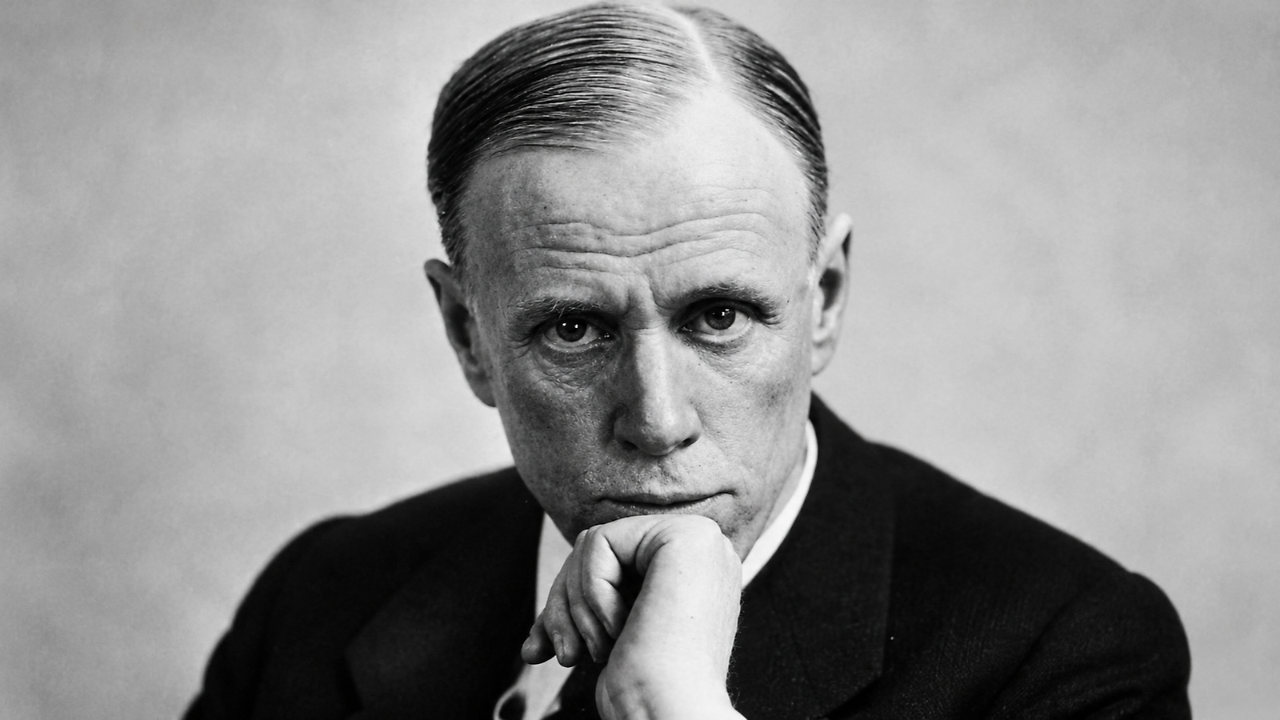
How Sinclair Lewis Made Ordinary Middle-Class Life A Subject Of Literary Rebellion
\n\nThe American Dream promised prosperity, freedom and the possibility of becoming someone extraordinary. Sinclair Lewis saw something troubling beneath that promise. Behind the comfortable homes, successful businessmen and respectable communities, he recognised a society increasingly governed by materialism, conformity and the fear of being different.
\n\nOn 5 November 1930, Lewis became the first American to win the Nobel Prize in Literature, a historic recognition of a writer who had spent years questioning the values his country celebrated. His achievement was remarkable not merely because he broke a national barrier, but because his fiction challenged America's understanding of itself.
\n\nThe Small Town That Concealed A Bigger Problem
\n\nPublished in 1920, 'Main Street' established Lewis as one of America's most provocative literary voices. The novel follows Carol Kennicott, an educated young woman who moves to the fictional town of Gopher Prairie, Minnesota, after marrying a local doctor.
\n\nMain Street (Picture Credit – Amazon)
\n\nCarol arrives with ambitions of transforming the community into a more intellectually stimulating place. Instead, she encounters suspicion, provincial attitudes and resistance to change. Lewis exposes how seemingly harmless social conventions can become instruments of control, particularly…
Original source: https://www.timesnownews.com/lifestyle