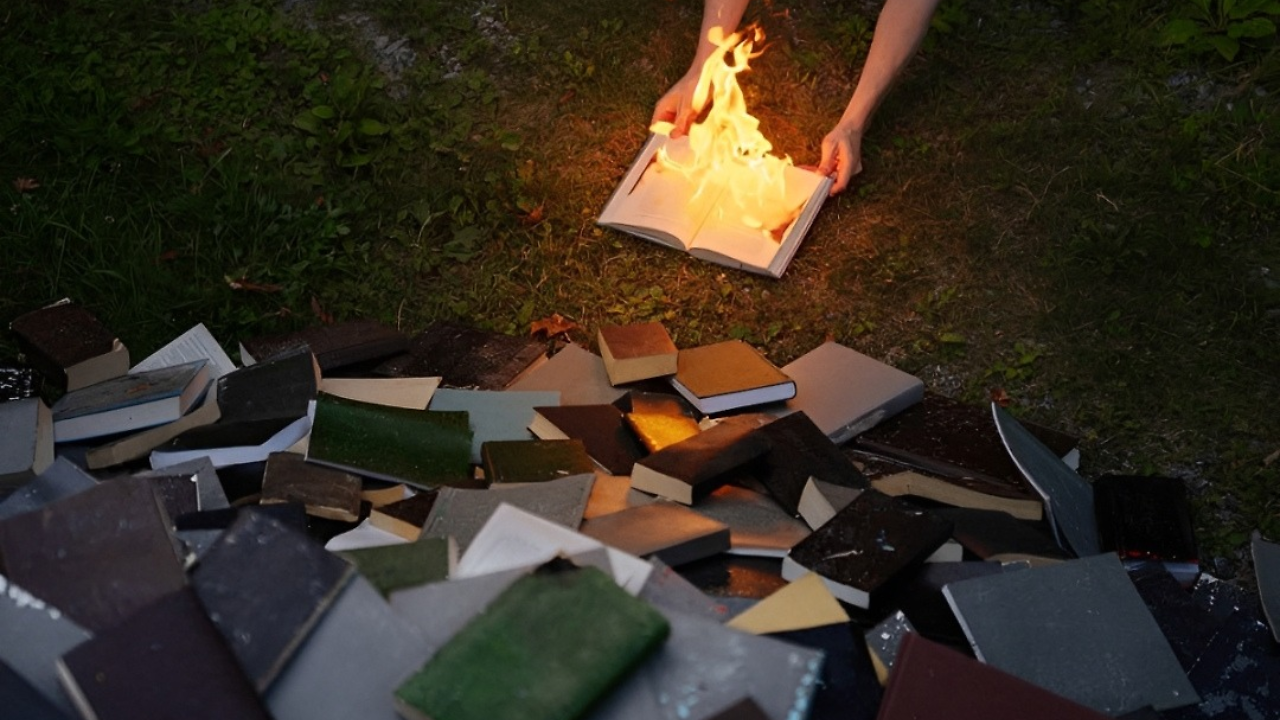
How Books Became Weapons Of Resistance During Political Upheaval (Picture Credit – Pinterest)
\n\nA government can close a newspaper, imprison a dissident or silence a speech. Yet a book presents a more stubborn problem: it can be hidden, copied, carried across borders and passed from one reader to another. During political upheaval, that portability can turn literature into something more than private entertainment. It becomes a way to preserve ideas that those in power want forgotten.
\n\nAcross history, books have been burned, banned and secretly circulated. Their significance extends beyond the words they contain, revealing how closely political authority is connected to the control of knowledge.
\n\nIn May 1933, pro-Nazi university students organised public book burnings across Germany, targeting Jewish writers, pacifists and political opponents. At Berlin's Opernplatz, thousands watched volumes disappear into flames while Nazi propaganda minister Joseph Goebbels addressed the crowd.
\n\nThe ritual was not merely an attack on paper. It declared whose voices belonged in German cultural life. Burning books offered a theatrical way to make exclusion visible, even though destroying copies could not extinguish the ideas themselves.
\n\nMahatma Gandhi's Hind Swaraj, written in Gujarati in 1909, questioned colonial rule and argued for self-government rooted in nonviolent…
Original source: https://www.timesnownews.com/lifestyle