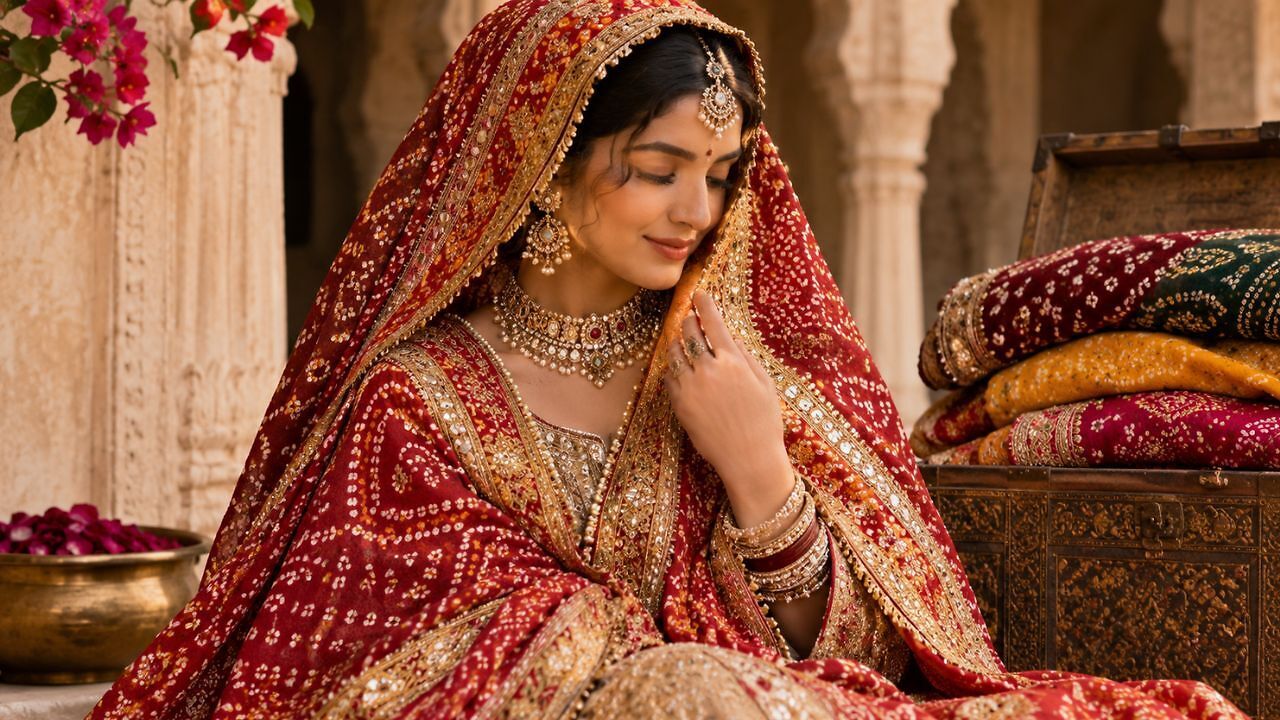
For years, the bridal dupatta followed a set pattern. A sheer net or organza piece, heavy with zari at the edges, pinned neatly over the head and left to fall over one shoulder. It looked lovely in photographs, but it also looked the same at almost every wedding. This season, brides are breaking that pattern. They are reaching for the odhni, the wide, generous veil their grandmothers wore, and finding in it a kind of beauty that feels personal rather than picked from a lookbook.
\n\nWhat draws brides in is the meaning stitched into these pieces. The red chunri with its tiny tie-dye dots has long been linked to a married woman's good fortune. The Gujarati gharchola, with its checked grid of bandhani, is traditionally gifted by the groom's family. Many brides are now sitting with their mothers and aunts, asking what each colour and motif once stood for. Some are wearing family odhnis that have been folded away in trunks for decades, getting them gently restored by local craftsmen who mend the gota and strengthen the old fabric.
\n\nThere is also a practical side. An odhni does not need a dozen pins to stay in place. Because of its…
Original source: https://www.timesnownews.com/lifestyle