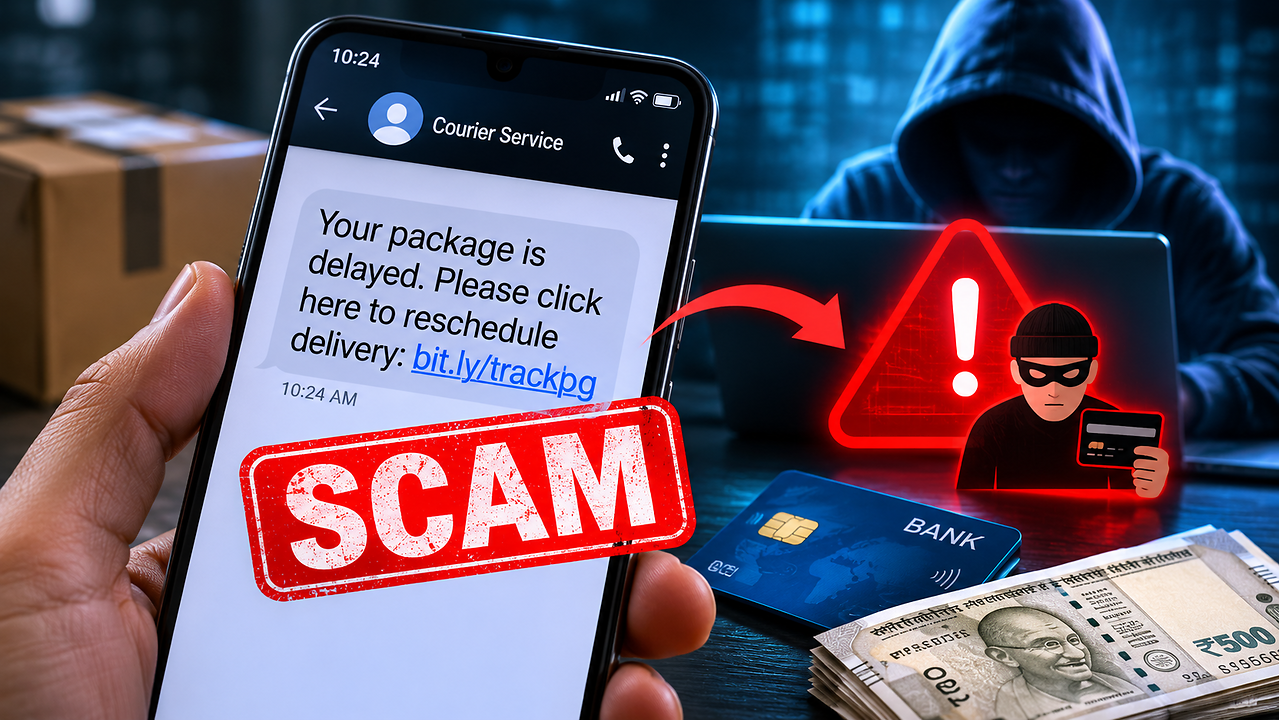
A message claiming that a package is delayed may appear routine, but it could be the first step in a cyber fraud. Cybercriminals are increasingly exploiting fake courier notifications, e-challan alerts and other seemingly legitimate messages to trick consumers into clicking malicious links or downloading fraudulent Android applications. A single click could expose sensitive personal and banking information, compromise devices and potentially lead to unauthorised financial transactions.
\n\nCybercriminals carrying out fake courier delivery scam typically use a technique called smishing. They impersonate trusted institutions such as courier companies, India Post, traffic police, banks or government departments to trick people into clicking malicious links, sharing sensitive information or installing fraudulent applications.
\n\nAmit Relan, CEO & Co-Founder, mFilterlt said, "The growing use of fake courier notifications, e-challan messages and malicious APKs reflects a larger challenge in the digital ecosystem: the erosion of trust in everyday digital interactions. Cybercriminals are exploiting the credibility of familiar institutions and the urgency of routine transactions to manipulate users into downloading malicious applications. Once installed, these apps can compromise devices, expose sensitive personal and financial information, and enable unauthorized transactions. What makes this threat particularly concerning is that the attack begins with a seemingly legitimate communication, making…
Original source: https://www.timesnownews.com/business-economy