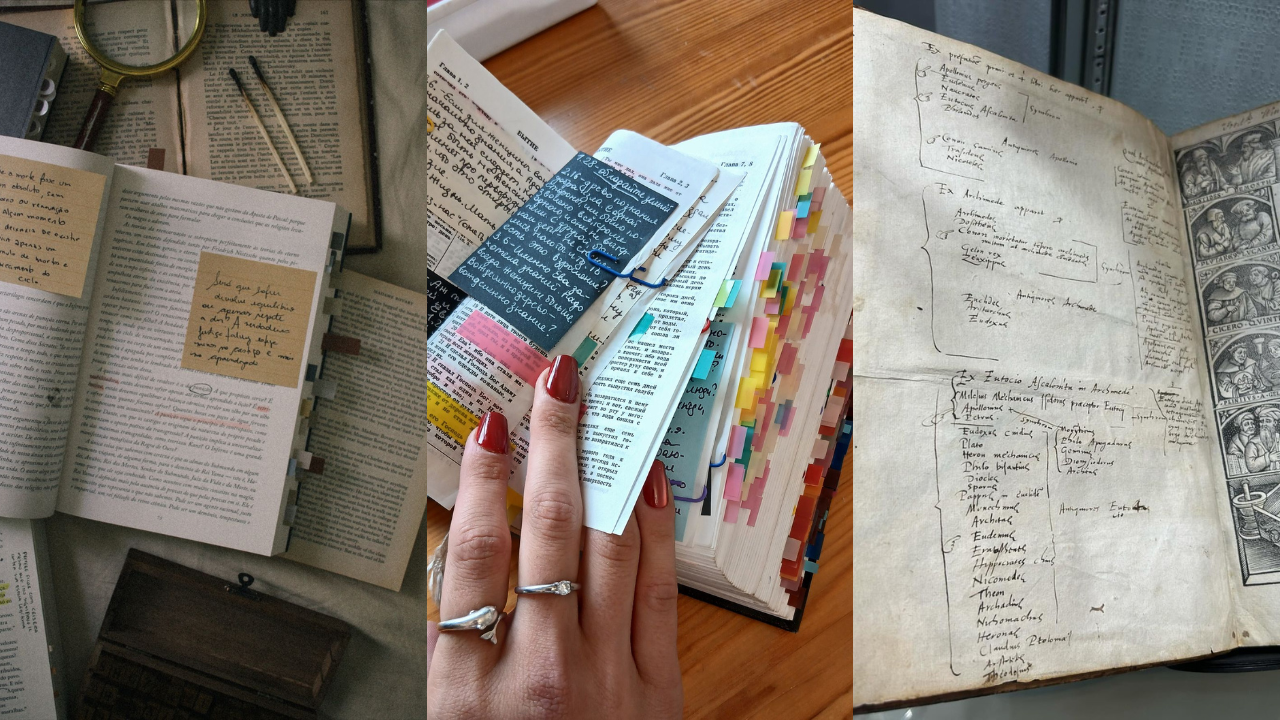
Is Writing In Your Books Actually Ruining Them? Readers Have Been Fighting About This For Centuries
- Authored by: Girish Shukla
- Updated Aug 14, 2026, 14:00 IST
One reader flinches at a pencil near a page; another pities a spotless book. The centuries-old fight over writing in your books, and why the purists are the newcomers.
Is Annotating A Book Ruining It Or Making It Truly Yours? (Picture Credit – Pinterest)
Hand a certain kind of reader a pencil and gesture at an open book, and watch them flinch, as though you had suggested keying a stranger’s car. To another reader, the flinch is the strange part, and a spotless book is a faintly sad thing, a conversation that never quite happened. The quarrel over whether you may write in your own books is remarkably old, and one side of it has a surprise coming. The pristine-book purists, for all their air of tradition, are the historical newcomers.
The Readers Who Wrote Back
For most of the life of the book, readers wrote in them all the time. The habit of annotating runs back two thousand years, to the glosses scholars pencilled beside ancient manuscripts, and the margins of medieval books positively teem with life, with doodles, snails and the famous killer rabbits. The poet Samuel Taylor Coleridge was such a compulsive annotator that friends lent him their books hoping to get them back thick with his notes, which were later published across five volumes and read as criticism in their own right. He gave us the very word for it, marginalia, around 1819. Reading was often a social act, and people filled a favourite book with notes before passing it to a friend. Jane Austen scribbled in her own volumes, and John Adams bickered in the margins with authors long dead. Mark Twain scrawled furious arguments at dead authors. Voltaire composed in the margins while imprisoned. Sylvia Plath’s heavily annotated copy of ‘The Great Gatsby’ is now a treasured literary artefact. And the most famous problem in the history of mathematics began as a margin note: in 1637, Pierre de Fermat jotted in his copy of Diophantus’s ‘Arithmetica’ that he had found a marvellous proof, but the margin was too narrow to hold it. That single scribble kept mathematicians busy for 358 years.
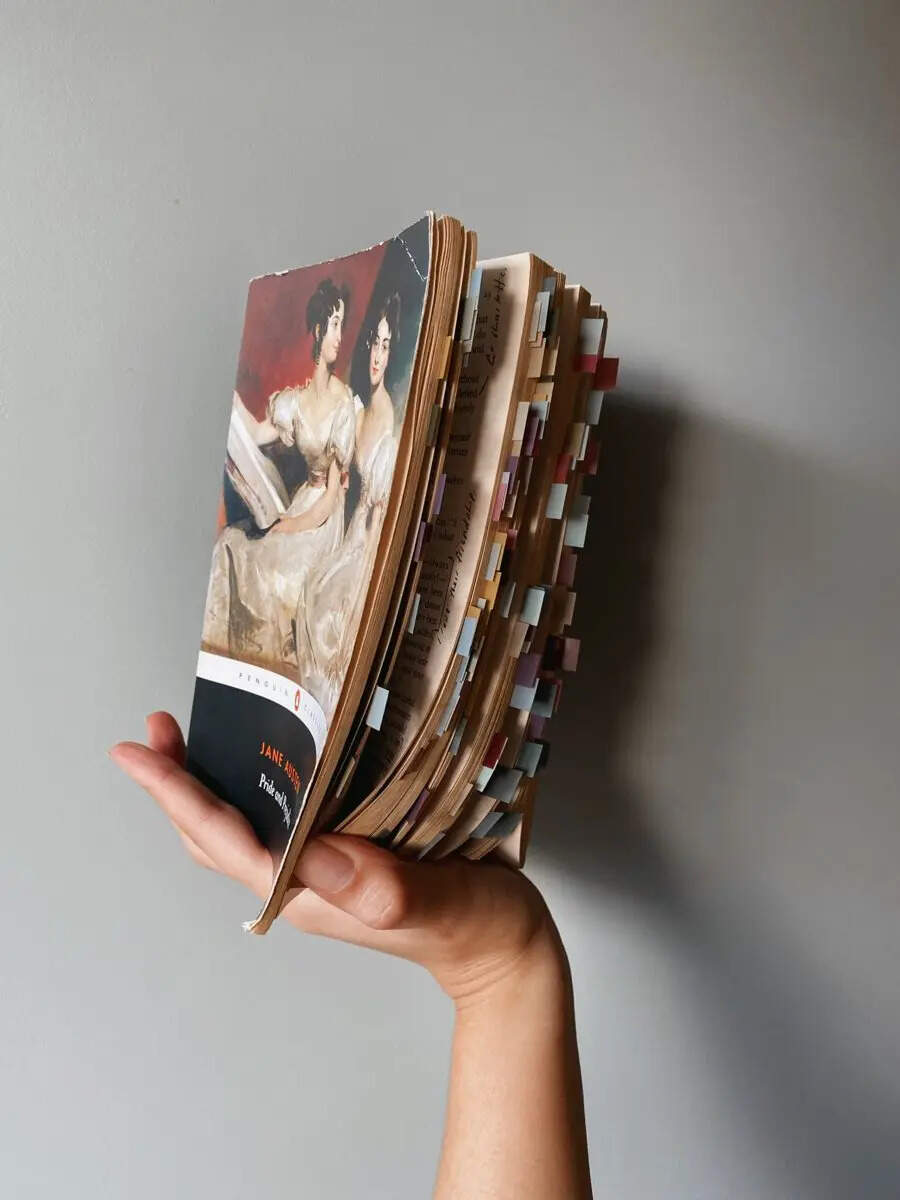
Writing In Books Feels Wrong To Some Readers, But History Says Otherwise (Picture Credit – Pinterest)
When the Book Became Sacred
So where did the taboo come from? The shift is easy enough to date. Once the printing press made books cheap and abundant, they stopped being heirlooms to be improved and handed down, and the marked-up book slowly began to look like a damaged one instead. By the 1800s, writing in books had become unusual, and the clean, untouched copy took over as the ideal. The collector’s market then hardened the feeling into a rule, since a spotless first edition can be worth many times a scribbled one. On the question of money, the purist is simply correct. A pencil does lower the resale price. But the argument was never really about money.
Two Ways of Loving a Book
The writer Anne Fadiman put it best in her essay collection ‘Ex Libris’, dividing book lovers into two tribes. Courtly lovers keep a book pristine out of reverence, never cracking the spine, never leaving a mark. Carnal lovers dog-ear the pages, underline furiously and break the spine flat, and love the book no less for it, only differently. Mortimer Adler made the carnal case decades earlier, in his 1940 essay ‘How to Mark a Book’, where he insisted that marking a book is not an act of mutilation but of love, and that active reading is simply thinking made visible on the page. Modern research on attention and memory tends to side with him. The fight has flared up again in our own time across Bookstagram and the wider online reading communities, where a whole culture of colour-coded tabs, highlighters and margin notes has bloomed, even as other readers still wince at a cracked spine or a stranger’s pencilled notes in a secondhand paperback.
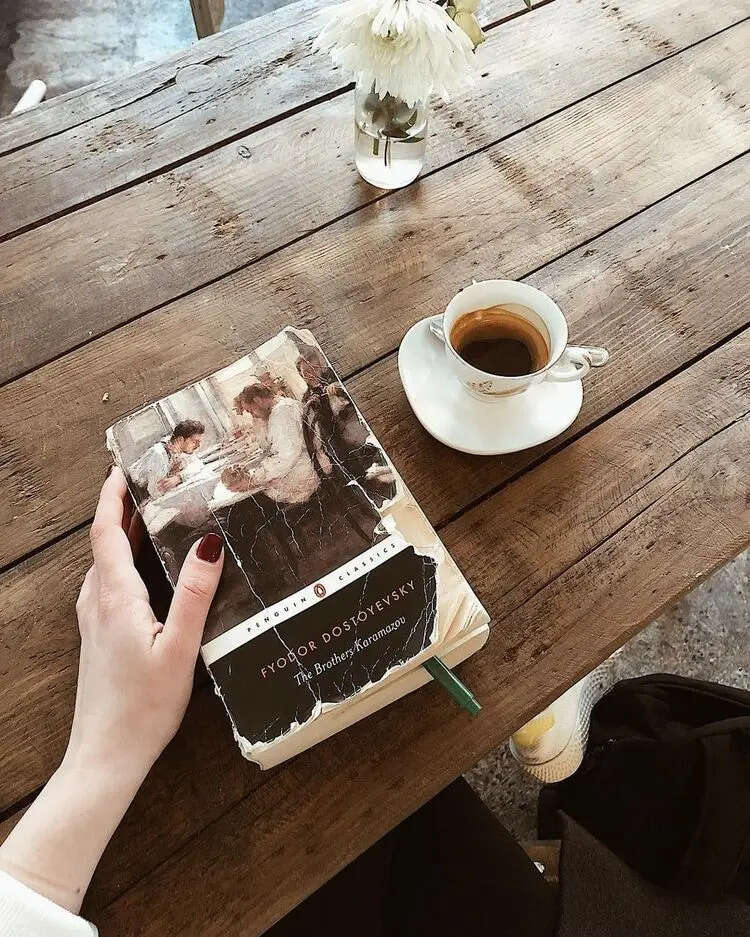
Should Books Remain Pristine Or Be Written In? An Age-Old Reading Debate (Picture Credit – Pinterest)
So, does writing in a book ruin it? Only if you believe a book is an object to be preserved rather than a mind to be met. A clean copy keeps its resale value. A marked one keeps something rarer, the record of a reader actually thinking, the precise spot where a life ran into a sentence and had to answer back. From Fermat to Plath, the readers who wrote in their books left the very marks that made them matter more, not less. The honest truth is that the best thing you can do to a book is use it hard. The only copy you can genuinely ruin is the one you were too timid ever to open.
Latest News


Seasoned Editor and Author with over a decade of experience in literary journalism, author interviews, and publishing trends. Known for curating impac… View More
Original source: https://www.timesnownews.com/lifestyle