Why Young India Is Turning to Ambedkar
Seventy years after his death, the man who drafted the Constitution has become young India’s most current writer. Why is a generation born long after 1947 reaching for Ambedkar now?
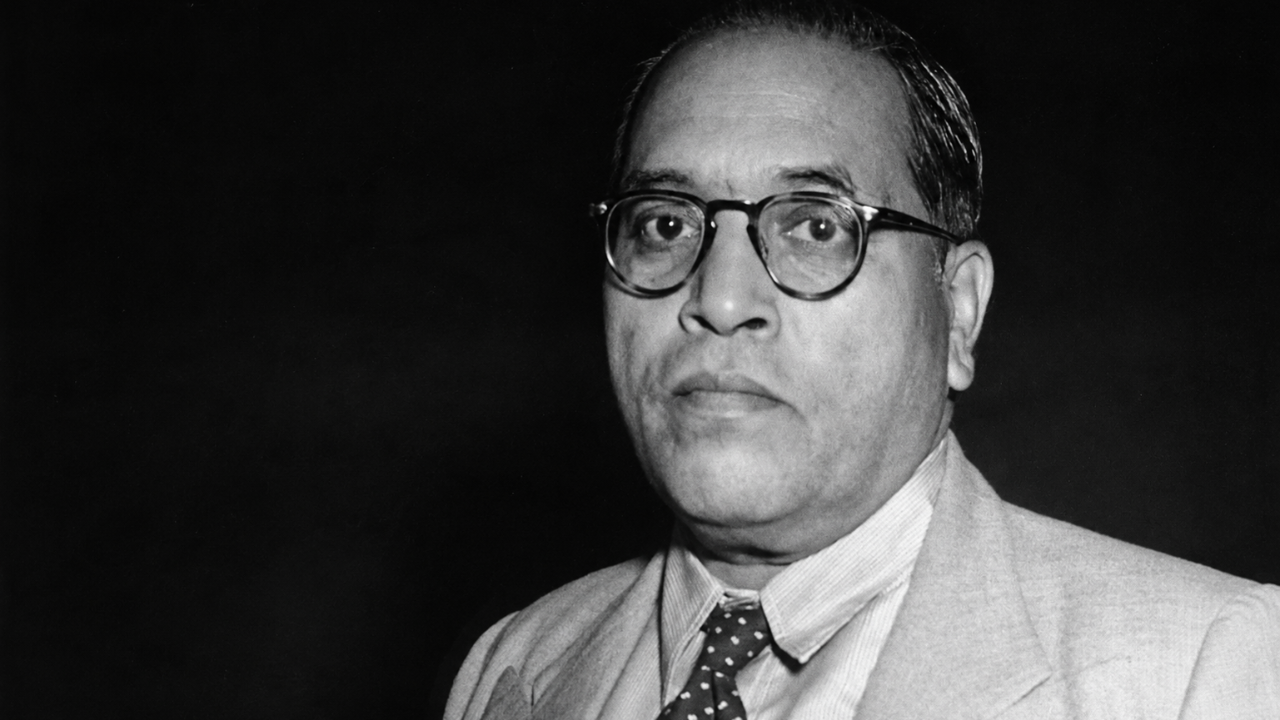
Look at the crowd at almost any student protest now, or scroll through a young Indian’s feed, and one face keeps returning. The blue suit, the heavy spectacles, the book held firmly in one hand. Seventy years after his death, B.R. Ambedkar has become the most current voice of a generation born long after the freedom he helped shape. On Independence Day that belongs to the young as much as to anyone, the question worth asking is why a man from another century has become their contemporary.
A Writer, Not Just a Statue
For decades Ambedkar was honoured mostly as a monument, a statue at a crossroads, a name attached to the Constitution, admired far more often than actually read. That is changing. Young readers are turning to the writer himself, and publishers have noticed. New editions of his work are everywhere, from the fierce, foundational ‘Annihilation of Caste’ to fat collected volumes and slim young-adult introductions aimed squarely at teenagers, issued across English, Hindi, Marathi and Tamil. Short autobiographical fragments such as ‘Waiting for a Visa,’ his own record of what untouchability felt like from the inside, now circulate widely among students who had only ever met him as a chapter heading. Navayana’s annotated edition of ‘Annihilation of Caste’, carrying Arundhati Roy‘s long introduction, helped move him from movement bookshops onto mainstream tables, and Shashi Tharoor’s 2022 biography ‘Ambedkar: A Life’ brought a fresh wave of readers to his life. Social media has done the rest, turning his sharpest lines and his likeness into things a teenager shares as easily as a favourite song.

Annihilation of Caste
The Life Behind the Icon
Part of the pull is the life itself, which is far stranger and angrier than the marble suggests. Ambedkar was born in 1891 into a Mahar family, then treated as untouchable, and spent his childhood being made to sit apart at school and denied the water other children drank freely. He answered that humiliation with an almost superhuman effort of study, earning doctorates at Columbia in New York and studying at the London School of Economics, becoming one of the most educated Indians of his age. He returned to fight caste at its root, chaired the committee that drafted the Constitution, and near the end of his life, in 1956, led hundreds of thousands of followers out of Hinduism into Buddhism in a final rejection of the hierarchy that had marked him. Young readers meet, in other words, not a saint behind glass but a brilliant outsider who forced the door open. That story travels.
Ambedkar Turned Childhood Humiliation Into Scholarship, Law, Resistance and Liberation
Words That Fit the Present
The deeper reason, though, is that Ambedkar reads like a writer about now. He wrote about equality, dignity and the distance between a nation’s promises and its practice, and to a generation anxious about fairness, jobs and whether the system is quietly rigged, his sentences land like commentary rather than history. His famous instruction, educate, agitate, organise, is a rallying cry built for a protest age. His warning that political freedom counts for little without social equality speaks straight to young people who suspect the country’s guarantees have not reached everyone alike. Standing before the Constituent Assembly in 1949, he warned that the country was entering a life of contradictions, political equality laid over deep social and economic inequality, and asked how long it could last. Young readers hear that as their own question. The Constitution he drafted has itself become a protest text, its Preamble read aloud at demonstrations, its promise of liberty, equality and fraternity turned back on the present as a demand rather than a decoration. It is no accident that Jai Bhim is now among the loudest cries at any student gathering.
A Photograph Of Dr BR Ambedkar Displayed At Jantar Mantar In New Delhi On July 20.
A Blueprint, Not a Memory
Ambedkar remains the beating heart of Dalit identity and pride, but his readership is plainly widening beyond it. Students of every background now turn to him for his arguments about democracy, rights and self-respect, and for a plainness that makes hard ideas feel usable. He offers something the older freedom-struggle canon sometimes cannot, a plan for the India still being built rather than nostalgia for the one already won. Where other founders are quoted, Ambedkar is argued with, underlined and applied to the day’s headlines. For a restless generation, that difference is everything.
Independence Day tends to look backwards, to the freedom secured in 1947 and the figures who secured it. What young readers seem to have found in Ambedkar is the opposite gaze. He was writing, always, about the freedoms that were not yet finished, the equality still owed and the dignity still withheld. That is why they turn to him now, not to salute a hero behind glass, but to borrow a manual for the work that remains. The other founders told India who it had been. Ambedkar told it who it still had to become, and to a twenty-year-old in 2026, that is by far the more useful book.
Original source: https://www.timesnownews.com/lifestyle