Parsi Cuisine’s ‘Khaatu-Meetho-Teekho’ Dynamic is Rooted in a Rich History of Culinary Fusion
- Authored by: Aalokitaa Basu
- Updated Aug 16, 2026, 12:32 IST
The deeply distinct Parsi cuisine is actually a shining beacon of a cuisine that was ‘glocal’ right at its inception, instead of growing to accommodate worldly influences into its palette.
Parsi cuisine is authentically ‘glocal’, yet deeply nostalgic (Credit: AI)
There’s something utterly distinct about stepping into a Parsi eatery. It could be a sprawling restaurant, an open-air cafe perched on the side of the street or a quaint yet bustling bakery – setting foot in feels quite a bit like being in a time capsule, having you feel the nostalgia of a culture that isn’t even necessarily yours.
Minor calendar variations between the Shahenshahi and Gregorian booklets, have final opinion on the date of the Parsi New Year in 2026, divided between August 15 – coinciding with Independence Day, or August 16. However, any day of the year is as good to take a deep dive into authentic Parsi flavours, which go far beyond just Dhansak – though its evergreen popularity can never be contested.
At its core, the Parsi cuisine represents a union of the rich culinary traditions of Persian and Indian flavours, born of a trying past for the community, dating back to the 7th century. Dr. Rukshana Billimoria in her study, A Unique Odyssey of Parsi Cuisine: from Persia to Mumbai, traces how Persians escaped the rampant religious persecution of their then-homeland, traversing their way to India. A benevolent Hindu prince granted them the permission to establish their Zoroastrian community in the country. ‘Parsis’ is a descendent version of the term ‘Persians’, who established their base primarily along the western coast of the country, namely what constitutes modern-day Gujarat, Maharashtra and Goa. Dr. Billimoria also asserts that owing to these locations, Parsi cuisine also grew to be nurtured by British and Portuguese influences of cooking, adding further weight to the ‘glocal’ claim. Take the Lagan Nu Custard for instance which is an authentic improvisation on the English custard dessert, dressed with dry fruits. The same can be said about the Chapat, which stripped down to basics is a pancake served with tea.
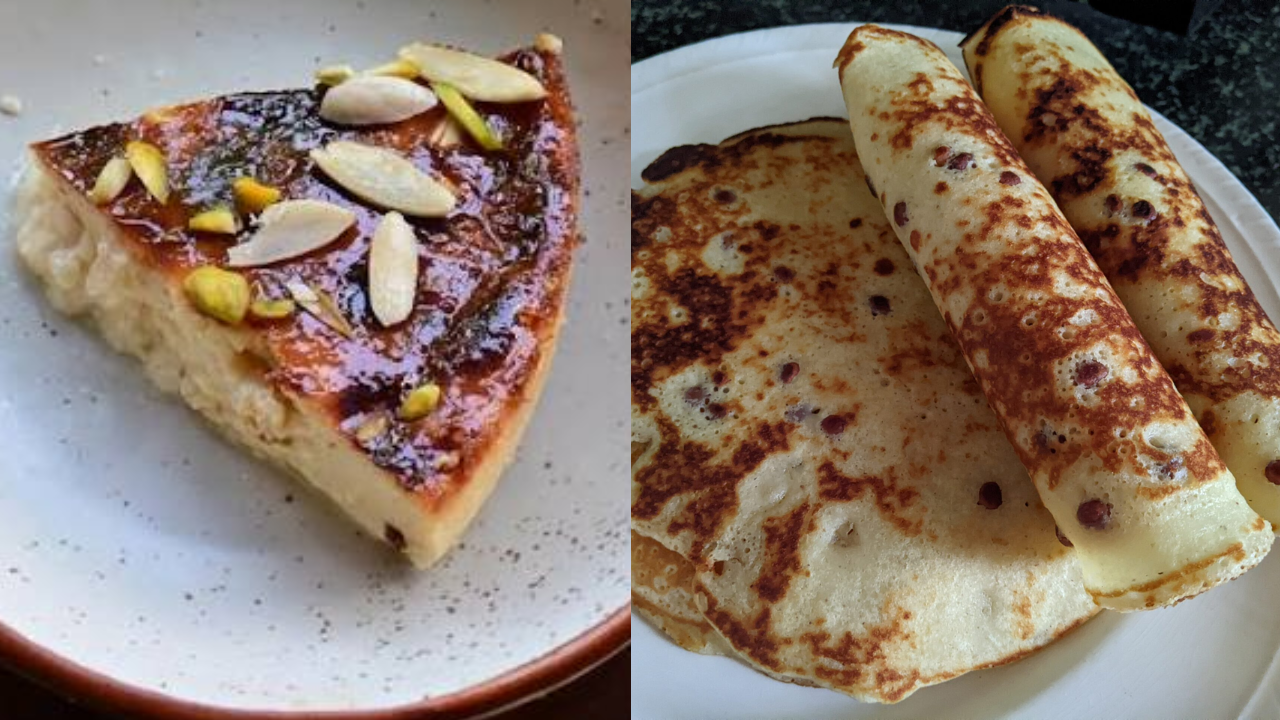
Lagan Nu Custard; Chapat (Credit: Instagram/the_bong_gastronomist, The Tiny Taster)
Not many know that the food traditions the Persians came to the country with were largely vegetarian, before they eventually took to meat for survival. Additions like fish nestled themselves into the legacy only after the Parsi’s settled into the country – fish-based delicacies like Patra Ni Macchi and Saas Ni Macchi come to mind.
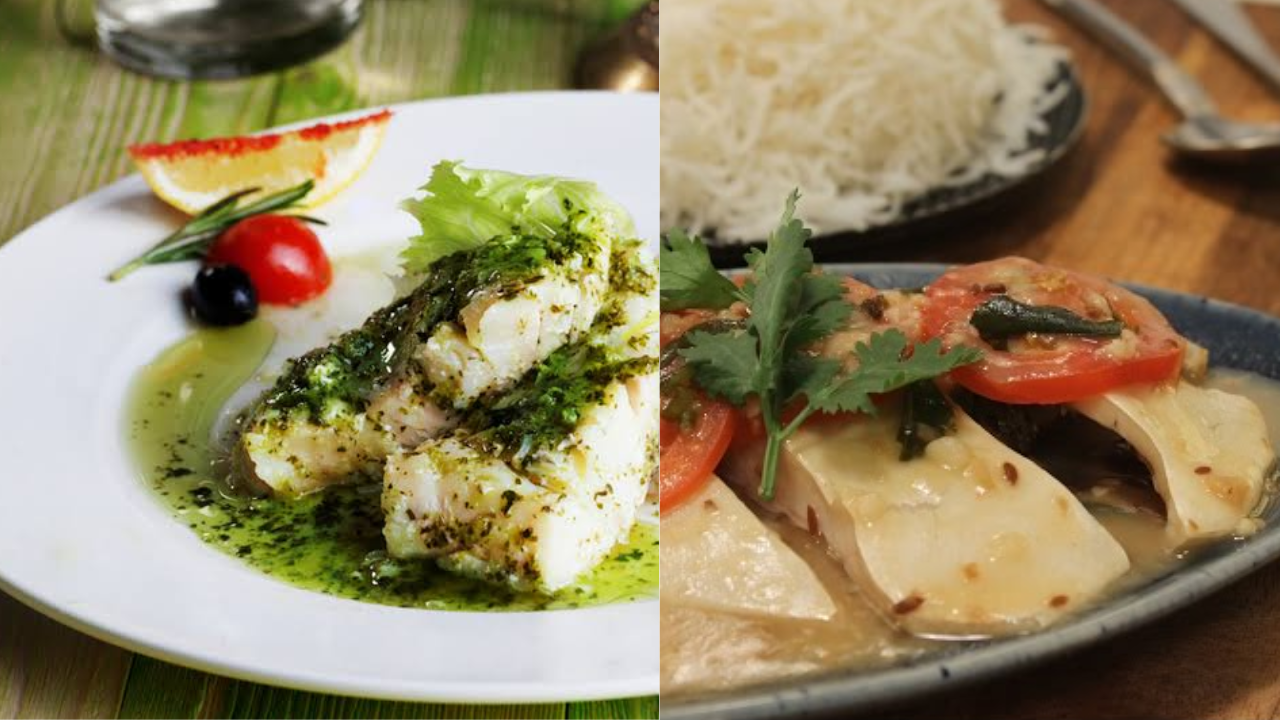
Fish-based delicacies of Parsi cuisine (Credit: Two Sleevers, YouTube/Sanjeev Kapoor Khazana)
However, there is one flavour dynamic in this mouthwatering cuisine and that is the khaatu-meetho-teekho flavour profile. The abundant use of vinegar, jaggery and barberry make up the ‘khaatu’ (khatta – sour) and the ‘meetho’ (meetha – sweet) while the ‘teekho’ (teekha – spicy) comes from a heavy reliance on spices, both mainstream and niche; think the Parsi dhana jeera which is a simple blend of coriander seeds and cumin or conversely, the Parsi garam masala which is a unique blend of cloves, cinnamon, nutmeg and peppercorn.
The stakes stand severely upped however, with the iconic Parsi Dhansak masala. This blend – a heady mix of chillied, coriander seeds, cumin seeds, curry leaves, turmeric, cinnamon, bay leaves, cloves, black peppercorns, mance, black mustard seeds, poppy seeds and vegetable oil – is of course slathered on to the Dhansak, but is also a master blend used in several other dishes. Then there is the Parsi Sambhar masala which tastes nothing like what your taste buds think when you hear ‘sambhar’. It’s a rustic blend of black mustard seeds, chilli powder, cinnamon, black peppercorns, cloves, turmeric, fenugreek seeds and sesame oil – incidentally a blend that also touches the flavour-wrapped Dhansak.
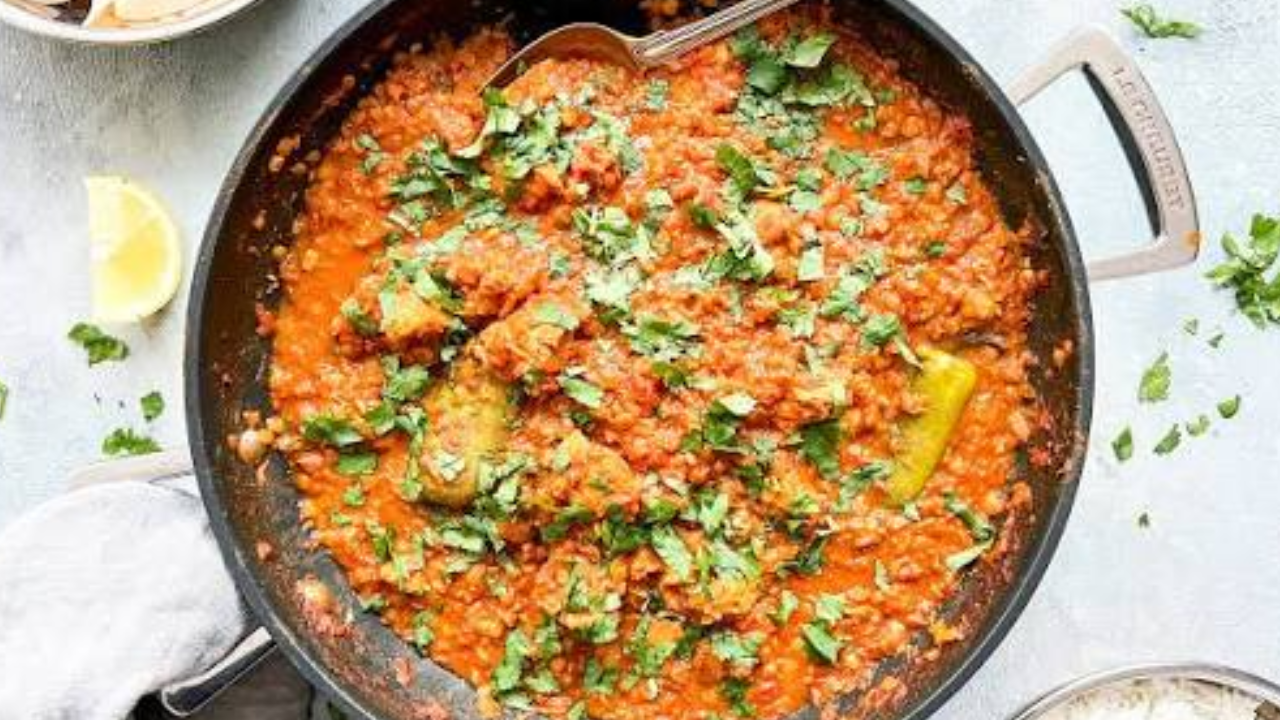
The iconic Parsi Dhansak (Credit: Daffodil Kitchen)
A Parsi pantry can be found typically stocked with Zafferan (saffron), Zard Chubeh (turmeric), Gol Ab (rose water) and Shambalileh (fenugreek). Nanaa (dried mint), Somagh (sumac), Limoo Amani (dried limes), Rob-e-Anar (pomegranate molasses) and Kashk (dried buttermilk) make for the more elevated and niche options. If you’re someone who is just starting out their exploration of the Parsi cuisine, but at home, the Advieh or the Persian mixed spice – made of nutmeg, rose petals, cumin, cardamom, coriander, cinnamon and black pepper – promises to become a staple roulette of flavours in your daily experiments.
It’s a world of flavours to lose your palette in, as the legacy churns out robust yet delicate dishes that are so deeply unique and an irreplicable part of the country’s vibrant culinary legacy.
Latest News


Aalokitaa Basu is a writer and Senior Copy Editor whose work explores the intersection of lifestyle, culture, beauty, wellness, and self-possession. H… View More
Original source: https://www.timesnownews.com/lifestyle