‘Islamic NATO’ Expands? Erdogan Hints Egypt Could Join Turkey-Saudi-Pakistan Pact
- Edited by: Ananya Varma
- Updated Aug 16, 2026, 08:32 IST
Turkish President Erdogan has suggested that Egypt may join the recently established Makkah Joint Defence Agreement, which currently includes Turkey, Saudi Arabia, and Pakistan.
This agreement focuses on collective defense and mutual deterrence, treating any attack on one member as an attack on all.
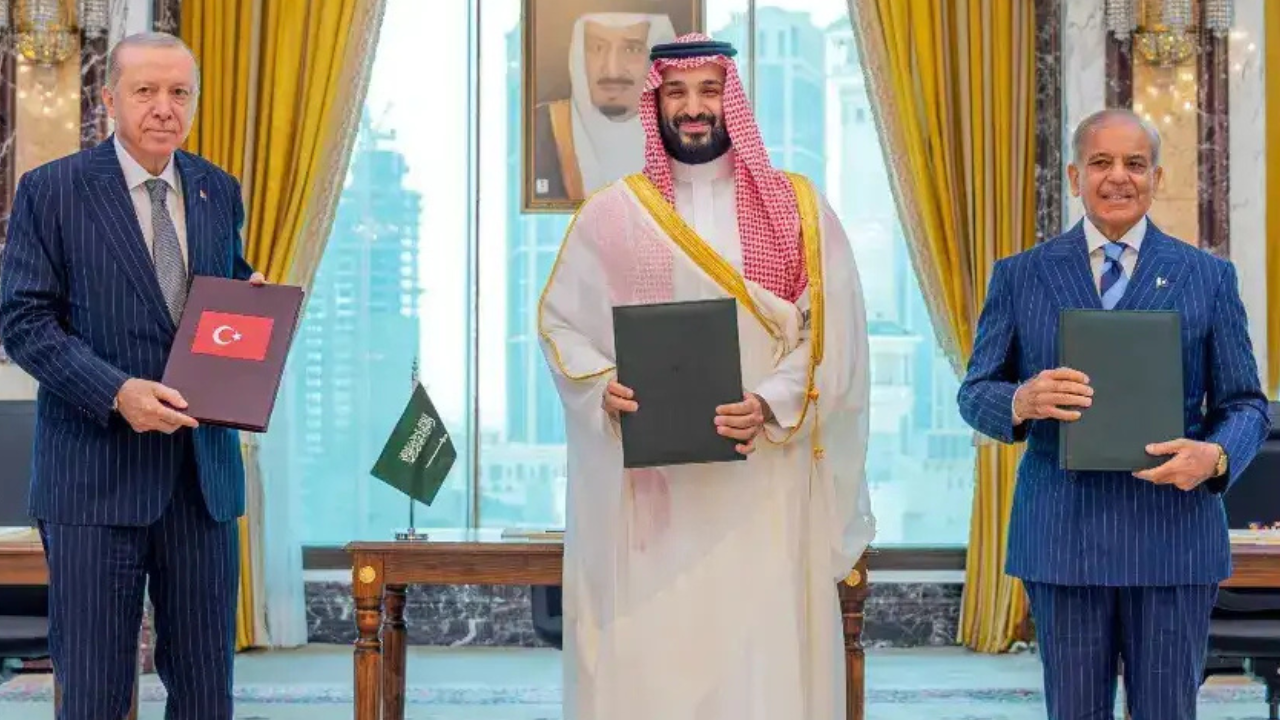
Egypt could become the next major power to join the newly formed Makkah Joint Defence Agreement, Turkish President Recep Tayyip Erdogan signalled, potentially expanding the emerging security bloc across South and West Asia. The landmark pact was signed in Mecca by Erdogan, Saudi Crown Prince Mohammed bin Salman and Pakistan Prime Minister Shehbaz Sharif, bringing the three countries together under a collective defence framework.
Speaking to Al Jazeera, Erdogan said bringing Egypt into the agreement could be a natural next step in efforts to strengthen regional stability.
Egyptian officials had participated in months of preparatory discussions with the three founding members before the Mecca summit, potentially paving the way for Cairo’s future accession to the alliance.
About the ‘Mecca’ Defence Pact
A joint statement by Pakistan, Saudi Arabia and Turkiye said the Makkah Joint Defence Agreement is based on shared strategic interests and longstanding defence cooperation. The pact commits the three countries to collective deterrence, with an armed attack against any one member to be treated as an attack against all.
The agreement also calls for deeper cooperation across defence and security sectors. Egypt’s possible entry could significantly widen the alliance’s strategic reach and give the emerging bloc greater weight in the region.
India is assessing the implications of the trilateral defence agreement for the country’s national security as well as regional peace and stability. At the heart of the agreement is a mutual defence commitment similar to NATO’s Article 5 mechanism. According to the pact, one of the key clauses is that an attack on one nation would be considered an attack on all of them.
Addressing the issue at a bi-weekly media briefing, MEA spokesperson Randhir Jaiswal said, “As far as this agreement is concerned, we are examining its implications both from the perspective of India’s national security and considerations of regional peace and stability.”
“India remains fully committed to safeguarding its national interests and will take all necessary measures in this regard,” he said.
Latest News


Ananya is a journalist with a strong grounding in breaking news and a deep-rooted passion for geopolitics. She has 6 years of experience in TV and Dig… View More
Original source: https://www.timesnownews.com/world