George Orwell Published Animal Farm On This Day In 1945 and Changed Political Satire Forever
- Authored by: Girish Shukla
- Updated Aug 17, 2026, 12:31 IST
George Orwell’s ‘Animal Farm’ turned a simple farm rebellion into an enduring warning about propaganda, power and corrupted ideals, proving why its political bite still feels disturbingly modern today worldwide.
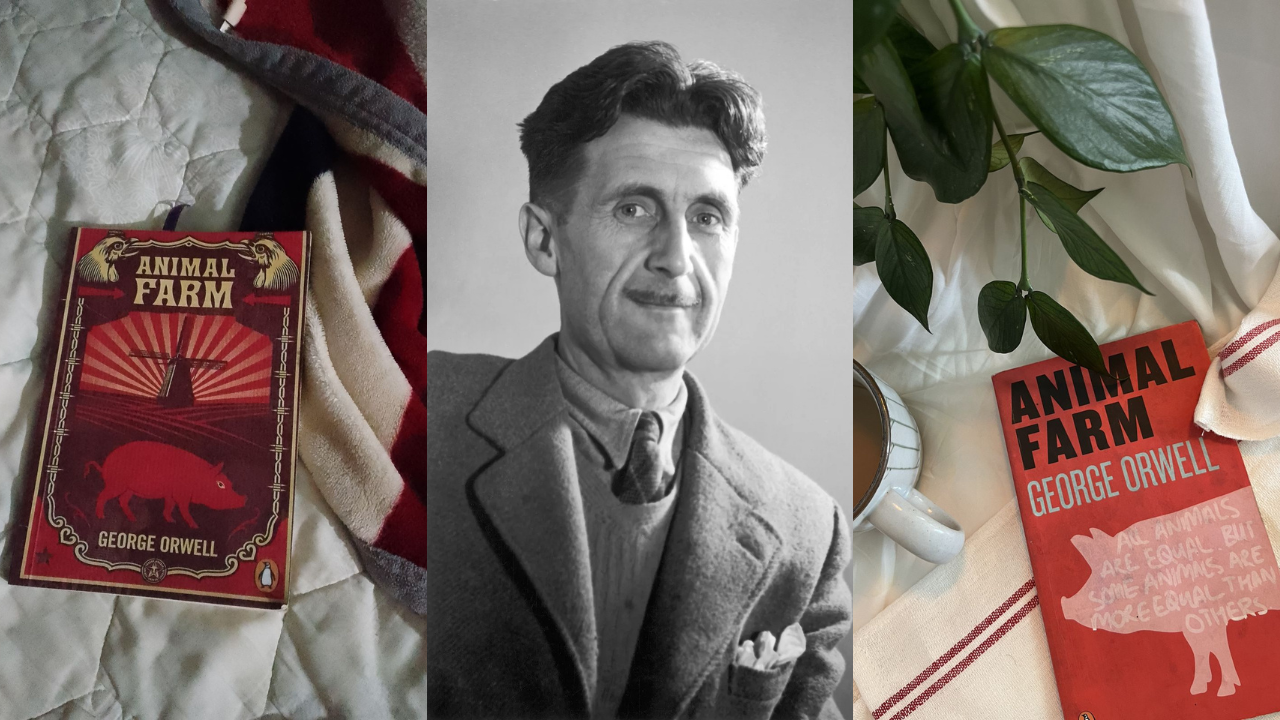
George Orwell’s Animal Farm Still Feels Like A Book Written For The Present (Picture Credit – Pinterest)
On 17 August 1945, a slim book about rebellious farm animals arrived in British bookshops. It looked deceptively simple, almost like a fable that might be handed to a child. Yet George Orwell’s ‘Animal Farm’ would become one of the twentieth century’s most enduring political satires, shaping the language through which generations understood propaganda, dictatorship and the corruption of revolutionary ideals. More than eight decades later, its warnings have lost remarkably little of their force.
Orwell wrote ‘Animal Farm‘ during 1943 and 1944, when Britain and the Soviet Union were wartime allies against Nazi Germany. That political context made the manuscript unusually awkward for publishers. Orwell’s allegory was unmistakably critical of the Soviet experiment and of Joseph Stalin’s transformation of revolutionary promise into authoritarian rule. Several publishers rejected it before Secker and Warburg finally released the book on 17 August 1945, initially printing 4,500 copies.

Animal Farm (Picture Credit – Pinterest)
At the centre of the story is Manor Farm, where animals overthrow their neglectful owner, Mr Jones, and attempt to establish a society built on equality. Their revolution begins with optimism. Rules are created, collective ideals are celebrated, and the old hierarchy appears to have been destroyed. Gradually, however, the pigs assume greater authority, with Napoleon consolidating power while the principles of the rebellion are quietly rewritten.
That transformation is what gives ‘Animal Farm’ its lasting brilliance. Orwell did not simply parody individual Soviet leaders or historical events. He demonstrated how political language itself can be manipulated until betrayal begins to resemble loyalty and inequality can be presented as the fulfilment of equality. The farm changes almost imperceptibly, one compromise at a time, until the society created to escape oppression begins reproducing it.
The simplicity of the novel was central to its power. Orwell compressed enormous political questions into a story that could be understood without specialised knowledge of Marxism, Stalinism or the Russian Revolution. Readers could recognise ambition, fear, manipulation and conformity even without identifying every historical parallel. That accessibility helped political satire move beyond the realm of intellectual argument and into popular culture.
Few political novels have contributed so many ideas to everyday language. The book’s altered commandments, its manipulation of memory and its portrayal of unquestioning loyalty became shorthand for political hypocrisy. Animal Farm demonstrated that satire could do more than mock those in power. It could explain the mechanisms through which power protects itself.
Its publication was also personally significant for Orwell. By the time the novel appeared, his wife Eileen had died unexpectedly only months earlier, leaving him to care for their adopted son. The professional breakthrough arrived during an intensely difficult period in his private life.
The success of ‘Animal Farm’, followed by ‘Nineteen Eighty-Four’ in 1949, established Orwell as one of the defining political writers of the post-war era. Together, the two books transformed his name into an adjective. “Orwellian” eventually came to describe political surveillance, propaganda and the distortion of truth far beyond the specific historical circumstances Orwell originally confronted.
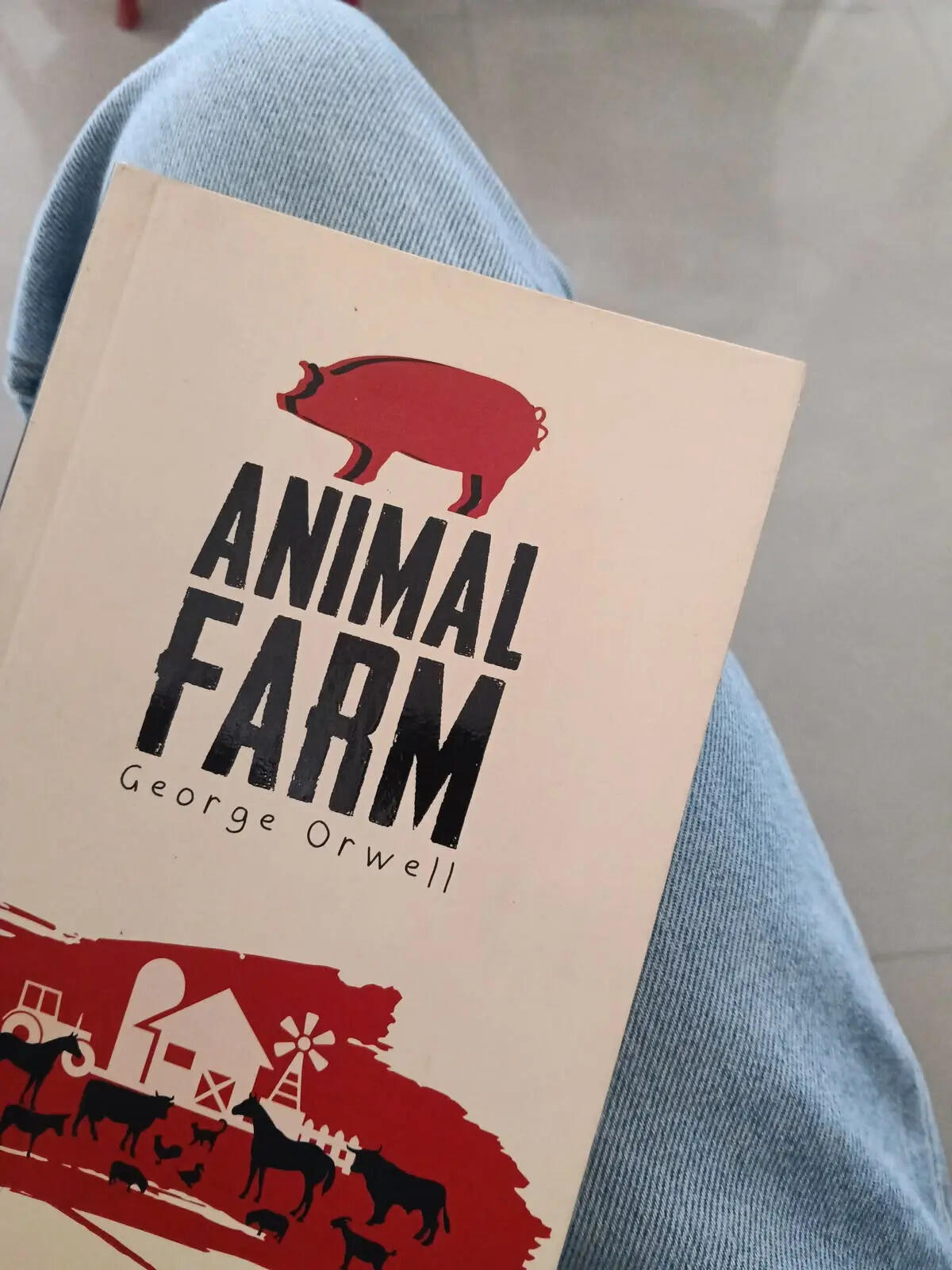
Animal Farm by George Orwell (Picture Credit – Pinterest)
What makes ‘Animal Farm’ endure, however, is not simply that history proved Orwell perceptive. It is that the novel understands something more unsettling about human institutions. Revolutions can begin with sincere ideals, leaders can convince themselves that privilege is necessary, and language can make obvious contradictions appear reasonable.
On 17 August 1945, George Orwell published a book about animals taking control of a farm. What he gave readers was something far larger: a compact vocabulary for recognising how power changes people, how truth can be rewritten and how easily freedom can disappear while everyone insists the original promises are still being honoured.
Latest News


Seasoned Editor and Author with over a decade of experience in literary journalism, author interviews, and publishing trends. Known for curating impac… View More
Original source: https://www.timesnownews.com/lifestyle