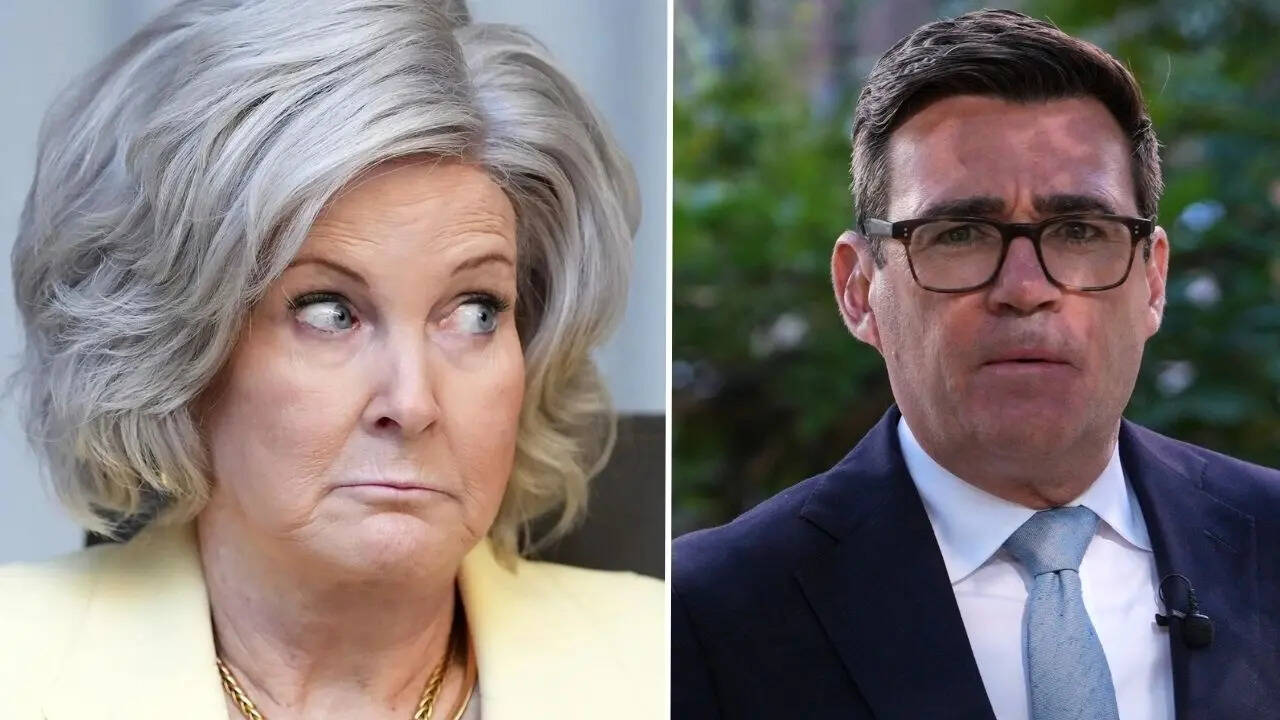
UK PM Andy Burnham Duped by Susie Wiles Imposter, White House Denies Hack
- Edited by: Rounak Bagchi
- Updated Aug 18, 2026, 00:07 IST
This incident highlights ongoing issues with impersonation using artificial intelligence, which has previously targeted other political figures
Susie Wiles and Andy Burnham.
The White House has denied that Chief of Staff Susie Wiles’ phone was hacked after UK Prime Minister Andy Burnham exchanged messages with someone pretending to be her. Burnham briefly communicated with the person shortly after becoming prime minister at the end of July, according to four officials cited by Politico.
It is not clear what was said in the messages. One source told Politico there were only “a few” texts and that they were “of no significance”.
Downing Street said: “We do not comment on national security matters.”
The British embassy in Washington raised the incident with the White House after the messages prompted concern that Wiles’ phone may have been compromised again.
However, a White House official said: “This incident had nothing to do with the Chief of Staff’s devices being hacked.” The FBI and White House investigated a similar incident in May last year, when prominent Republicans and business executives were contacted by someone impersonating Wiles.
Wiles told colleagues at the time that her personal mobile phone had been hacked, rather than her government device, according to the Wall Street Journal.
The earlier campaign involved both text messages and calls in which the impersonator used a voice that sounded like Wiles. Officials believed artificial intelligence may have been used to mimic her voice.
No one has been publicly identified or charged over that campaign.
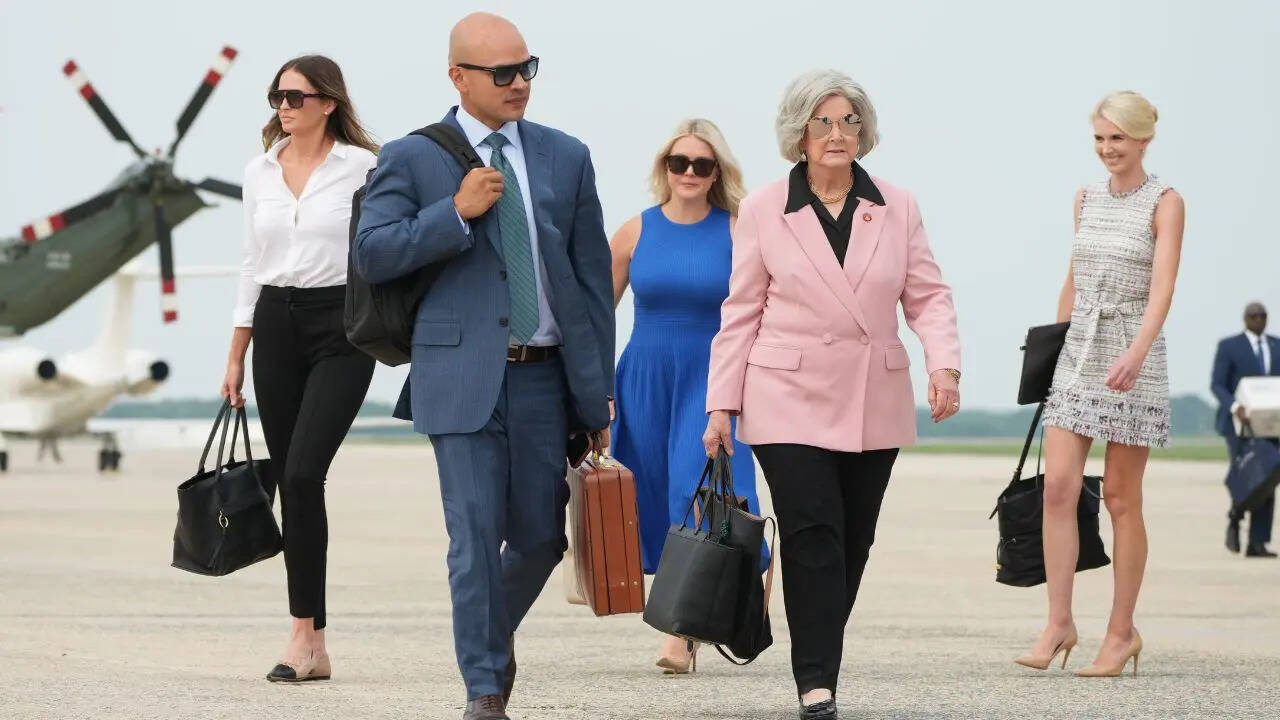
Susie Wiles (in pink) gets ready to board Air Force One.
Previous Impersonation Attempts
The latest incident comes amid growing concern over the use of artificial intelligence to impersonate senior political figures.
In 2024, then-UK Foreign Secretary David Cameron was deceived by someone pretending to be former Ukrainian President Petro Poroshenko, leading to text and telephone conversations.
Last year, US Secretary of State Marco Rubio was also impersonated by someone who used AI to mimic his voice and written communications. The Washington Post reported that the impersonator contacted three foreign ministers, a US governor and a member of Congress.
A State Department cable attributed the Rubio incidents to an actor whose “goal” was to gain access to information or accounts.
The latest incident involving Burnham and the fake messages has also renewed scrutiny of how senior US officials use personal devices for government business.
Trump administration officials have frequently used personal devices and the encrypted messaging app Signal for official communications.
Former national security adviser Michael Waltz was removed from that position after inadvertently including Atlantic editor Jeffrey Goldberg in a Signal group where senior officials discussed plans for air strikes against Houthi rebels in Yemen.
Latest News


Rounak is a journalist with over 7 years of experience covering geopolitical and international affairs. He has a keen interest in research and explain… View More
Original source: https://www.timesnownews.com/world