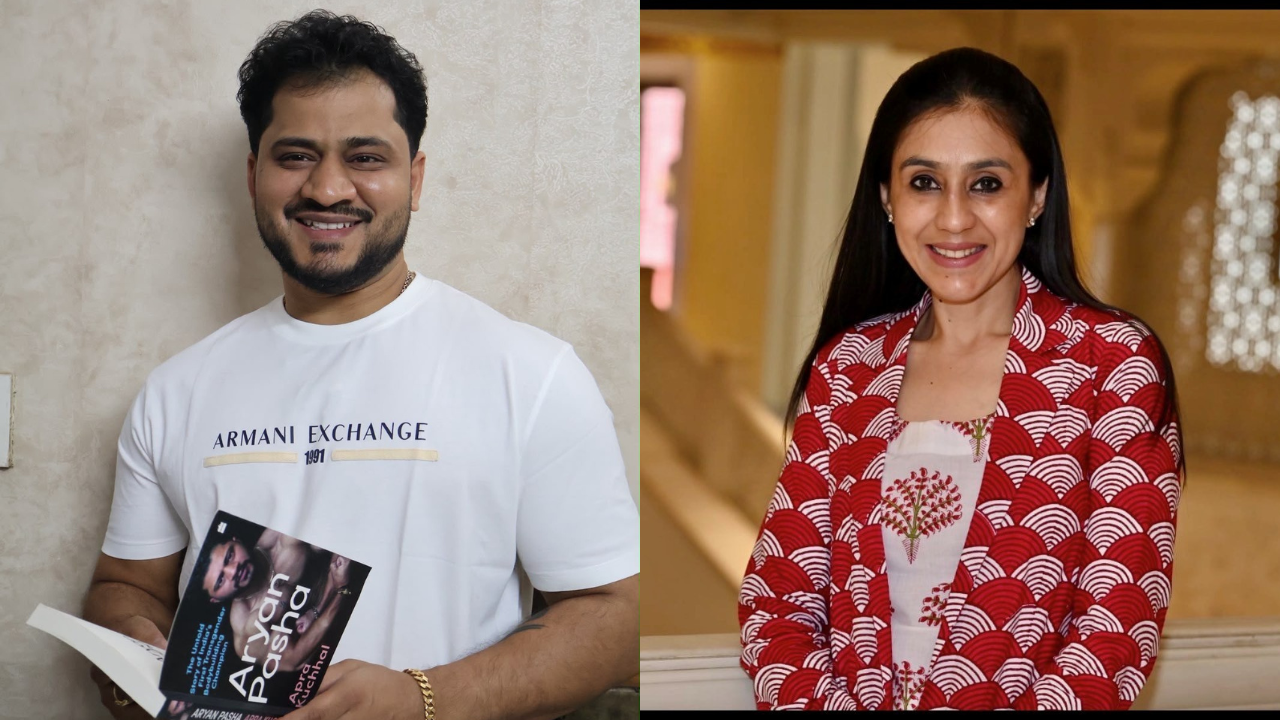
Exclusive: ‘I Wanted Readers To Meet Aryan, Not Just The Bodybuilding Champion,’ Says Author Apra Kucchal
- Authored by: Girish Shukla
- Updated Aug 18, 2026, 17:00 IST
Aryan Pasha and biographer Apra Kucchal speak candidly about identity, prejudice, masculinity, family and courage, offering a deeply human portrait of the champion beyond medals, labels and public milestones alike.
Exclusive: ‘I Wanted To Humanise Aryan’s Journey Rather Than Dramatise It,’ Says Author Apra Kucchal
Aryan Pasha’s story is often framed through milestones, bodybuilding, transition and breaking barriers. But in this exclusive conversation, both Aryan and his biographer Apra Kucchal move beyond the headlines. Aryan speaks candidly about identity, prejudice, family, masculinity and the loneliness of being “the first”, while Kucchal reflects on the responsibility of telling his life with honesty and care. Together, their responses reveal not just a champion, but a deeply human story of courage, dignity and self-belief.
Aryan Pasha Questions
1. Before you fought for recognition in bodybuilding, what was the first battle you had to win within yourself?
I was six when I told people I was a boy, and for years after that the world kept correcting me, my name, my uniform, my body. When enough people tell you you’re wrong about yourself, a part of you starts to wonder if they’re right.
Looking back, I think that was the hardest battle of all. Not the competitions or the prejudice, but holding on to the truth of who I was when everything around me insisted otherwise.
2. Was there a particular moment when you stopped seeking society’s permission to live as yourself?
The closest thing to a turning point was deciding to come out publicly instead of living quietly. I had the support to stay hidden and comfortable, and in many ways that would have been the easier life.
But I didn’t want to spend my life hiding. I knew not everyone would understand or accept me, and that was okay. The day I chose to live honestly instead of waiting for society’s permission, I felt free.
3. Bodybuilding is built around discipline, control and physical transformation. Did the sport help you reclaim a body that had once felt unfamiliar to you?
For many years, my body felt like something that had been handed to me. I lived in it, but it never really felt like mine. Bodybuilding was the first time I got to build it on purpose. Every kilo of muscle was a decision I made, not something that happened to me.
There’s something very honest about the gym. You put in the work, your body changes, and for once the reflection starts matching the person you’ve always known yourself to be.
4. What did entering a traditionally masculine sporting space demand from you that audiences never saw on stage?
The stage is about three minutes. Nobody sees the years before it. My body doesn’t produce testosterone the way a cis man’s does, so it responds slower. I had to work harder for results that came easier to the men standing next to me. There were days of spending six hours in the gym, month after month, while quietly carrying everything else that came with my journey.
There’s also a constant awareness you carry in those spaces that has nothing to do with lifting weights. You’re always reading the room, figuring out who’s safe, wondering if someone is going to question your presence. That part is invisible.
People see the physique and assume it came from discipline alone. The discipline was the easy bit.
5. Were there moments when prejudice came disguised as concern, advice or sporting regulation? How did you recognise and respond to it?
All the time. And that’s the hardest kind to deal with because it sounds reasonable. “We’re just protecting fairness.” “We’re worried about your safety.” “There isn’t a category for you—it’s not personal, it’s just the rules.”
But many of those rules were the prejudice. They were written in a way that left someone like me with nowhere to stand.
Over time, I learned the difference between genuine concern and a polite way of saying no. When people truly care, they ask what you need. When it’s prejudice, they tell you why what you need isn’t possible.
I stopped trying to convince the second kind. I just kept showing up until it became harder to ignore me than to make another excuse.
6. You have achieved something historic, but did becoming “the first” ever feel lonely rather than celebratory?
Yes. Being the first sounds great, but it often means there is no one ahead of you to guide you. You celebrate your achievements, but you also carry the responsibility of representing an entire community. That can feel isolating. I hope that in the future there won’t be just one transman body building champion making history. There will be many.
7. What did your family’s acceptance, resistance or silence mean during the most difficult years of your transition?
I was luckier than many trans men in India. I had the support that so many people never get, and I never take that for granted. But support doesn’t mean everything is easy.
For a long time, my father asked me not to come out publicly. It wasn’t because he didn’t accept me. He was scared of what the world would do, of the names people would call me and the way society treats people like us.
The turning point came during a long drive when I spoke to him about what trans men in this country really go through, and why staying silent was no longer something I could do. I think that conversation helped him understand that I wasn’t choosing a difficult life. I was choosing an honest one.
8. Has the public celebration of your success sometimes reduced you to your gender identity rather than recognising you as an athlete?
Yes, and it’s a strange thing to feel because it usually comes from a good place. I’m almost always introduced as a transgender bodybuilder, never just a bodybuilder. The trans part comes first, and the athlete part often comes second, if at all.
I understand why. That’s the historic part of my story. That’s what makes the headline. But I also spent years training six hours a day. I earned my place on that stage as an athlete.
Sometimes, being seen mainly as a symbol quietly takes attention away from the work behind it. I want both things to be true that being trans is an important part of who I am, and that I’m a serious competitor.
9. What practical barriers still prevent transgender athletes in India from training, competing and building sustainable careers?
Start with the basics. There’s no category for us in most competitions, so you either compete against cis men where the field isn’t level in your favour or you don’t compete at all. Hormone therapy and surgeries cost money and aren’t reliably covered, so the sport becomes something only the relatively privileged can even attempt. There’s almost no institutional support: no federations behind you, no sponsors, few coaches who understand a trans body. Many of us can’t hold down a stable job and train seriously at the same time, and there’s no safety net if it doesn’t work out. Underneath all of it is the everyday discrimination that makes even walking into a gym feel like a risk for some people. Talent was never the barrier. The infrastructure is.
10. Was there anything you revealed during the writing of the book that you had never previously said aloud?
Yes, there were many things I had never spoken about before. In earlier conversations and interviews, I mostly spoke about my transition and my journey in bodybuilding, but I kept many parts of my life private. I never really spoke about my relationships, my closest friends, or allowed people a glimpse into my family and the people who shaped me.
For this book, I decided to open those doors. I wanted anyone reading it to see the complete picture not just the athlete or the person who made history, but the human being behind it all.
While sharing my story with Apra and later reading it on these pages, I felt like I was living those moments again. The difficult ones, the beautiful ones, the people who stood by me, and the parts of myself I had kept quietly protected for years.
It was not always easy to revisit those memories, but it felt honest. I hope readers don’t just know my journey they feel it.
I am grateful to Apra for the trust and patience with which she approached my story. She didn’t just document my journey; she took the time to listen to the people around me as well. She spoke to my family, my friends, and the people who have been part of my life, and brought together different perspectives with honesty and balance. She gave space to every voice while still allowing my story to remain my own.
11. What would you say to a young person who recognises themselves in your story but does not yet feel safe enough to speak?
Firstly, you don’t owe anyone your story before you’re ready to tell it. Staying safe isn’t the same as hiding, and there’s no medal for coming out into a situation that will hurt you.
Survive first. Wait until you’ve got some ground under your feet: people you trust, a bit of independence.
What I’d want you to hold on to is that the discomfort you feel now is not a life sentence. It felt permanent to me too, and it wasn’t.
You are not broken, and you are not alone, even on the days it feels exactly like both. Your time will come and when it does, you’ll know.
11. Do you feel India is becoming more accepting, or merely more willing to talk about transgender lives?
Those aren’t the same thing, and we’re much further along on the second than the first. There’s more conversation now, more visibility, a court judgment or two and that matters, genuinely.
But talk is cheap and acceptance is expensive. A trans man can be on a magazine cover and still struggle to rent a flat, get a job, or walk into a gym without stares.
Representation has raced ahead of reality. I’ll believe we’re becoming accepting when a trans kid in a small town has the same ordinary options as anyone else—not applause, just options.
We’re talking more. We’re not yet living differently enough.
12. What is the greatest misconception people continue to hold about strength, masculinity and transgender men?
That masculinity is something you’re born with and either have or you don’t. I built mine slowly and deliberately, in the gym and in life and that doesn’t make it any less real.
People often see a trans man as someone trying to become something he isn’t, or as a lesser version of a “real” man. But being a man has never been about just one thing. It’s about how you live, how you treat people, and how you stand by yourself and others.
Having to question and build my own understanding of masculinity probably made me think about it more deeply than many people ever have to. And strength was never just about the body. It’s about holding on to who you are, especially when it isn’t easy.
13. When people finish your biography, what do you hope they understand about you beyond the labels of champion and trailblazer?
That beneath all the labels, there is just a person someone who was scared, stubborn, and trying to figure things out, like everyone else.
“Champion” and “trailblazer” are kind words, but sometimes they turn you into an idea instead of a person. I’m not a symbol or a statue. I’m a man who wanted something very ordinary to live in his own body and be seen as himself.
I did difficult things to get there, but I was never made of iron. I had doubts, fears, and moments when things felt hard.
If someone finishes the book thinking, “he was just a human being who refused to give up on himself,” that would mean more to me than anything else. The trophies are the least interesting part of the story.
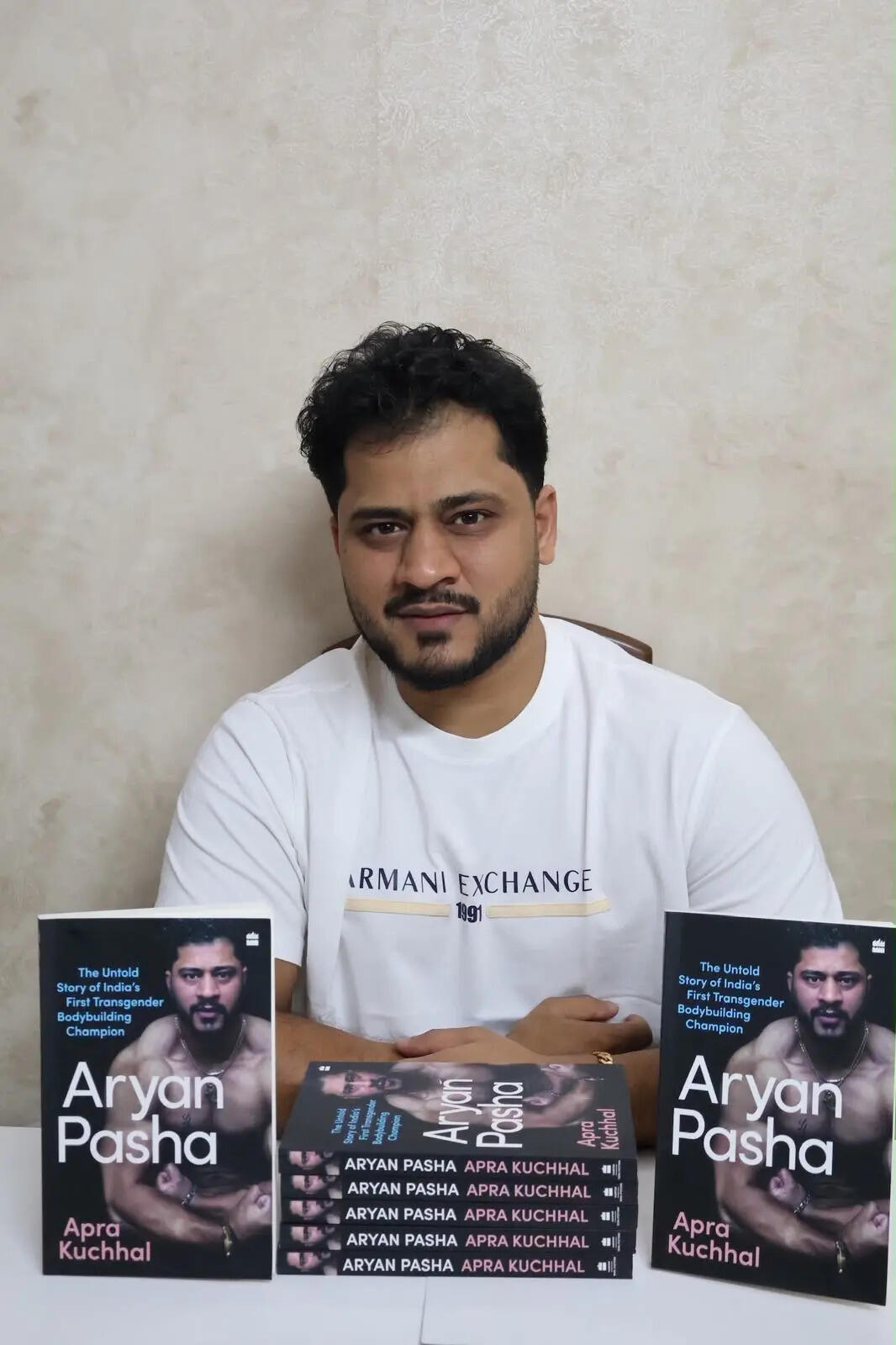
Aryan Pasha
Apra’s Responses
1. What made you realise that Aryan’s life required a full biography rather than a profile centred only on his sporting achievements?
At first, Aryan’s story appeared to be about a bodybuilder breaking barriers. But the more time I spent with him, the more I realised that bodybuilding was only one chapter of a much larger story. His victories on stage made headlines, but what fascinated me was everything that happened before the medals the years of confusion, self-discovery, rejection, resilience, and the quiet determination to build a life on his own terms. A magazine profile could have celebrated an achievement; a biography allowed me to understand the human being behind it. I wanted readers to meet Aryan, not just the body building champion.
2. How did you earn the trust necessary to write about experiences involving identity, rejection, physical transformation and family pain?
Trust was never something I expected to receive automatically. It came through time, honesty and listening without judgement. Many of our conversations were not about the book at all; they were simply about life. I never approached Aryan with the intention of extracting dramatic and juicy stories. Instead, I wanted him to know that I was interested in understanding him as a person. Once he realised that I wasn’t looking for sensational moments but for the truth of his journey, he became increasingly open. That trust also came with responsibility, because every story he shared carried a part of his life that deserved utmost care, sensitivity and respect.
3. Where did you draw the line between honest storytelling and protecting parts of Aryan’s life that were not yours to expose?
For me, that line was always very clear. Just because I knew something about Aryan’s life didn’t mean it belonged in the book. I kept asking myself one question: Does this help readers understand his journey, or does it simply satisfy their curiosity?
If a personal experience helped explain who Aryan is, the challenges he faced, or the choices he made, then it had a place in the story. But there were also things that were deeply private either his own or involving people close to him that didn’t need to be made public. Those were not my stories to tell.
I believe a biographer’s responsibility is not just to be truthful but also to be respectful. A person’s life can be told honestly without exposing every private moment. In fact, I think knowing what to leave out is just as important as knowing what to include
4. Did writing the book challenge any assumptions you previously held about gender, courage or social acceptance?
Absolutely. Like many people, I used to think that once someone finds the courage to live as their true self, acceptance eventually follows. Writing Aryan’s story made me realise that it isn’t always that simple. You can be completely certain of who you are, have legal recognition, and still face misunderstanding, prejudice, or rejection.
It also changed the way I think about courage. Before this, I associated courage with big, life-changing decisions. Aryan showed me that real courage is often much quieter. It’s choosing to step out into the world every single day, knowing you may be judged or misunderstood, and still refusing to hide who you are. That’s what I saw in Aryan throughout his journey, and it left a lasting impression on me.
5. How did you avoid turning Aryan’s life into either a tragedy narrative or a simplistic story of triumph?
For all of us life is rarely one thing, it’s a combination of many things. Aryan’s story includes pain, but it also includes humour, love, friendships, ambition, setbacks and ordinary moments. I consciously avoided writing him as someone who should only be admired for suffering or celebrated only for winning. I wanted readers to see him as a complete person, someone who struggled, made difficult choices, celebrated victories, got angry on rejections and continued to evolve. That balance felt more truthful than either tragedy or triumph alone.
6. Which conversation with Aryan stayed with you long after the interview had ended?
There wasn’t one dramatic conversation that stayed with me as much as the quieter moments. Some of the most meaningful conversations happened when Aryan spoke without anger or self-pity about years of simply wanting to be seen for who he truly was. Those moments reminded me that, for most of us, dignity and acceptance are far deeper human needs than recognition.
If I had to choose one conversation that has stayed with me, it would be the one where he spoke about his stepmother. He shared how their relationship began with uncertainty and hesitation, but gradually transformed into one of deep trust, love, and unwavering support. Listening to him speak about Payal (the stepmother) and the role she played in his transition was incredibly moving. You could sense the gratitude in his voice and the respect he had for her strength.
I remember walking away from that conversation thinking that a strong woman is someone who chooses love over judgment, understanding over fear, and acceptance over expectations. His stepmother showed me that motherhood is not just about giving birth—it is about showing up, standing by someone through their most vulnerable moments, and giving them the courage to live as their authentic self. That conversation stayed with me because it reminded me of the quiet yet extraordinary power of unconditional love.
7. The book presents the body as a site of conflict, discipline and reclamation. How did you approach that theme without sensationalising it?
I was very conscious of not turning Aryan’s body or his transition into something people simply looked at with curiosity. For him, his body was never about spectacle—it was about finally feeling at home in himself. His journey through transition and bodybuilding wasn’t driven by a desire to impress others; it was about bringing his inner identity and outer self into harmony.
So, I approached that part of his story by focusing on what those experiences meant to him emotionally, rather than describing them in ways that invited sensationalism. Every physical change reflected years of struggle, resilience, and self-belief. I wanted readers to understand that his body wasn’t the story in itself; it was one part of a much larger journey of identity, dignity, and self-acceptance. My intention was always to humanise rather than dramatise.
8. What does Aryan’s journey reveal about the difference between legal recognition and genuine social belonging?
The law can acknowledge your identity, but society decides whether it will treat you with dignity. Aryan’s journey shows that the two are not always the same. Legal protections matter because they create rights and opportunities, but belonging comes from everyday interactions, in schools, workplaces, families and neighbourhoods. Aryan’s story shows that inclusion is not complete when documents change; it becomes meaningful only when attitudes change and acceptance follows.
9. Were there moments when Aryan’s memories differed from how his family or others remembered the same events? How did you handle that?
As with most biographies, I found that different people remembered certain moments differently. Memory is deeply personal, and people often experience the same event through their own emotions, relationships, and perspectives. Rather than trying to decide whose version was “correct”, I looked for consistency across conversations and verified details through available records wherever possible.
For example, Aryan’s cousin recalled certain events from his childhood differently than Aryan did. Instead of treating these differences as contradictions, I saw them as evidence of how both of them interpreted and remembered the same experiences in unique ways. My responsibility as a biographer was to present those perspectives honestly while remaining faithful to the broader truth of Aryan’s journey.
10. What responsibility does a biographer carry when telling the story of someone whose community is frequently misrepresented?
The responsibility is huge because people often form opinions about the transgender community through stories like these. I was very conscious that Aryan’s life is his story it is not the story of every trans man. No one person can speak for an entire community, and I never wanted readers to come away thinking that every transgender person’s journey is the same.
My responsibility was to tell his story truthfully and with sensitivity, without exaggerating his struggles or reducing him to his gender identity. I wanted readers to meet Aryan as a son, a friend, a professional, and a person who happened to be a trans man. If the book helps someone see beyond labels and understand the individual behind them, then I feel I have done justice to his story.
Latest News


Seasoned Editor and Author with over a decade of experience in literary journalism, author interviews, and publishing trends. Known for curating impac… View More
Original source: https://www.timesnownews.com/lifestyle