AI’s Next Big Bottleneck Isn’t Chips; Nvidia’s Jensen Huang Says It’s Something Much Bigger
- Edited by: Priya Raghuvanshi
- Updated Aug 18, 2026, 11:30 IST
Nvidia CEO Jensen Huang says land, power and data centres are becoming as crucial as chips as AI companies race to expand computing capacity.
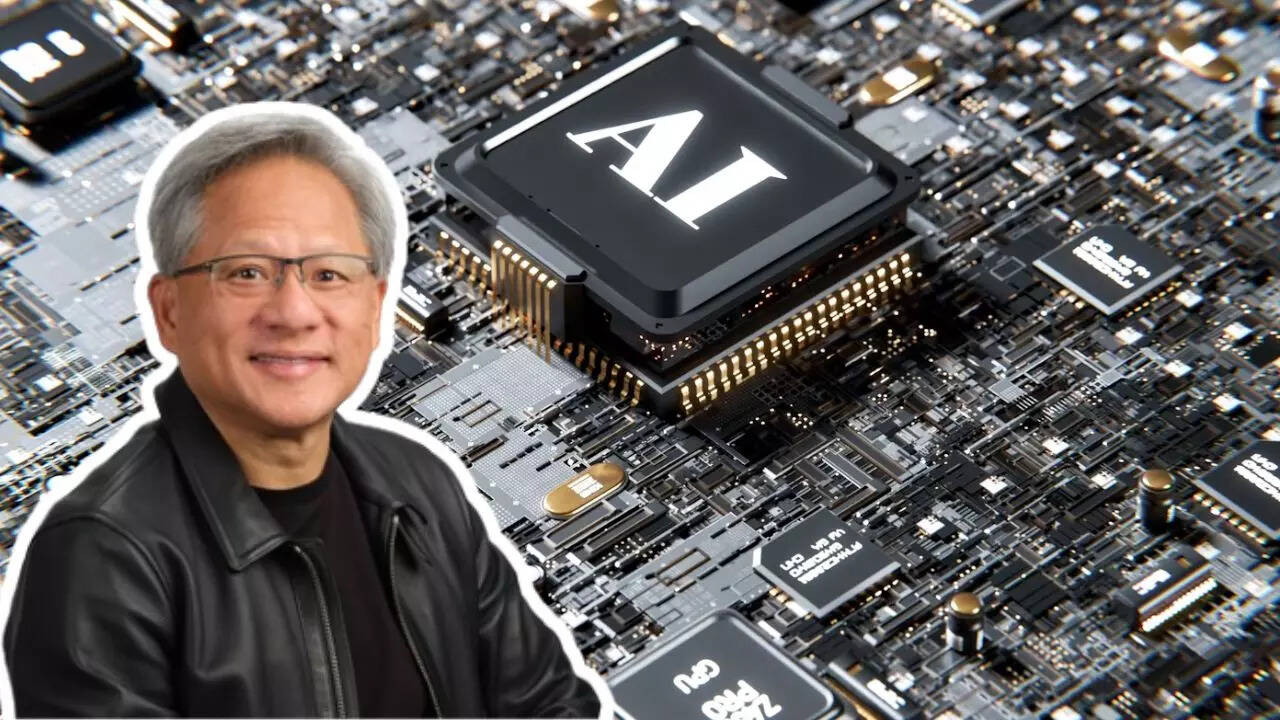
Nvidia CEO Jensen Huang (File Photo)
Nvidia CEO Jensen Huang has stressed a major shift taking place in the artificial intelligence industry, saying the next phase of AI growth will depend not just on cutting-edge chips and computing power but also on access to physical infrastructure. According to Huang, land, electricity and ready-to-use data-centre facilities are becoming increasingly important as AI companies race to expand their computing capacity.
His comments point to a broader evolution in the industry, where the ability to build and operate large-scale AI systems could increasingly depend on securing the physical resources required to run them.
In a post on X, Huang described AI factories as a defining part of the infrastructure supporting the technology boom.
“AI factories are the defining infrastructure of the AI era,” Huang said, referring to facilities where energy and data are converted through computing into intelligence for businesses, industries and governments.
Nvidia Expands Focus Beyond AI Chips
Huang’s comments came while discussing Nvidia’s arrangement with SB Energy to secure land, power and shell (LPS) capacity at the PORTS-Pike Technology Campus in Portsmouth, Ohio. OpenAI is expected to be the tenant at the facility.
The development underlines how Nvidia’s role in the AI ecosystem is expanding beyond the supply of graphics processing units and other computing hardware. The company is increasingly looking at the infrastructure needed to put those systems into operation at scale.
Huang noted that major cloud service providers and investment-grade companies typically have the financial resources and operational capabilities needed to arrange land, electricity and data-centre facilities. Frontier AI laboratories, however, face a different challenge as their computing requirements continue to rise.
“Their growth is increasingly constrained not by algorithms or customer demand, but by the availability of compute,” Huang said.
Power And Data Centres Become Critical AI Resources
The comments reflect a growing reality for the AI sector: advanced models require enormous amounts of computing infrastructure, which in turn demands substantial supplies of electricity and suitable facilities.
As demand for AI services increases, companies need more than processors to keep pace. They also require locations with sufficient power availability, data-centre capacity and infrastructure that can be brought online quickly.
Huang said Nvidia would take a selective approach to securing such infrastructure. The company would focus on locations where customer requirements are sufficiently clear and sustainable to justify investments that can accommodate several generations of computing technology.
The PORTS-Pike project is expected to initially offer 4.25 gigawatts of AI factory capacity. Nvidia has said that each generation of systems deployed at the site could involve around 1.5 million Nvidia GPUs, potentially generating an estimated USD 150-200 billion in Nvidia revenue for each generation.
Huang Rejects Circular Financing Concerns
Huang also addressed questions surrounding Nvidia’s financial involvement in the infrastructure arrangement, particularly concerns over whether the structure amounted to circular financing. “No. OpenAI will pay the lease,” he said.
He explained that Nvidia was using its scale and visibility into customer demand to help secure infrastructure that would ultimately accommodate Nvidia-powered computing systems.
The approach illustrates how competition in AI is increasingly extending into areas traditionally associated with real estate, utilities and infrastructure financing. Securing enough electricity and suitable data-centre space could become just as strategically important as gaining access to the latest AI accelerators.
Nvidia’s AI Strategy Moves Into Infrastructure
Huang said Nvidia’s evolution has moved well beyond its original focus on accelerated computing chips. The company now develops complete computing systems, networking equipment, CUDA software and AI factories, while also becoming involved in securing the physical infrastructure required to deploy those technologies.
The shift comes as AI development becomes increasingly capital- and infrastructure-intensive. Semiconductor performance remains crucial, but the ability to deploy chips at scale depends on a wider ecosystem involving electricity, land, financing, cooling systems, networking and data-centre facilities.
For frontier AI companies in particular, the availability of computing capacity could increasingly determine how quickly they can develop and deploy new models and services.
Latest News


She is working as a Chief Copy Editor at Times Now’s Business Desk, where she covers key developments in the stock market, Indian corporates across se… View More
Original source: https://www.timesnownews.com/business-economy