Quick Comms’ 10-Minute Promise Meets Its Reality Check: Expired Goods And A Refund Wall
- Written by: Priya Raghuvanshi
- Updated Aug 19, 2026, 13:41 IST
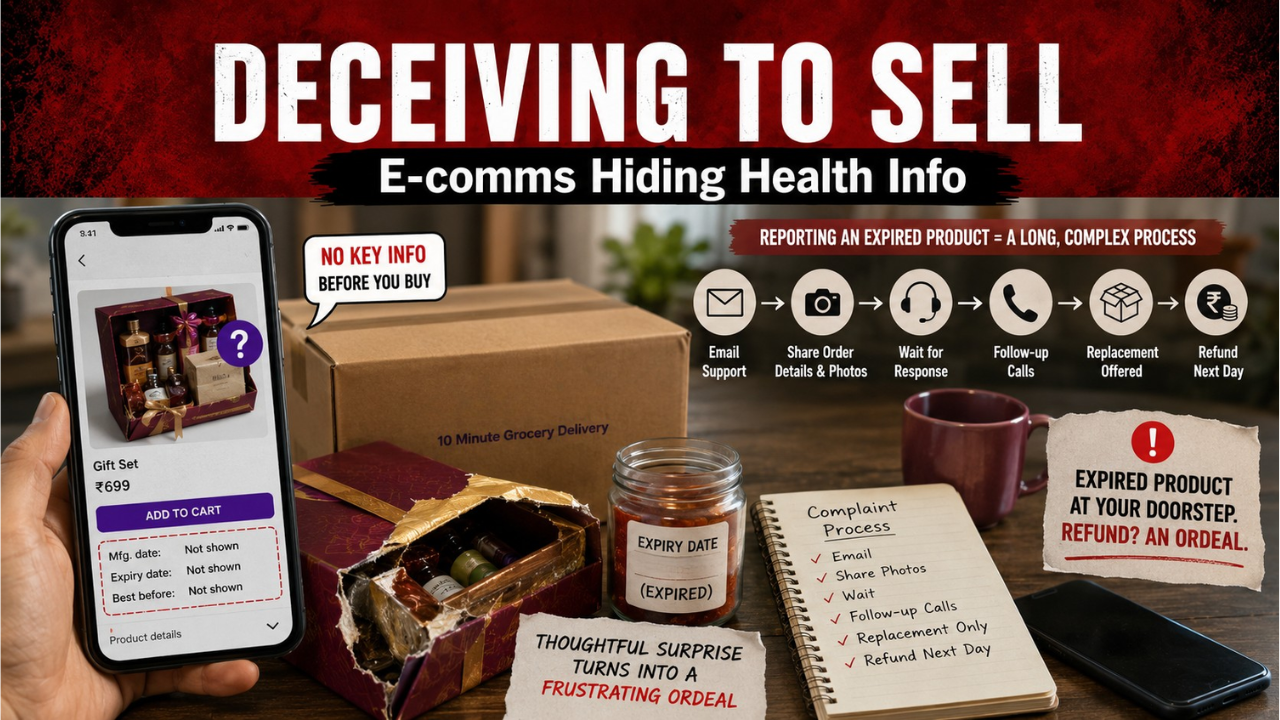
E-comms Hiding Health Info: Expired products delivered to your doorstep, but getting a refund can be another ordeal. Times Now Digital’s campaign highlights the gaps consumers face on quick-commerce platforms.
Expired products delivered by quick-commerce platforms leave consumers facing a frustrating and complicated refund process, raising fresh questions over transparency and accountability. (File Photo)
Times Now Digital’s ‘E-Comms Hiding Health Info’ campaign has been constantly asking quick commerce platforms to be more transparent with their users and provide all the necessary information which a customer can see, similar to when they buy any product from the shelf. The campaign has consistently highlighted a critical gap in India’s fast-growing quick-commerce ecosystem: the absence of key information such as manufacturing, expiry and best-before dates on many online product listings. But an equally pressing question follows: What happens when an expired product still reaches a consumer’s doorstep?
For Mansi, a Mumbai resident, what was meant to be a thoughtful Birthday surprise for her best friend, Poorva, living in Pune, turned into an ordeal that left both of them frustrated and helpless.
Mansi had ordered a gift set through Zepto, expecting it to arrive in nice packaging and in good condition. Instead, her friend received an expired product in damaged packaging, raising concerns not only about product quality but also about the transparency practices followed by the quick commerce platforms.
However, the problem did not end with the delivery.
When Mansi attempted to report the issue through the platform, there was no straightforward in-app option to raise a complaint for receiving an expired product. Instead, the consumer was directed to contact customer support over email, share order details along with photographs of the product, and wait for further communication. During a subsequent phone call, the customer was informed that the order was only eligible for replacement or return, and that an immediate refund would not be processed despite the complaint involving an expired product. It was only the next day that the product was picked up and the refund was processed.
Getting Resolution Is Even More Stressful
The incident shows a larger concern that lies at the heart of the Times Now Digital ‘E-Comms Hiding Health Info’ campaign. If consumers cannot verify expiry dates before placing an order because such information is not clearly displayed on product listings, and if reporting an expired product involves navigating multiple channels and lengthy procedures, are digital marketplaces placing unnecessary burdens on consumers seeking safe products and timely redressal?
This is just one of the incidents among several other which are reported daily on different social media platforms. In another similar incident shared on the social media platform, a customer received expired cheese. The user wrote, “Delivered EXPIRED food by @Swiggy Instamart! Britannia Cheese ordered 29/07/26 expired 2 months ago (06/06/26). Support dismissed proof with zero resolution. Exploiting the morning rush risks kids/elderly health. Violates Sec 27 of FSS Act. Demand immediate action!”
The post again raises the same concern about how every other quick commerce user is also facing issues with the platform regarding the resolution of the problems that arise after the product gets delivered. As mentioned in the post, the Swiggy Instamart support dismissed their proof of receiving the expired product, making it difficult to get any solution.
Consumer rights advocates argue that expired products are not simply matters of poor quality; they are potential public health risks. They believe online marketplaces should not only display critical health information, including expiry and best-before dates, prominently before purchase, but also establish simple, transparent and time-bound grievance mechanisms for complaints involving expired or unsafe products.
The incident also comes at a time when regulators are paying closer attention to transparency and consumer protection in digital commerce. As scrutiny intensifies over compliance with food labelling norms and mandatory disclosures, cases like Smriti’s highlight that the conversation extends beyond what consumers can see before clicking “Buy.” It also includes how efficiently platforms respond when those safeguards fail.
For consumers, the right to know does not end at the product listing. It also includes the right to receive safe products and access a quick, hassle-free resolution when something goes wrong. As India’s quick-commerce sector continues to expand, transparency and accountability must remain central to the digital shopping experience.
(This report is part of Times Now Digital’s “E-Comms Hiding Health Info” campaign. Follow the series for more on your rights as a consumer and expert guidance on what to check before you buy online.)
Latest News


She is working as a Chief Copy Editor at Times Now’s Business Desk, where she covers key developments in the stock market, Indian corporates across se… View More
Original source: https://www.timesnownews.com/business-economy