Ramayana, The Odyssey, Dune: The age of spectacle, scale, and screen adaptations
With Nolan’s The Odyssey stirring up a mean storm, the trailer of the new Ramayana releasing on YouTube and the upcoming release of Dune: Part Three, a look at how some of the biggest screen adaptations of literary texts have fared at the box office.
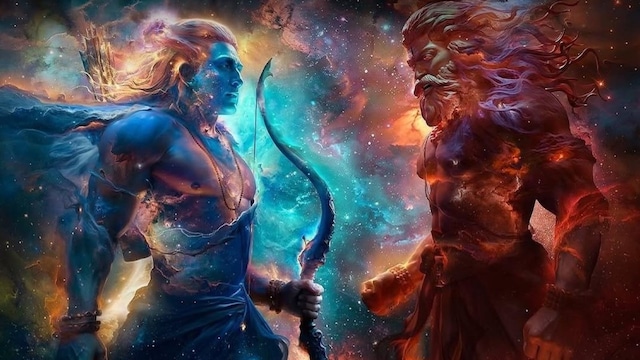
If you haven’t watched the trailer yet, Arun Govil—the OG Ram from Ramanand Sagar’s 1987 televised Ramayan—is now King Dashrath, Kannada superstar Yash plays Ravan, Sai Pallavi is Sita, television heartthrob Ravi Dubey is Laxman, Rakul Preet Singh is Surpanakha and Ranbir Kapoor, of course, is Ram. Though he doesn’t make an appearance in the trailer, Sunny Deol is touted to play Hanuman.
So close at the heels of Christopher Nolan’s The Odyssey, comparisons are inevitable. Still running in theatres, his adaptation of Homer’s enduring epic has raked in a whopping $1 billion worldwide in three weeks. The number is too mind-bogglingly enormous to convert into Indian rupee. Starring Matt Damon, Anne Hathaway, Tom Holland and Robert Pattinson, it has become the highest-grossing film yet of Nolan’s illustrious career, usurping the hitherto invincible supremacy of his 2012 Oscar-winning feature The Dark Knight Rises.
Can Ramayana, with its accentuated opulence and global ambition, re-create the magic? Will Indians welcome Ram this Diwali the way they did 40 years ago? The kind of absolute reverence that Ramanand Sagar’s iteration received no longer exists, but we do live in a more polarising and performative time with Hindi cinema’s once rich repertoire practically dried up.
It wouldn’t be too shabby to have our own, first truly global film with a vision and scale that matches those of Nolan’s productions. It’d be quite something to have people that look like us, talk like us and have grown up among us battle ogres on the biggest screens possible to the pulsating music of AR Rahman and Hans Zimmer as they tell the world a story so deeply embedded in our cultural consciousness that it’s all pervasive.
Also Read: Ranbir Kapoor’s Ramayana gets a release date: Watch English trailer
When discussing larger-than-life big screen adaptations of literary texts, it’s blasphemous not to bring up The Lord of the Rings trilogy or the Harry Potter series and how they have changed cinema, the way we consume it and what we have come to expect from it. Epochal franchises, they served spectacle, created sprawling, sweeping worlds, minted unprecedented moolah and built superstardom for everyone involved.
The Lord of the Rings films (2001-2003), based on the JRR Tolkien novels, raked in an estimated $2.99 billion against a reported $281-million budget. Meanwhile, the eight Harry Potter films (2001-2011) together made $7.7 billion (approx) at the box office against a $1.2 billion budget.
It’s imperative I also mention the Dune trilogy headlined by Timothée Chalamet and Zendaya, considering the final instalment is due in December. An adaptation of Frank Herbert’s 1965 space opera novel, the first two Denis Villeneuve films have made $1.12 billion worldwide against a reported budget of $355 million.
Closer home, it is historical literary dramas and not fantastical fiction that have translated gloriously onto the silver screen. Sanjay Leela Bhansali and Mani Ratnam have emerged as the undisputed frontrunners of myth and magic making on celluloid.
Bhansali first tasted blood in 2002 with Devdas, turning Sarat Chandra Chattopadhyay’s classic tragedy into unforgettable, subliminal cinema. Starring Shah Rukh Khan, Aishwarya Rai Bachchan and Madhuri Dixit in lead roles, the period piece—Bollywood’s most lavish until then, mounted on a reported budget of ₹50 crore—turned out to be a golden goose. It collected ₹168 crore worldwide (approx), becoming the highest-grossing Indian film of that year.
Also Read: From Raja Harishchandra to Ramayana: The eleven-decade evolution of mythology in Hindi cinema
Even though he’d made Ram-Leela (2013), relocating Shakespeare’s Romeo and Juliet to a bloody Gujarat overrun with caste violence, it was two years later that Bhansali came out with his take on Nagnath S. Inamdar’s Marathi novel Rau, narrating the star-crossed romance of fabled Maratha warrior Peshwa Bajirao I and his ethereal second wife, Mastani. As luminous and iridescent as Devdas, the little-known love story turned out to be a major box-office success. Bajirao Mastani made an estimated ₹357 crore against a budget of ₹145 crore, catapulting the careers and cementing the off-screen romance of its lead actors Ranveer Singh and Deepika Padukone.
Bhansali next adapted Malik Muhammad Jayasi’s celebrated poem Padmaavat into a historical spectacle that caused a stir both at the ticket window and outside it. A monumental blockbuster, the 2018 film raked in an estimated ₹585 crore against a reported budget of ₹215 crore.
Without much ado, Mani Ratnam mounted his two-part magnum opus starting 2022, bringing to screen Kalki Krishnamurthy’s 1954 Tamil novel set in the Chola Empire. Starring Vikram, Aishwarya Rai and Karthi, Ponniyin Selvan: I & II amassed ₹832 crore against an estimated budget of ₹500 crore.
However, this is not to say that all literary adaptations that foreground spectacle and scale perform wonders at the box office. A glittering example is Om Raut’s 2023 dud Adipurush. A “modern” re-telling of the Ramayana, it angered more people than it meant to and turned out to be a colossal misfire at the box office, making a paltry ₹393 crore against an estimated budget of ₹700 crore.
If Nitesh Tiwari’s Ramayana goes on to achieve what it intends to, it will bring some relief to an industry in free fall and allow theatres a chance to dust off cobwebs. For it will have been a while since Dhurandhar.
Also Read: Can Ranbir Kapoor’s ‘Ramayana’ break Bollywood’s ‘epic curse’?
Original source: https://www.cnbctv18.com/entertainment/