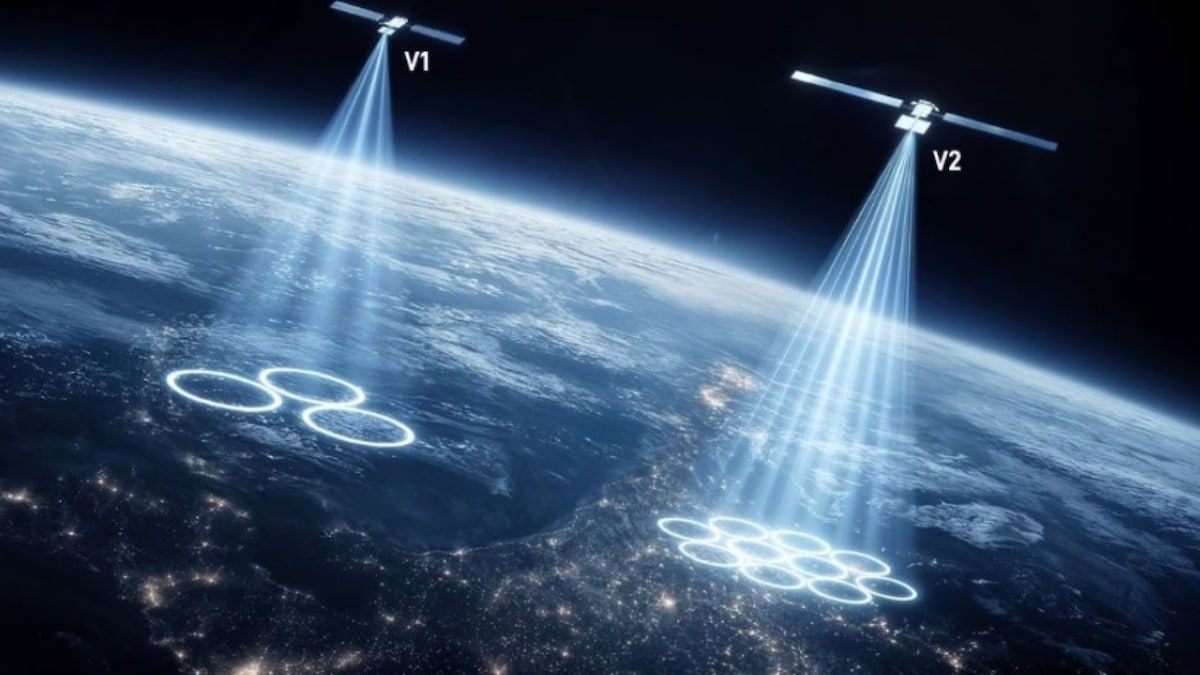
Starlink in India: What Is direct-to-device service? Can your phone really connect directly to a satellite
Starlink has reapplied to the Indian National Space Promotion and Authorisation Centre (IN-SPACe) for permission to deploy nearly 30,000 Gen 2 satellites in low Earth orbit (LEO).
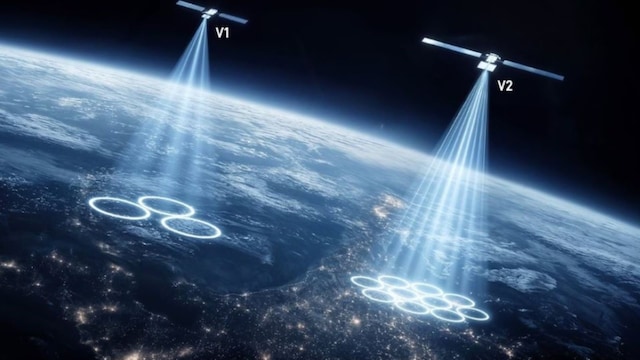
Starlink has reapplied to the Indian National Space Promotion and Authorisation Centre (IN-SPACe) for permission to deploy nearly 30,000 Gen 2 satellites in low Earth orbit (LEO). The application also covers direct-to-device (D2D) connectivity, which could allow supported phones to communicate with satellites without the need for a mobile tower or a separate satellite dish.
What is direct-to-direct service?
Direct-to-device, or D2D, is a satellite technology designed to connect directly with compatible smartphones and other devices without needing extra equipment such as a satellite dish or special dongle.
Normally, when you make a call, send a message or use the internet, your phone connects to a nearby mobile tower. The tower then connects you to the telecom network. But in the case of D2D, if there is no mobile tower nearby, the satellite can provide the connection.
For example, if you are in a remote area where there is no mobile tower, a D2D-enabled phone could connect to a satellite overhead and send messages or access other supported services.
Can your phone really connect directly to a satellite?
Yes, but only if the phone and satellite service support the technology.
However, having a Starlink satellite overhead does not mean that every smartphone can connect to it. The phone must be compatible with the D2D service, and the satellite operator and telecom company must support the connection.
Is D2D only for smartphones?
No, the technology can also be used for IoT devices, such as sensors and trackers operating in remote areas. For example, an IoT device in a remote location could send information through a satellite even when there is no normal mobile network nearby.
What about Starlink in India?
Starlink already received approval from country’s Indian National Space Promotion and Authorisation Centre (IN-SPACe) for its first-generation satellite constellation in July 2025. Its Gen 1 network has 4,408 LEO satellites and is designed to provide traditional broadband services.
Starlink’s earlier application for its Gen 2 network was rejected because some proposed features and spectrum bands did not meet Indian requirements, according to the ET report.
The company has now reapplied with its updated plans
Starlink plans around 42,000 satellites globally for Gen 2 and is seeking approval for nearly 30,000 of them in India. The proposed satellites would operate at altitudes of around 340 km to 615 km.
Original source: https://www.cnbctv18.com/technology/