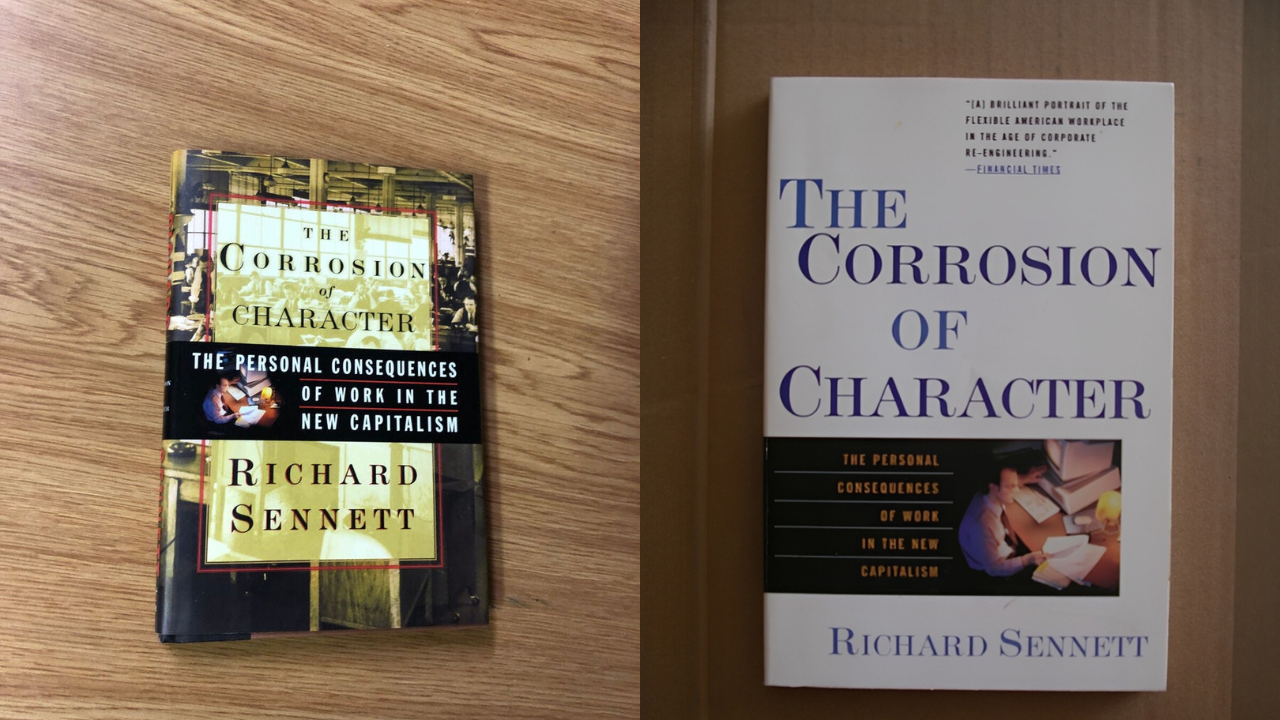
The Forgotten Bestseller That Makes More Sense In The Age Of Quiet Quitting
- Authored by: Girish Shukla
- Updated Aug 20, 2026, 14:00 IST
Richard Sennett’s ‘The Corrosion of Character’ feels strikingly current, tracing how insecure work, fractured loyalty and constant reinvention created the conditions behind quiet quitting, burnout and today’s growing workplace detachment.
The Forgotten Book That Saw Our Workplace Disillusionment Coming (Picture Credit – Pinterest)
Work once promised something more than a salary. It offered structure, identity and the sense that effort accumulated over time into a life that made sense. That bargain now feels less secure. Careers are increasingly broken into short-term projects, restructurings arrive without warning, and employees are expected to remain endlessly adaptable even when employers offer little certainty in return.
Long before “quiet quitting” entered workplace vocabulary, sociologist Richard Sennett had already identified the emotional cost of that shift. Published in 1998, ‘The Corrosion of Character: The Personal Consequences of Work in the New Capitalism’ examined what happens when work becomes flexible, temporary and unstable, while human beings continue to need continuity, trust and meaning.
When Flexibility Became A Virtue
Sennett was writing at a moment when flexibility was being sold as progress. Traditional hierarchies, repetitive labour and lifetime employment were supposedly giving way to flatter organisations, mobility, collaboration and reinvention. Workers would no longer be trapped inside one rigid professional identity.
Yet Sennett saw a contradiction at the heart of that promise. Businesses might benefit from remaining flexible, but people still build character through long-term commitments. Trust grows slowly, loyalty depends upon continuity, and identity develops when yesterday can be connected meaningfully to tomorrow.
That is why short-term work can create a deeper instability than simple job insecurity. A person may become professionally adaptable while finding it harder to build a coherent story about who they are and where their life is heading.
A Father, A Son and Two Different Worlds Of Work
One of Sennett’s most memorable comparisons involves two generations. In earlier research, he had encountered Enrico, a janitor whose working life was repetitive but predictable. His job was hardly glamorous, yet its stability allowed him to understand sacrifice over time and imagine a future for his family.
Years later, Sennett met Enrico’s son, Rico. He had achieved upward mobility, but his professional world was defined by risk, movement and weak institutional loyalty. His career looked more successful from the outside, yet it was much harder to build around lasting commitments.
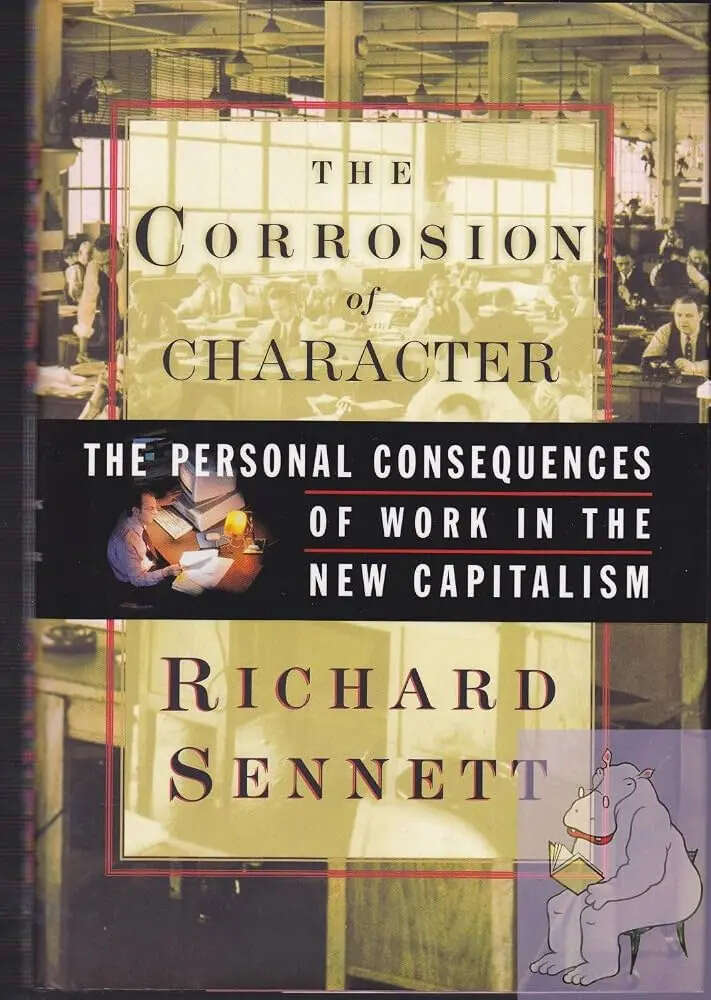
The Corrosion of Character (Picture Credit – Amazon)
The comparison prevents the book from becoming nostalgic. Sennett is not arguing that old forms of labour were ideal. He is asking what happens when predictability itself is dismissed as outdated, and every worker is expected to remain permanently ready for disruption.
Why Quiet Quitting Fits Sennett’s Argument
Quiet quitting became shorthand for employees refusing to give more than their jobs formally required. Critics saw laziness, while supporters saw boundary-setting and resistance to unpaid emotional labour.
Sennett offers a different interpretation. If companies increasingly treat employment as temporary, flexible and conditional, workers may eventually begin treating commitment in exactly the same way. Loyalty becomes difficult to sustain when the relationship feels one-sided.
That is what makes the idea so relevant now. Employers often ask workers to care deeply, remain available, absorb change and identify personally with company goals, while preserving their own freedom to restructure, relocate or eliminate roles. Under those conditions, disengagement can become less a failure of character than a rational response to asymmetry.
The Problem Goes Beyond Burnout
Burnout is usually described as exhaustion. Sennett’s concern is more unsettling because it is about meaning.
He argues that character depends on durable qualities such as trust, responsibility, commitment and the ability to delay gratification. Workplaces organised around short-term results and constant reinvention can make those qualities harder to practise, even when they remain personally valuable.
The damage, then, is not simply that employees dislike their jobs. It is that work may stop helping people understand who they are. That is why ‘The Corrosion of Character’ still feels urgent. Quiet quitting may fade as a phrase, but the unease underneath it is unlikely to disappear. Sennett’s lasting insight is that workers may not have suddenly stopped caring about work. Work may simply have stopped giving them enough reason to care.
Latest News


Seasoned Editor and Author with over a decade of experience in literary journalism, author interviews, and publishing trends. Known for curating impac… View More
Original source: https://www.timesnownews.com/lifestyle