Raghuram Rajan Wants Governments To Tax This One Thing AI Companies Use
- Edited by: Priya Raghuvanshi
- Updated Aug 20, 2026, 17:14 IST
Raghuram Rajan has proposed taxing AI tokens and offering retraining credits to help businesses manage potential job losses from AI.
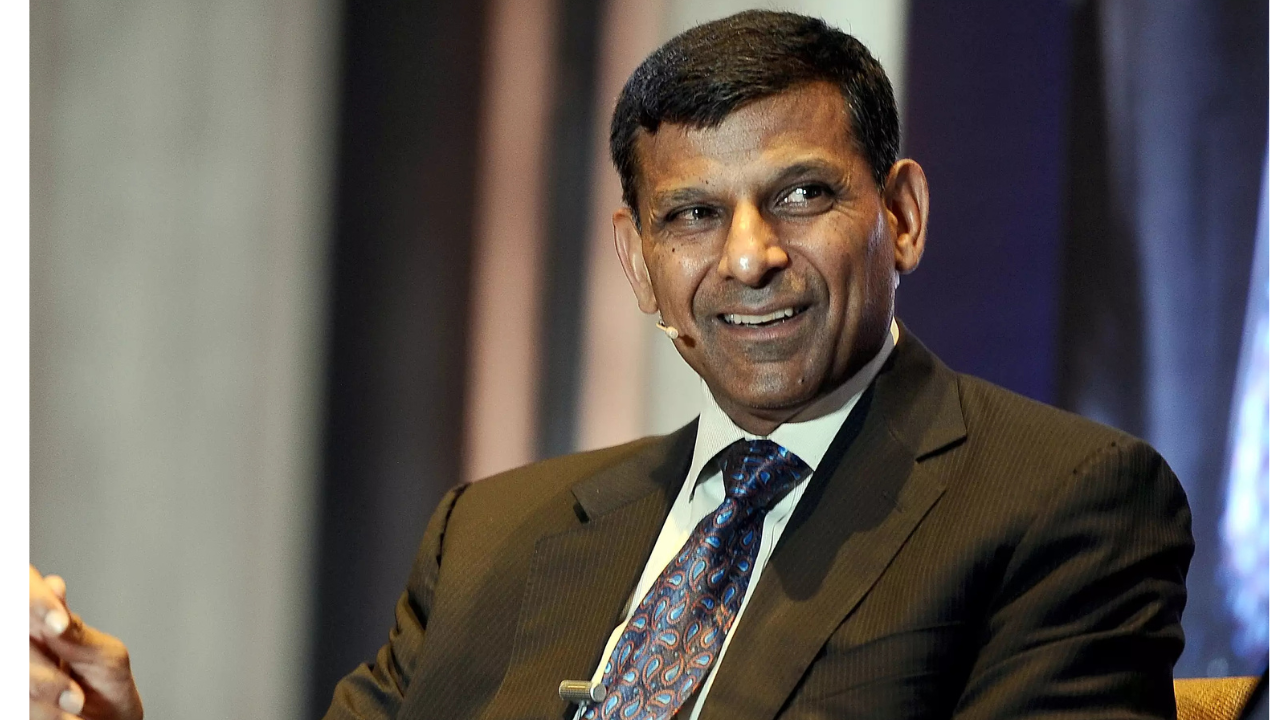
Former Reserve Bank of India governor Raghuram Rajan (File Photo)
Former Reserve Bank of India governor Raghuram Rajan has put forward a policy to address the employment disruption that could accompany the rapid adoption of artificial intelligence. Rajan has suggested that governments consider taxing the AI tokens used by companies while providing tax incentives to businesses that retrain and retain employees.
Writing in a Project Syndicate column published on August 14, Rajan said AI-driven displacement of workers was likely, although its timing, magnitude and effects would differ across sectors. His proposal is a broad policy suggestion and does not represent an India-specific tax plan or an announced government measure.
Rajan argued that governments need to assess whether existing tax structures are inadvertently encouraging businesses to replace human labour with technology.
Using the US tax system as an example, he pointed out that companies make social-security contributions for employees, whereas there is no equivalent levy when firms rely on AI systems. This difference, he suggested, can make automation financially more attractive.
“One way to level the playing field is to levy a tax on the AI tokens a firm uses,” he wrote.
AI tokens refer to the small units of data processed by AI models. They are also widely used as a basis for measuring and charging for AI model usage, making them a potential mechanism for tracking corporate AI consumption.
AI Token Levy Could Start Small
Rajan proposed that any tax on AI-token usage could begin at a relatively low level before being gradually increased as governments develop a better understanding of its economic impact.
However, he stressed that policymakers would need to strike a balance. A levy that is too high could discourage businesses from deploying useful AI technologies or slow productivity gains.
Tracking payments made to domestic AI providers would be relatively straightforward, according to Rajan. However, foreign AI companies would also need to be brought within the framework to prevent businesses from simply shifting their AI spending overseas. He did not suggest a specific rate for the proposed tax.
Tax Credits Could Encourage Companies To Retrain Workers
Alongside an AI levy, Rajan proposed tax credits for businesses that invest in employee retraining and make efforts to keep workers employed as technology changes the nature of their jobs.
His suggested framework could reward companies over time rather than offering the entire incentive upfront. Under one approach, a business could receive one-third of the value of a training credit for every year the employee who received the training remains employed.
The credit could potentially continue to apply even if the trained worker changes employers. Governments could also design the scheme so that the tax credit is used specifically to offset the liability created by the AI-token levy.
Businesses Are Still Moving Cautiously On AI
Rajan noted that corporate adoption of AI has not yet matched some earlier expectations. Businesses are still working out how to integrate the technology into existing processes, while questions around costs and practical implementation remain.
Many large companies, he said, are continuing with pilot programmes rather than making sweeping decisions on hiring or layoffs.
US Census Bureau data collected between December 2025 and May 2026 showed that overall business adoption of AI stood at around 17-20%. For companies with at least 250 employees, the adoption rate was significantly higher at 37 per cent.
However, Rajan warned that the current pace may not remain unchanged. Competitive pressures could push companies to deploy AI more aggressively, potentially increasing the pace of job displacement.
AI Could Also Create New Economic Opportunities
Rajan’s assessment of AI’s impact on employment was not entirely negative. He noted that the technology could improve productivity in existing occupations and generate new roles linked to AI implementation and management.
AI could also reduce the barriers to launching new businesses by taking over or simplifying functions such as programming and accounting. This could potentially allow entrepreneurs to operate with fewer resources and lower initial costs.
At the same time, Rajan argued that businesses would need to take greater responsibility for helping employees adapt to technological change. Regular retraining, combined with efforts to retain workers, could help employees transition into roles that remain relevant as AI becomes more widespread.
Companies that demonstrate a strong commitment to supporting employees through this transition could also gain an advantage in attracting skilled workers, he suggested.
Get Latest News Live on Times Now along with Breaking News and Top Headlines from Business, Economy and around the World.
Latest News


She is working as a Chief Copy Editor at Times Now’s Business Desk, where she covers key developments in the stock market, Indian corporates across se… View More
Original source: https://www.timesnownews.com/business-economy