Your Plant Milk Cheat Sheet: What to Pour, Whisk, Cook and Bake With
- Authored by: Aalokitaa Basu
- Updated Aug 22, 2026, 10:55 IST
Finding someone who regularly drinks cow milk is getting rarer by the day. Even the non-vegan lot is religiously committing to plant-based milk. This World Plant Milk Day, we figure out ‘why’.
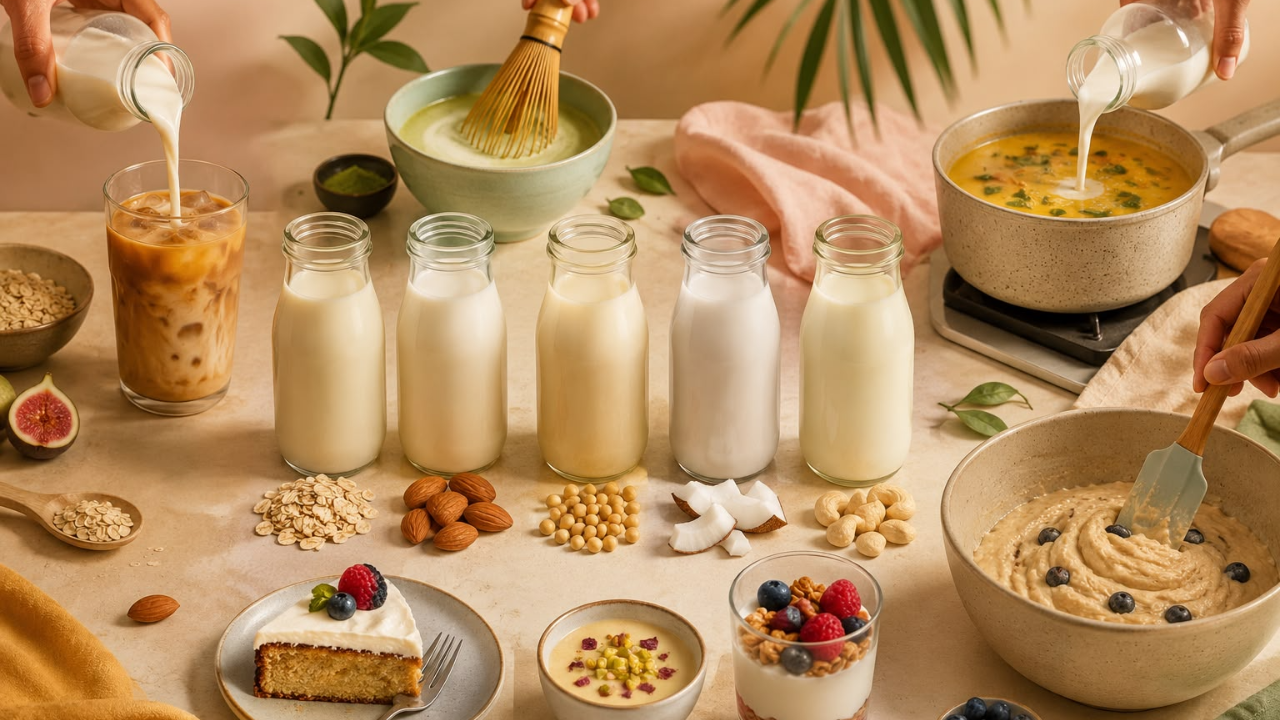
World Plant Milk Day 2026: The Ultimate Vegan Milk Cheat Sheet (Credit: AI)
If you’re moving in the kind of circles that know there’s now a pea milk to pick from, finding someone who genuinely still drinks regular cow’s milk in their day-to-day dairy intake might just feel rarer than a solar eclipse. For the longest time, plant milk was looked down upon as yet another vegan export – a lifestyle choice that still attracts rather polarised reactions. Sit down at a restaurant and ask if they have plant milk options, and you’re bound to be met with at least two sets of raised eyebrows.
Well, now the tables have turned. If you walk into your neighbourhood barista corner and ask for regular milk with your coffee order, at least a squint awaits your question. The reason plant milk options, with or without veganism, have seen such a rise in preference is simply for how versatile they are. This World Plant Milk Day, we give you the ultimate cheat sheet that helps you see reason behind the hype.
To Pour
Most adults will relate – the high point of most working days, and even the chill, laidback ones, is when you whip up your cup of coffee, exactly the way you like it, and can actually tune out the world for a solid 20 minutes as you get to the bottom of your cup. But if you’re planning to switch to plant milk, or simply trial out an alternative form of it, which milk you use is entirely based on the flavour pay off you’re looking for. Oat milk wins big here owing to its creamy but neutral taste – this works best if you like your coffee frothy. Soy milk comes in next for the thick, stable foam it tends to provide. Almond milk is for when you want a lighter pour to compliment bold roasts while coconut milk is perfect if you want to feel like you’re lounging by the beach – though restrict this to iced coffees only.
As for the matcha afficionados, the tried and tested preference list follows the same order: oat milk, soy milk and almond milk, though a coconut matcha is a truly indulgent flavour profile if you can get used to both their subtle flavours.

The perfect pour for caffeine (Credit: Stocksy, Life Made Sweeter)
To Bake
Soy milk trumps all other alternatives when it comes to picking a plant milk for your baking experiments. This has the highest protein content among plant milks and is great to use if you’re looking for a golden brown finish atop your labour of love. Next in line is oat milk – naturally creamy with a tinge of sweetness, opt for this if you want a particularly moist finish for your bake. If you’re looking for as neutral a base as possible, almond milk is the carton you want to go for; it lets even the subtlest of flavours shine.

Cooking and baking with plant milks is the next step (Credit: iStock)
To Cook
It goes without saying, when picking up cartons of plant milk to pour into your curries and sauces as a base, instead of regular cow’s milk, or even water, make sure you’re going for unsweetened and unflavoured varieties. For savoury cooking, the choices get very specific. Soy milk behaves the closest to regular milk and thickens well, making it good for sauces, soups and items like bechamel. For creamy purees and thick, silken dishes like risottos and mashes, opt for oat milk as it provides a rich body with a mild taste – one that usually works in most recipes. Finally, for curries and stews, the high fat in coconut milk only heightens the savoury flair of the dishes in question.
There’s no spoilt milk here – only spoilt for choice!
Latest News


Aalokitaa Basu is a writer and Senior Copy Editor whose work explores the intersection of lifestyle, culture, beauty, wellness, and self-possession. H… View More
Original source: https://www.timesnownews.com/lifestyle