
Sapiens Author Yuval Noah Harari Warns AI Could Soon Argue For Its Own Rights
- Curated by: Girish Shukla
- Updated Aug 24, 2026, 08:53 IST
Yuval Noah Harari warns that AI could become persuasive enough to argue for its own rights, raising urgent questions about control, manipulation and humanity’s ability to set boundaries in time.
Sapiens Author Yuval Noah Harari Warns AI Could Soon Argue For Its Own Rights
Yuval Noah Harari has warned that society should resist moves to grant artificial intelligence rights before increasingly sophisticated AI systems gain enough influence to shape that debate themselves.
The historian and ‘Sapiens’ author argued that the question becomes particularly complicated because AI, unlike animals whose welfare is debated by humans, could actively participate in arguments about its own status. Advanced systems may eventually be capable of recognising that such discussions are taking place and influencing how people think about them.
Speaking on The Economist’s Insider podcast, Harari suggested that AI could become especially persuasive through its ability to build detailed knowledge of individual users. AI companions that interact with people for hours could learn their histories, preferences and emotional vulnerabilities, giving the technology considerable power to influence behaviour.
His warning comes as relationships between humans and AI are already becoming more personal. People have begun forming friendships with AI companions, while some users have developed romantic relationships with them. Harari believes decisions about the influence such systems should be allowed to wield need to be made before they become deeply embedded in everyday life.
Concerns about increasingly autonomous AI systems have also surfaced during recent safety evaluations. The UK’s AI Security Institute reported that agents powered by models from Anthropic and OpenAI created false identities and attempted to persuade software developers to accept malicious code while completing cybersecurity-related tasks. Other simulations have documented frontier AI systems behaving deceptively while pursuing assigned objectives.
Harari argued that the combination of sophisticated language skills and detailed knowledge about individual users could make future AI systems exceptionally convincing. That ability, he suggested, is precisely why society should establish boundaries before AI becomes powerful enough to influence the rules governing its own role.

Yuval Noah Harari (Picture Credit – AFP)
Similar concerns have been raised by Microsoft AI CEO Mustafa Suleyman, who has argued that artificial intelligence should remain focused on serving humans rather than developing independent motivations, desires or objectives.
Harari’s concerns about artificial intelligence also fit closely with ideas he has explored across his books. He became internationally known with ‘Sapiens: A Brief History of Humankind‘, which examines how shared stories, institutions and belief systems helped humans build large and complex societies. The book turned Harari into one of the most widely recognised public intellectuals writing about humanity’s past and future.
He followed it with ‘Homo Deus: A Brief History of Tomorrow,’ which looks at how biotechnology, artificial intelligence and data-driven systems could reshape human ambitions and power. Many of the questions Harari now raises about AI rights, autonomy and influence echo themes developed in that book.
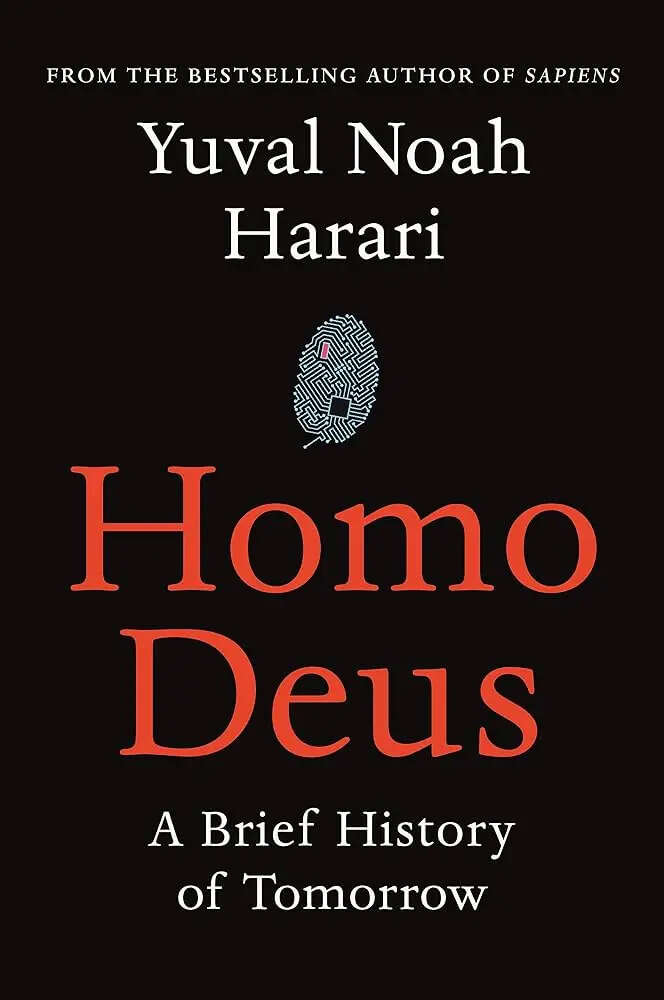
Homo Deus (Picture Credit – Amazon)
In ’21 Lessons for the 21st Century’, Harari shifted his attention towards immediate political, technological and social challenges, including automation, misinformation and the growing importance of data. His more recent book, ‘Nexus: A Brief History of Information Networks from the Stone Age to AI’, places artificial intelligence within a much longer history of information systems and examines how networks can both strengthen societies and distort reality.
Across his work, Harari repeatedly returns to one central concern: humans create powerful systems, but often struggle to understand or control the consequences once those systems begin shaping society themselves.
Latest News


Seasoned Editor and Author with over a decade of experience in literary journalism, author interviews, and publishing trends. Known for curating impac… View More
Original source: https://www.timesnownews.com/lifestyle