31-Year-Old Runner Dies During Marathon: Cardiologist Reveals Who Really Needs Heart Screening
- Authored by: Ashima Sharda Mahindra
- Updated Aug 10, 2026, 13:00 IST
A young runner’s marathon death highlights rare cardiac risks and why warning symptoms, family history, and targeted heart screening matter.
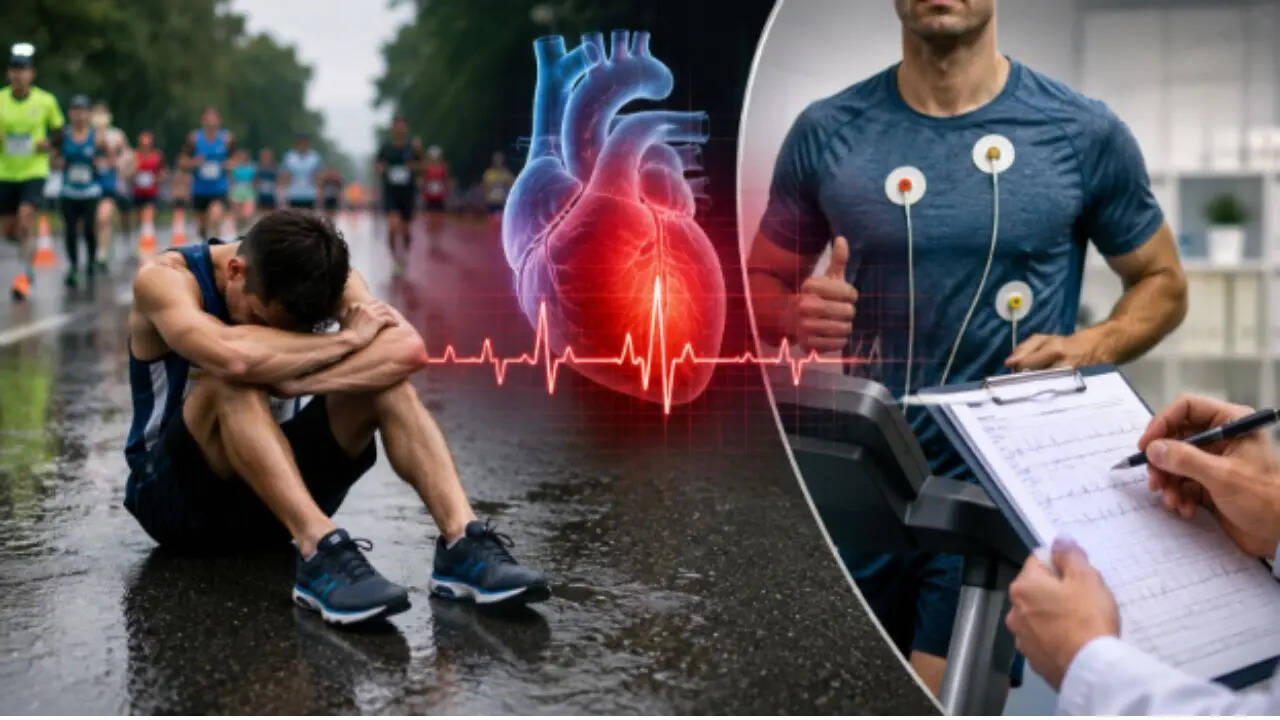
31-Year-Old Runner Dies: Who Needs Heart Screening Before Marathons? (Pic: AI image)
The sudden death of a 31-year-old runner during a marathon at Nandi Hills, Karnataka, has raised concerns about cardiac arrest in young athletes and whether apparently healthy runners should undergo heart screening before participating in endurance events. The runner reportedly collapsed while taking part in a 21-km race and was suspected to have suffered a cardiac arrest. He had participated in previous running and fitness events and was described by fellow participants as fit and energetic.
While the exact cause of death will be determined through medical and post-mortem investigation, the incident highlights an important question: Can a young, apparently healthy person have an undiagnosed heart condition?
Do young runners need heart screening?
According to Dr Vaibhav Dedhia, Consultant Cardiology at Jaslok Hospital & Research Centre, young and apparently healthy runners do not necessarily require extensive cardiac testing before every marathon. “Young, apparently healthy runners do not necessarily require extensive cardiac screening before participating in marathons. However, a structured pre-participation cardiovascular evaluation is advisable, particularly for those undertaking high-intensity endurance exercise,” he said.
According to Dr. Dedhia, the first step should include a detailed medical and family history, physical examination and blood pressure measurement. “Doctors should specifically ask about symptoms that occur during exercise, including chest pain, unexplained fainting, palpitations, unusual breathlessness and reduced exercise tolerance,” he added.
A family history of sudden cardiac death, cardiomyopathy or inherited heart rhythm disorders can also increase concern and may warrant further evaluation.
What heart tests may be needed?
A 12-lead electrocardiogram (ECG) can help identify certain structural or electrical heart abnormalities. In athletes, however, ECG results need to be interpreted carefully because some changes can occur as a normal adaptation to intensive training. “Routine ECG screening of every healthy runner remains controversial because of false-positive findings and the need for appropriate follow-up,” said Dr. Dedhia.
If a person’s medical history, examination or ECG raises concerns, doctors may recommend an echocardiogram to assess the structure and function of the heart. Additional tests, including exercise stress testing, Holter monitoring, cardiac MRI or coronary imaging, may be considered when clinically appropriate. The key message is that heart screening should generally be risk-based rather than a one-size-fits-all approach.
Warning signs runners should never ignore
Regardless of age or fitness level, certain symptoms during exercise should not be dismissed as ordinary fatigue. A few of these include:
- Chest pain or pressure during exercise
- Fainting or nearly fainting
- Unexplained rapid or irregular heartbeat
- Breathlessness that seems disproportionate to the exercise
- A sudden decline in exercise performance
- Unusual dizziness during strenuous activity
A person experiencing these symptoms should stop exercising and seek medical evaluation rather than attempting to push through them.
Can exercise lead to cardiac arrest?
Regular physical activity is strongly associated with better cardiovascular health. For most people, running and other forms of exercise provide substantial health benefits. However, intense exercise can place considerable demands on the cardiovascular system. In a small number of susceptible individuals with underlying heart conditions, strenuous exercise can potentially trigger dangerous heart rhythms.
Conditions such as hypertrophic cardiomyopathy, inherited arrhythmia syndromes and other structural or electrical abnormalities can sometimes remain undiagnosed until symptoms occur. “That is why being physically fit does not necessarily eliminate the possibility of an underlying cardiac problem,” said Dr. Dedhia.
The death of a young runner is a tragic reminder that fitness is not the same as complete cardiovascular health. But it also should not discourage healthy people from exercising. For young runners, the most useful approach is to know their personal and family history, recognize warning symptoms, and seek medical evaluation when concerns arise. Before undertaking intense endurance training, particularly if symptoms or significant family history are present, discussing heart screening with a cardiologist can help determine whether additional testing is appropriate.
Latest News


Is a prolific writer with a varied experience of over two decades of journalism under her belt. She writes passionately about diverse health topics wi… View More
Original source: https://www.timesnownews.com/lifestyle