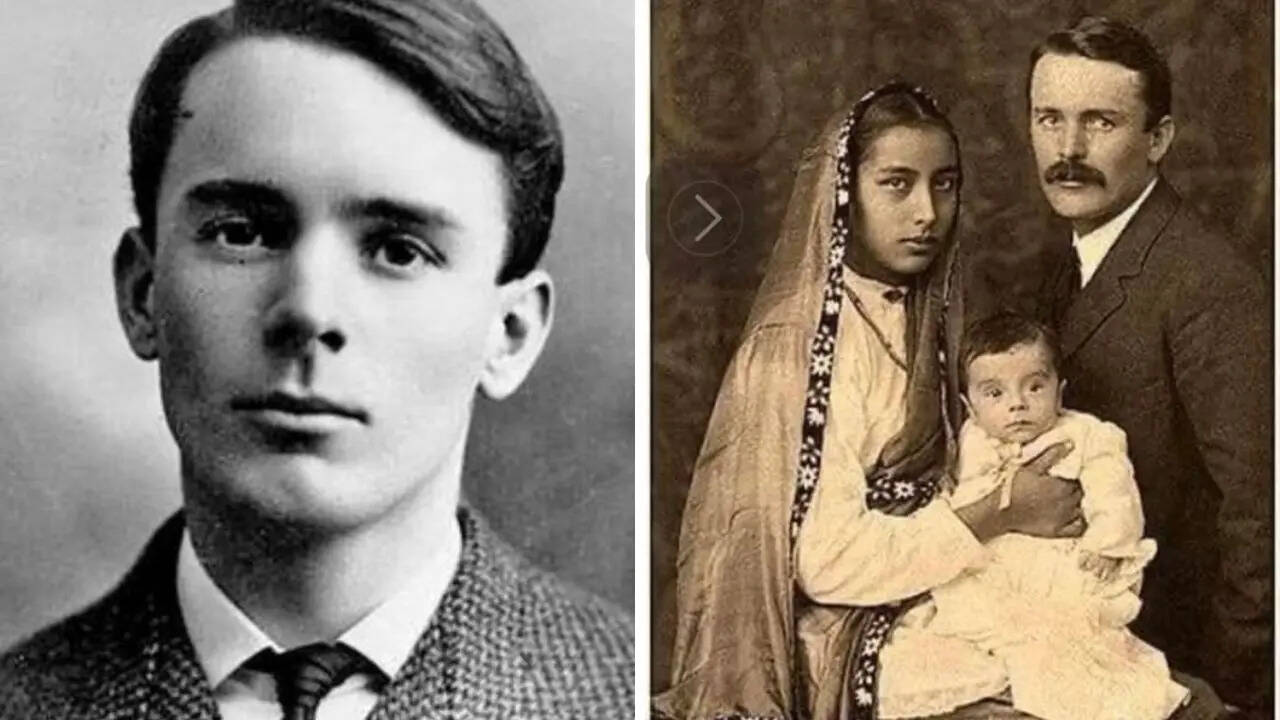
The Only American Jailed by the British Colonial Government During India’s Freedom Struggle
- Written by: Namya Sinha
- Updated Aug 7, 2026, 15:13 IST
Born into an affluent American Quaker family, Samuel Evans Stokes Jr. left home for the Himalayas, signed the Congress manifesto and became the only American jailed by the British colonial government during India’s freedom struggle.
Samuel Stokes came to India at 21. He ended up staying, marrying a local woman from Himachal, and becoming part of India’s freedom struggle.
This story sounds like something out of a novel, almost too improbable to be true. An American from an affluent family left home, settled in the Himalayas, joined India’s freedom struggle and became the only non-Indian to sign the Congress manifesto in 1921. He was also accused of sedition by the British colonial government and sentenced to six months in prison. Samuel Evans Stokes Jr. became the only American to have been imprisoned for taking part in the Indian independence movement.
Born on 16 August 1882 into an American Quaker family, Samuel grew up in Philadelphia, United States (US). For the unversed, Quakers are members of the Religious Society of Friends (also called the Society of Friends or Friends Church), a Christian movement founded in England in the mid-17th century by George Fox.
His father, Samuel Evans Stokes Sr., was a businessman and the founder of Stokes and Parish Machine Company, which specialised in manufacturing mechanical elevators.
In 1904, much against the wishes of his parents, Samuel travelled to India from Philadelphia, arriving on 9 January 1904. At just 21, he still had to finish his studies and eventually take over the reins of the family business. But he travelled to India, unsure of when he would return home, with the sole aim of working at the leprosy home run by Dr Marcus Carleton in Subathu, Himachal Pradesh.
He wanted to care for the sick at the leprosy home and even started learning the local dialect to be taken seriously. The Himalayas soon captured his heart. He was referred to as the “Gora Saab”, but the locals were still wary of him. Samuel wanted to move beyond the formal structure of the church and simply serve those who were ill. During the Kangra earthquake of 1905, which claimed more than 20,000 lives, Samuel worked tirelessly to help. Instead of using funds provided by the government, he used his own. The relentless work eventually took a toll on his health. But once he recovered, he decided to stay in India. He returned to the US after his father’s death in 1911, but later came back and married a local woman from Himachal named Agnes.
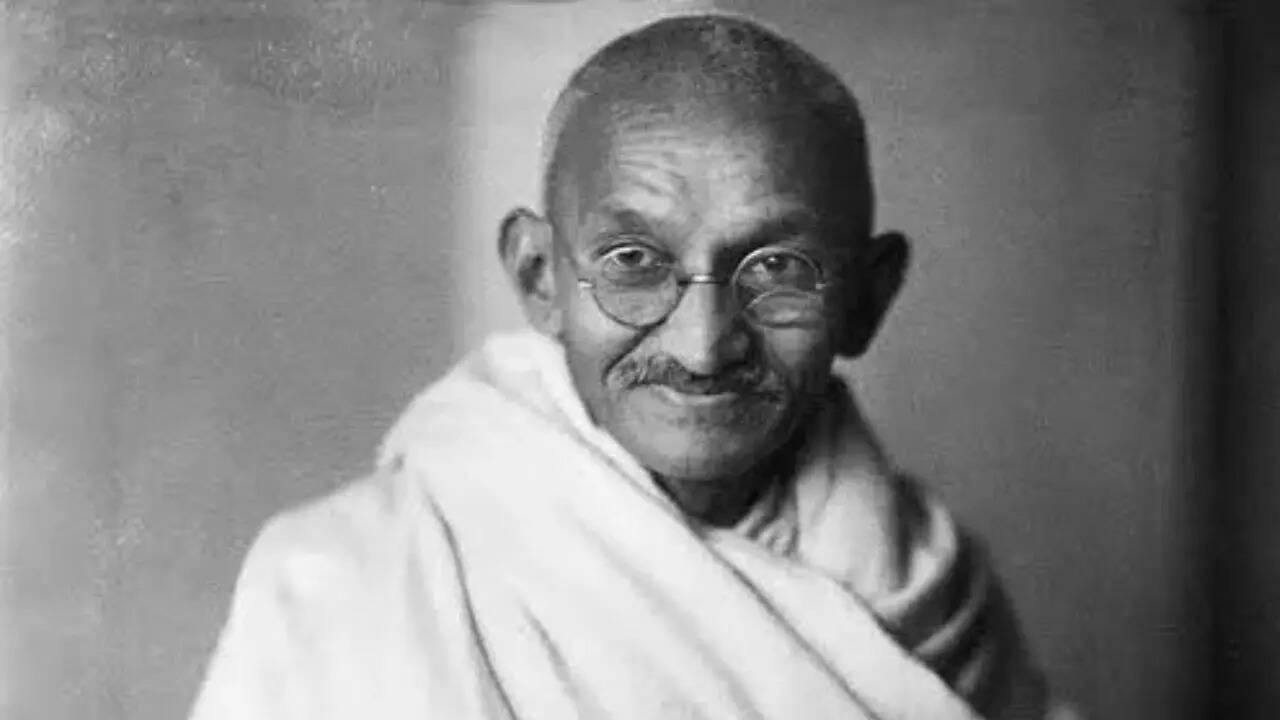
Inspired by Mahatma Gandhi, Samuel Evans Stokes Jr. joined India’s freedom movement.
By 1920, he was protesting against the Begar system of forced labour, which he believed was exploitative. In a message to the people, he said, “You should continue under the guidance of Stokes and suspend all kar and begar to the government and to the state… In your efforts I am with you with all my heart and soul.”
Inspired by Mahatma Gandhi, he started getting involved in India’s freedom struggle. According to the article Samuel Evans Stokes, Mahatma Gandhi, and Indian Nationalism by Kenton J. Clymer, “In October 1921 Mohandas K. Gandhi summoned India’s most prominent nationalists, including Motilal and Jawaharlal Nehru, D.V. Gokhale, Vallabh Bhai J. Patel, M.A. Ansari, Abdul Kalam Azad, Rajendra Prasad, Lala Lajpat Rai, and C. Rajagopalachari, to Bombay to consider an appropriate response to a recent government crackdown on nationalist leaders.”
It also stated that they decided to issue a manifesto urging Indians to withdraw from all government service, including the armed forces. “Among the nationalists invited was a single foreigner, an American named Samuel Evans Stokes III. Stokes, the only American ever to serve on the All India Congress Committee, joined the others in signing the manifesto.”
After the Non-Cooperation Movement began in 1921, he adopted khadi and attended public bonfires where foreign-made cloth was burnt.
Edward, Prince of Wales (later King Edward VIII), visited India in 1921, and as it was the peak of the Non-Cooperation Movement, his visit resulted in widespread protests and violent clashes. The city of Lahore witnessed demonstrations by the Congress Committee, the Khilafat Committee and various Sikh organisations. It was during these protests that Samuel was detained on 3 December under Section 108 of the CrPC.
Latest News


Namya is a seasoned journalist with nearly two decades of experience. A graduate of Miranda House, Delhi University, and Boston University’s College o… View More
Original source: https://www.timesnownews.com/lifestyle