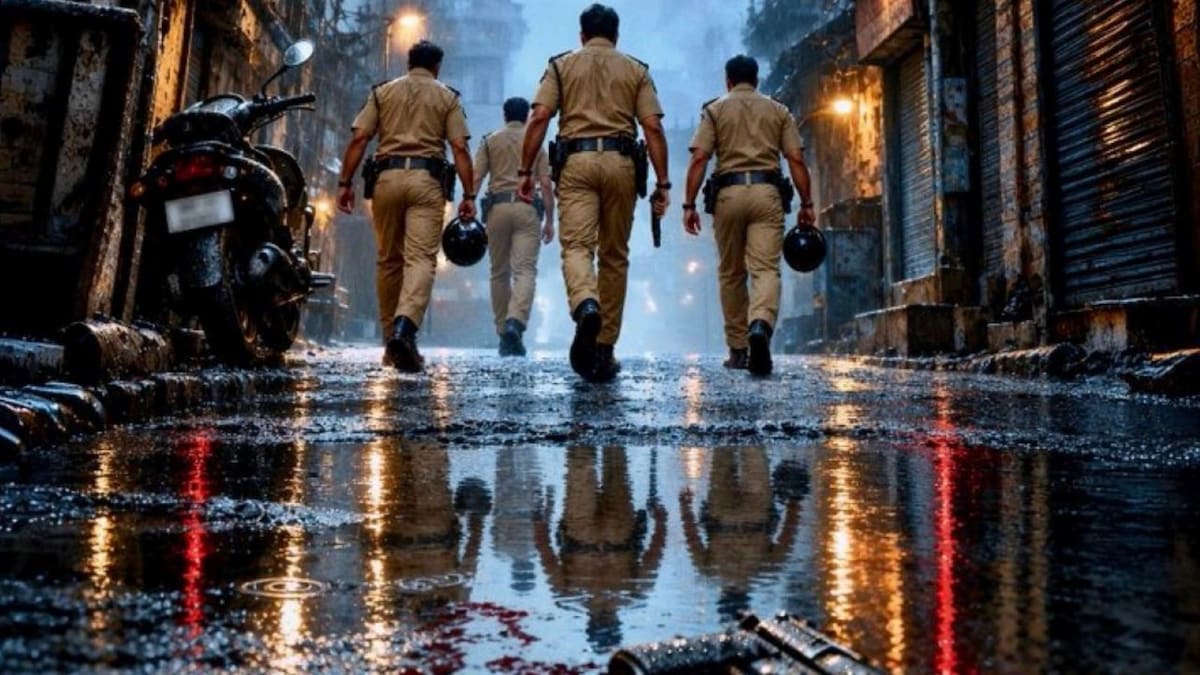
Can Ranbir Kapoor’s ‘Ramayana’ break Bollywood’s ‘epic curse’?
The real battle isn’t for box-office supremacy, but for cultural legitimacy. If recent epics proved that spectacle alone cannot sustain mythology, Ramanand Sagar’s Ramayana remains the enduring reminder that reverence, not scale, is what gives an epic its staying power.
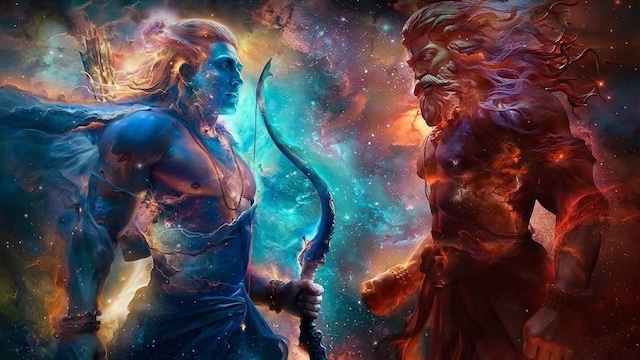
Adipurush proved that visual excess cannot substitute for reverence, while Brahmāstra showed that technical brilliance alone cannot forge an emotional mythology. Looming over both is Ramanand Sagar’s Ramayana, a cultural landmark that still defines how generations of Indians imagine the epic.
Together, they underscore the challenge before the film: in mythology, scale may create spectacle, but only storytelling, emotional conviction and cultural authenticity create a phenomenon.
Nitesh Tiwari’s Ramayana is more than a big-budget spectacle; it’s a generational wager in cinema. For decades, Bollywood has treated the epic as a box-office guarantee card. History has been less forgiving. Mythology may command attention, but only conviction earns devotion. Reverence, not scale, is what transforms an epic into an event.
Conceived as a two-part epic, the film brings together Ranbir Kapoor as Lord Rama, Sai Pallavi as Sita, and Yash as Ravana, while pairing Oscar-winning composer Hans Zimmer with AR Rahman for a score that signals its international ambitions as much as its cultural roots. With Part 1 slated for a worldwide Diwali release on November 8, 2026, and Part 2 a year later, Ramayana is staking its claim as Bollywood’s most ambitious attempt to turn India’s oldest epic into a global blockbuster.

Ranbir Kapoor in Ramayana. (Image YouTube)
Why Nitesh Tiwari’s Ramayana is Bollywood’s biggest gamble yet
With Ranbir Kapoor stepping into one of Indian mythology’s most revered roles, Ramayana is wagering that audiences no longer want spectacle just for spectacle’s sake. It’s a bolder bet: that reverence can coexist with blockbuster filmmaking, that emotional truth can outlast visual excess. That cinematic craft, not just a towering budget, can turn an ancient epic into a global cultural phenomenon.
For decades, Ramayana has remained one of Indian cinema’s most intangible stories to adapt.
Beyond Ramanand Sagar’s iconic late-1980s television series, which became a cultural phenomenon across India, few films or streaming adaptations have matched the emotional, spiritual, or popular hold of the ancient epic. That is partly because Ramayana occupies a space beyond entertainment.
For millions of Indians, it is a sacred text woven into memory, ritual and identity, leaving filmmakers with little room for creative missteps. Every adaptation arrives not only with blockbuster expectations but with the burden of earning the trust of an audience that guards its mythology with unusual devotion.
Read more: Imtiaz Ali’s movies show that the market may have moved on from millennials too soon
Ramanand Sagar’s Ramayana remains Bollywood’s toughest benchmark
Bollywood has since attempted to retell the epic with bigger stars, larger budgets and increasingly sophisticated visual effects, but the equation has changed.
Today’s audiences are scattered across streaming platforms, social media and global franchises, making the kind of collective viewing that defined the Doordarshan era almost impossible.
Yet expectations for Ramayana have only intensified. As a sacred text, it invites scrutiny of every creative choice—from casting and dialogue to visual design and faithfulness to the epic. Spectacle may draw crowds, but only authenticity and emotional conviction earn their trust.
That is why the benchmark remains Ramanand Sagar’s Ramayana. Its enduring legacy rests not on technical innovation but on trust. It convinced audiences that it understood the spirit of the epic before attempting to reinterpret it, a standard that every Bollywood adaptation has inherited and few have fully met.
Ramanand Sagar’s Ramayana understood a simple truth that reverence comes before reinvention. Every Bollywood adaptation has chased its legacy, but few have come close to matching its quiet authority. Its legacy was never built on spectacle, but on the rare ability to turn mythology into shared national memory. We must admit that the Doordarshan classic remains the gold standard every new adaptation must confront.
Not that Ranbir Kapoor’s Ramayana will fail at the box office, but it has to face a high creative hurdle because it will inevitably be measured against Ramanand Sagar’s Ramayana. Sagar’s Ramayana is woven into India’s cultural memory.
Remember, it is competing with nostalgia, not just another adaptation. From Ranbir Kapoor’s portrayal of Lord Rama to the dialogue, costumes, VFX and music, will be judged against decades of emotional attachment to Sagar’s interpretation.
Ramayana’s China bet: Beyond India, toward the world
Ramayana must win over more than multiplex audiences. Its biggest test is convincing millions who still see
Ramanand Sagar’s television classic as the definitive screen version of the epic. The larger gamble is whether a story every Indian already knows can sustain its emotional power across two films.
But Nitesh Tiwari’s ambitions stretch far beyond the domestic box office. With a global rollout and a reported release in China, the two-part saga is being positioned not simply as a Bollywood blockbuster, but as India’s boldest bid yet for a worldwide cinematic event.
Can Ramayana succeed where Adipurush fell short?
Take Adipurush. Armed with a reported ₹500 crore budget, a star-studded cast and Hollywood-scale ambition, it seemed engineered for blockbuster glory. Instead, weak writing and widely criticised VFX eclipsed the film’s spectacle, with it reportedly earning only around ₹300 crore worldwide. Its biggest lesson? The Ramayana magnifies flaws as much as it rewards ambition.
The paradox is hard to ignore. Ramayana may be Bollywood’s ultimate IP, but it is no box-office shortcut. Remember, spectacle grabs attention; craft wins audiences!
Read more: Delhi Belly, a rare cinematic triumph that’s impossible to recreate
Original source: https://www.cnbctv18.com/entertainment/