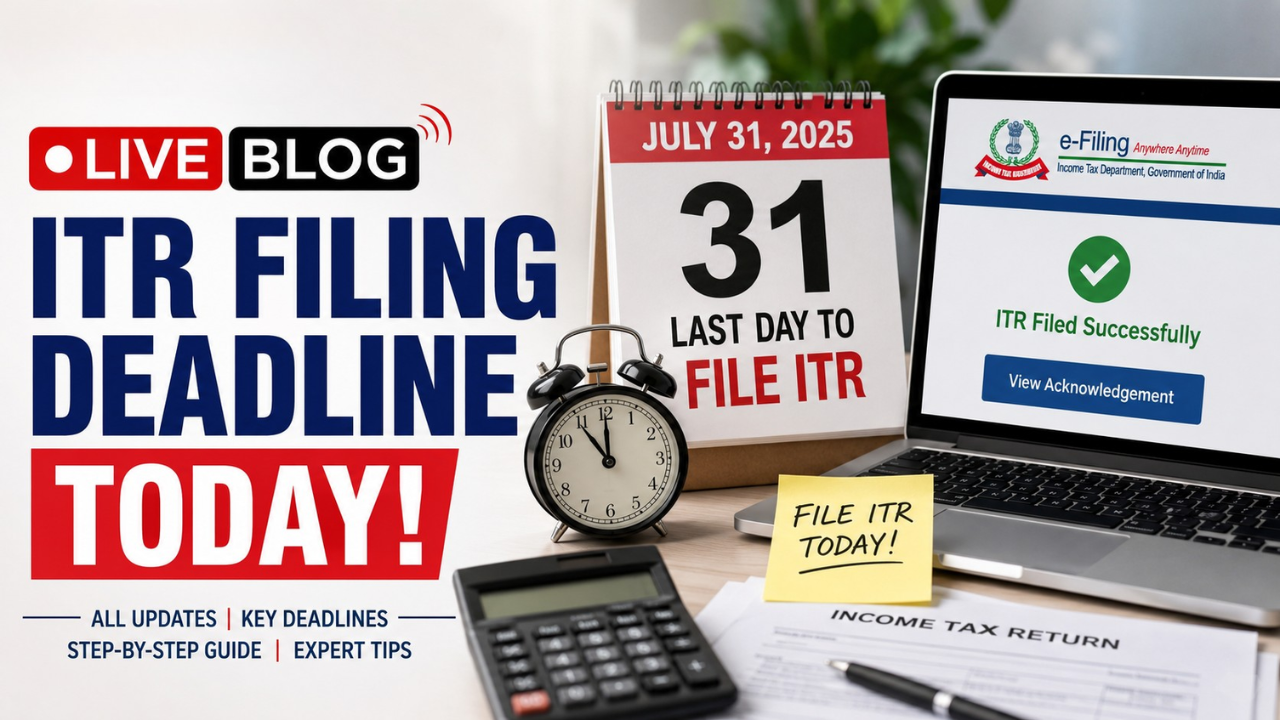
ITR Deadline 2026 Highlights: Last Day To File Income Tax Return On www.incometax.gov.in; No Extension Announced Yet
ITR Deadline 2026 Highlights: Today, July 31, is the last date for eligible taxpayers to file Income Tax Returns for AY 2026-27. With no deadline extension announced, resident individuals filing ITR-1 or ITR-2 should complete the process promptly to avoid penalties.


ITR Deadline 2026 Highlights: With the deadline for filing Income Tax Returns (ITR) for Assessment Year (AY) 2026-27 today, July 31, eligible taxpayers are making final preparations to complete the process on time. Filing the return before the due date is crucial not only for meeting statutory requirements but also for avoiding unnecessary financial consequences such as late filing fees, interest on outstanding tax liabilities and potential notices from the Income Tax Department.
As of now, the government has not issued any official notification extending the due date. Taxpayers who are covered under the July-end deadline should therefore complete the filing process without expecting additional time.
The July 31 deadline is applicable primarily to resident individuals who are required to file ITR-1 (Sahaj) or ITR-2 and whose accounts are not subject to a tax audit. This group represents a significant portion of taxpayers, including salaried employees, pensioners and many students who satisfy the prescribed eligibility conditions.
Who Is Required To File By July 31?
For AY 2026-27, eligible taxpayers filing ITR-1 and ITR-2 must submit their returns by July 31, 2026. Returns can be filed through the Income Tax Department’s official e-filing portal or with the help of fintech platforms that offer assisted filing services for a fee.
In general, ITR-1 and ITR-2 are meant for resident individuals with total income of up to Rs 50 lakh from eligible sources. These may include salary or pension income, earnings from up to two house properties, interest income, dividend income, long-term capital gains up to Rs 1.25 lakh and other specified sources permitted under the applicable return forms.
Since these taxpayers are not required to have their accounts audited, they fall under the July 31 filing schedule.
ITR Deadline 2026: Has the Government Extended the Due Date?
Last year, the Income Tax Department extended the filing deadline twice after taxpayers encountered technical issues on the e-filing portal. Initially, the due date was moved from July 31 to September 15, before being extended by an additional day to September 16.
This year, however, no such relief has been announced. Tax professionals are advising eligible taxpayers to complete their filings before the existing deadline instead of expecting an extension. Filing on time can help avoid last-minute technical problems, late fees, and delays in the processing of tax refunds.
ITR Deadline 2026: Why July 31 Isn’t The ITR Filing Deadline For Every Salaried Taxpayer
Individuals and Hindu Undivided Families (HUFs) who do not have income from business or profession and are required to file ITR-1 or ITR-2 must submit their returns by July 31.
This generally includes taxpayers earning income from:
Salary or pension
House property
Capital gains
Interest and dividend income
Crypto assets held as investments
Foreign assets or overseas income (where applicable under ITR-2)
ITR Deadline 2026: Do You Still Need To File An ITR Even If You Don’t Have To Pay Tax?
Under the old tax regime, the basic exemption limit is:
Rs 2.5 lakh for individuals below 60 years of age
Rs 3 lakh for senior citizens (60 years to below 80 years)
Rs 5 lakh for super senior citizens (80 years and above)
Under the new tax regime, the basic exemption limit is Rs 4 lakh for taxpayers across all age groups.
Even if your income is below the exemption limit, you may still be required to file an ITR if you meet any of the specified conditions, such as:
Savings bank deposits exceeding Rs 50 lakh
Current account deposits exceeding Rs 1 crore
Foreign travel expenditure of more than Rs 2 lakh
Electricity bills exceeding Rs 1 lakh
Ownership of foreign assets or having signing authority in an overseas account
ITR Deadline 2026: Which ITR Form Should You File?
ITR-1 (Sahaj): Meant for resident individuals earning income from salary or pension, one house property, and other eligible sources, subject to the prescribed conditions.
ITR-2: Applicable to individuals and Hindu Undivided Families (HUFs) who do not have income from business or profession.
ITR-3: Designed for individuals and HUFs earning income from business or profession.
ITR-4 (Sugam): Intended for taxpayers opting for the presumptive taxation scheme and earning presumptive income from business or profession, subject to the prescribed eligibility criteria.
ITR Deadline 2026: Can You Revise Your Income Tax Return After Filing?
ITR Deadline 2026: Who Is Required To File An ITR?
Under the old tax regime, the basic exemption limits are:
*Rs 2.5 lakh for individuals below 60 years of age.
*Rs 3 lakh for senior citizens aged 60 years or above but below 80 years.
*Rs 5 lakh for super senior citizens aged 80 years or above.
Under the new tax regime, the basic exemption limit is Rs 4 lakh for all individual taxpayers, irrespective of age.
ITR Deadline 2026: What Is The Update On Deadline Extension?
ITR Deadline 2026: Follow These Tips For A Smooth And Stress-Free Filing Experience
Before filing your ITR, ensure the following requirements are in place:
Keep your e-filing portal login credentials, including your password, readily available.
Update your profile with the latest personal and contact details.
Make sure your bank account is validated and linked to your e-filing profile.
Confirm that your PAN is linked with Aadhaar, wherever applicable, as required for individual taxpayers.
Taxpayers are also advised to avoid waiting until the final hours before the deadline to file their returns. If you are unsure about any tax provisions or the information to be disclosed, consider consulting a qualified tax professional to ensure your return is filed accurately and within the stipulated due date.
ITR Deadline 2026: Filed Your Income Tax Return? Don’t Skip This Crucial Final Step
An ITR becomes valid only after it is successfully e-verified. This mandatory step allows the Income Tax Department to start processing your return, making e-verification the final and essential stage of the ITR filing process.
ITR Deadline 2026: How Many Times Has The ITR Deadline Was Extended In The Last Five Years?
ITR Deadline 2026: Has The Government Extended the Filing Deadline?
Last year, the Income Tax Department extended the due date twice after taxpayers encountered technical issues on the e-filing portal. The original July 31 deadline was first revised to September 15 and subsequently extended by one more day to September 16.
This year, however, tax professionals are advising taxpayers not to expect a similar relief. They recommend completing the filing process well before the deadline to avoid last-minute technical glitches, late filing penalties, and delays in the processing of refunds.
ITR Deadline 2026: Is There Any Update On Extension Of The Due Date?
ITR Deadline 2026: CBDT Releases New Form
ITR Deadline 2026: Who Needs To File An ITR?
Under the old tax regime, the basic exemption limits are:
Rs 2.5 lakh for individuals below 60 years of age.
Rs 3 lakh for senior citizens aged 60 years or above but below 80 years.
Rs 5 lakh for super senior citizens aged 80 years or above.
Under the new tax regime, the basic exemption limit is Rs 4 lakh for all individual taxpayers, regardless of age.
If your total taxable income crosses the applicable exemption threshold, you are generally required to file your ITR within the due date specified under the Income Tax Act.
ITR Deadline 2026 Live: How To Ensure A Smooth ITR Filing Process
Before filing your ITR, make sure the following essentials are in place:
Ensure you have a valid password to access the Income Tax e-filing portal.
Verify that your profile details on the portal are up to date.
Confirm that your bank account has been validated and linked to your profile.
Check that your PAN is linked with Aadhaar, wherever this requirement is applicable for individual taxpayers.
The department also recommends avoiding last-minute filing. If you are uncertain about any information or tax-related details, seeking assistance from a qualified tax professional can help ensure your return is filed correctly and within the stipulated deadline.
ITR Deadline 2026: Is There Any Extension To The Deadline?
ITR Deadline 2026: Income Tax E-Filing Portal Functions Smoothly On Final Filing Day
ITR Deadline 2026: Filing Your Income Tax Return Isn’t Complete Until You Finish This Final Step
An ITR is considered valid only after it has been successfully e-verified. Once the return is e-verified, the Income Tax Department can begin processing it.
ITR Deadline 2026 Live: Different Categories Have Different Filing Deadlines
The due dates for AY 2026-27 are as follows:
July 31, 2026: Resident individuals filing ITR-1 and ITR-2.
August 31, 2026: Taxpayers earning salary income along with freelance or business income that is not liable for a tax audit.
October 31, 2026: Businesses and professionals whose accounts are required to undergo a mandatory tax audit.
Before filing, taxpayers should carefully verify which ITR form applies to their income profile and confirm the relevant due date. Selecting the correct return form and filing within the applicable timeline can help ensure compliance and reduce the risk of penalties, delays or other tax-related complications.
Original source: https://www.timesnownews.com/business-economy