Mahto’s Health Worsens: Why Potassium Drop Can Trigger Dangerous Heart Risks
- Authored by: Simran Sukhnani
- Updated Aug 9, 2026, 21:40 IST
Concerns over the health of fasting protesters in Jharkhand have renewed attention on the medical dangers of prolonged hunger strikes, particularly potassium imbalance, dehydration, irregular heartbeat, and other potentially life-threatening complications.
Mahto’s Health Update Jharkhand Protest
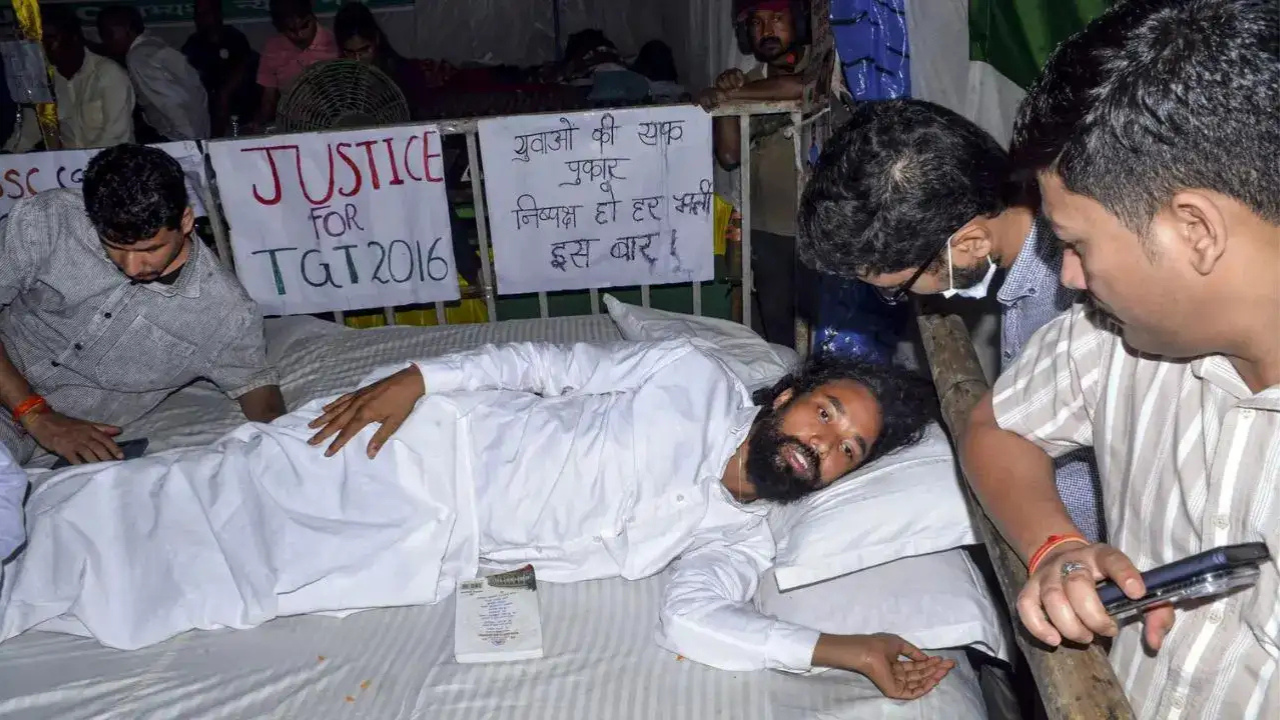
Ranchi has been witnessing an intense student-led agitation over alleged irregularities in Jharkhand Public Service Commission (JPSC) and Jharkhand Staff Selection Commission (JSSC) recruitment examinations. The protest has now entered its third week, with several aspirants continuing an indefinite hunger strike and pressing for direct talks with the state government. Fresh negotiations were scheduled after concerns grew over the condition of some fasting protesters. Reports indicate that student leader Devendra Nath Mahto has become extremely weak, with complaints of dehydration, low blood sugar and low blood pressure, and medical teams have repeatedly examined the hunger strikers as the standoff continues. Recent reports have also suggested that at least one protester required hospital treatment as the agitation escalated.
The political dispute has dominated headlines, but prolonged hunger strikes raise another urgent question: what happens inside the body when food intake is drastically reduced for days or weeks?
The Major Danger
One of the least understood dangers is potassium imbalance, a problem doctors take seriously because it can affect the heart’s electrical system. Potassium is an essential mineral that helps regulate heartbeat, muscle contraction and nerve function. Under normal circumstances, it is obtained from foods such as fruits, vegetables, pulses, dairy products and nuts. When a person stops eating for an extended period, the body initially uses stored glucose for energy. As those reserves are depleted, it begins breaking down fat and eventually muscle tissue. During this process, potassium levels can become unstable.

Low levels of Potassium (Credits: iStock)
The risk becomes greater if prolonged fasting is accompanied by vomiting, diarrhoea, excessive sweating, dehydration or the use of certain medications, all of which can increase potassium loss from the body. Low potassium, known medically as hypokalaemia, may begin with symptoms that appear deceptively mild: weakness, fatigue, muscle cramps, constipation or dizziness.
In more severe cases, however, the consequences can be far more serious. Potassium is critical for maintaining the heart’s normal rhythm, and dangerously low levels can lead to palpitations, irregular heartbeat, fainting episodes and, in rare situations, life-threatening arrhythmias. This is why doctors monitoring prolonged fasting often check not only blood sugar and blood pressure but also electrolytes such as potassium, sodium and magnesium.
Cardiologists note that people who have been fasting for many days may already be dealing with reduced blood volume and low blood pressure, which can compound the effects of electrolyte disturbances. A person may appear merely exhausted while their cardiovascular system is under significant stress. Continuous medical supervision becomes especially important when fasting extends beyond several days.
Other Factors To Note
Another medically important point is that the danger does not necessarily end when the fast is broken. After prolonged starvation, suddenly consuming large amounts of carbohydrates can trigger re-feeding syndrome, a condition in which insulin shifts potassium, phosphate and magnesium rapidly into cells. Blood levels can then fall sharply, potentially causing heart failure, breathing difficulties or dangerous rhythm disturbances if nutrition is restarted too aggressively.

Potassium deficiency (Credits: iStock)
Public protests and hunger strikes have long been part of India’s democratic landscape, often drawing attention to deeply felt grievances. Yet physicians repeatedly emphasise that extended fasting is not simply a political act; it is a significant physiological stress on the body. Dehydration, low blood sugar, falling blood pressure and electrolyte imbalance can interact in unpredictable ways, and potassium remains one of the most critical markers because of its direct link to the heart’s electrical stability.
As the Jharkhand protest continues and concerns over the health of fasting students persist, the unfolding situation serves as a reminder that the most dangerous complications of a hunger strike are sometimes the ones that cannot be seen from the protest site — they are occurring silently inside the body, one electrolyte at a time.
Latest News


Simran covers books that start conversations, beauty insights, fashion moods, and stories that make people feel something. Off duty? You’ll find her c… View More
Original source: https://www.timesnownews.com/lifestyle