The Colourful Life Of ‘Loony Akhtar’: The British General Who Lived Life King-Size
- Written by: Namya Sinha
- Updated Aug 12, 2026, 15:06 IST
Sir David Ochterlony, a British general with 13 Indian wives, a fondness for the hookah and a taste for regal clothes, fashioned an extraordinary life in Mughal Delhi.
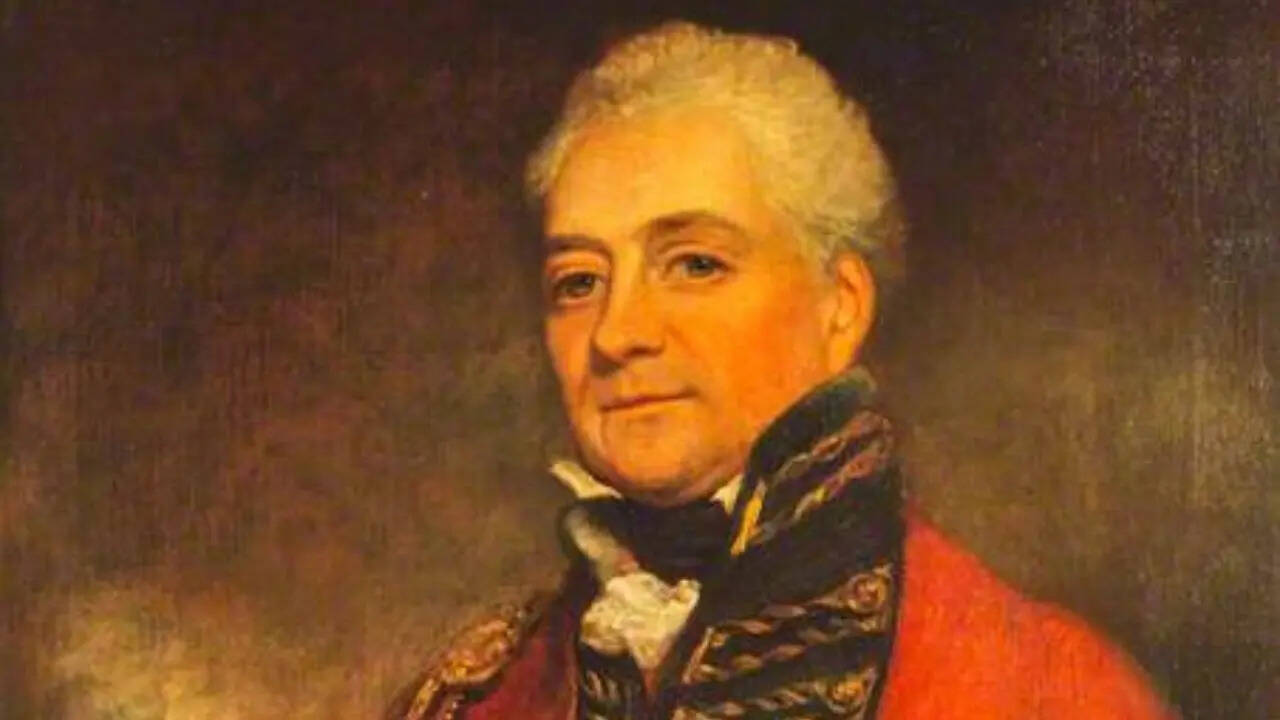
Sir David Ochterlony (1758-1825) | Photo Credit: Wikimedia Commons)
“Loony Akhtar”. That was what Delhi called Sir David Ochterlony (1758–1825), a British general who led a colourful life. He moved comfortably between British and Indian cultures, and his years in the Mughal capital became a fascinating example of cultural hybridity.
Born in Boston, US, Ochterlony was a soldier and administrator. He served under General Gerard Lake during the East India Company’s campaigns in north India and was appointed British Resident at the Mughal court in Shahjahanabad (Old Delhi) in 1803. The position placed him close to the ageing Emperor Shah Alam II and required him to navigate the elaborate etiquette of the Mughal court. By then, Ochterlony was familiar with the customs and lifestyle of Delhi’s elite. Historian Sylvia Shorto describes him as a man who consciously emulated the manners of Delhi’s urban aristocracy. He also liked to be addressed by his Mughal title, “Nasir-ud-Daula”, Defender of the State.
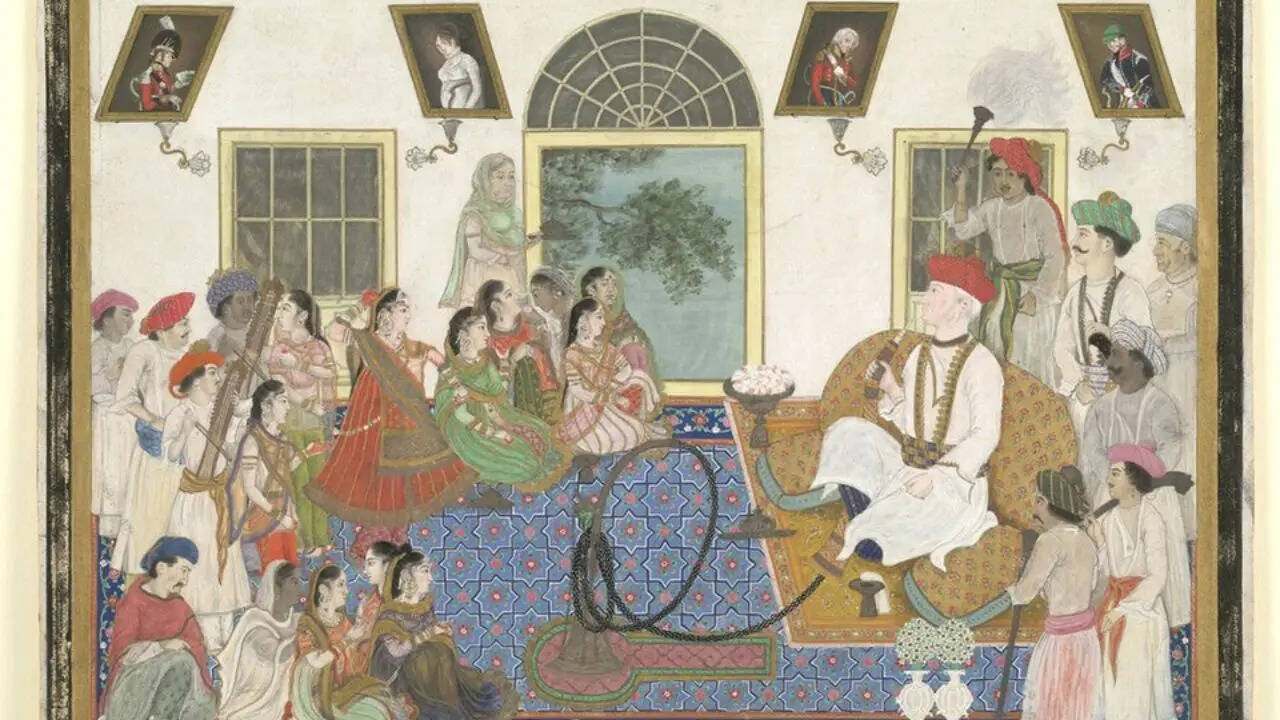
A watercolour of Sir David Ochterlony in Indian dress, smoking a hookah, by an anonymous Delhi artist, c. 1820. (Photo: Wikimedia Commons)
His mannerisms began to mirror those of Mughal noblemen. He smoked the hookah and embraced pleasures that were part of aristocratic life in Delhi. He is widely said to have had 13 Indian wives or companions. “In early 19th-century Delhi, one of the sights of the town was the afternoon parade of the British Resident, or ambassador, and his 13 Indian wives, each travelling on the back of her own elephant,” wrote author William Dalrymple in his essay Before British India, There Were Indian Britons. According to the account, Ochterlony would leave the British Residency each evening with his household and take them around the Mughal Red Fort for their airing before returning for dinner.
Ochterlony and his wives were said to sit in howdahs, or elephant thrones, with his own reportedly the most elaborate. Made of wood and painted silver, it was padded and decorated with embroidered zari.
His desire to embrace the rituals of Mughal royalty extended to ceremonies associated with the emperors. One such ritual was Charan Amrit. A large silver vessel, known as a tasht, was filled with water and rose petals, and Ochterlony would soak his feet in it. His servants were then expected to drink the water as a gesture of loyalty and respect.
His favourite wife was Mubarak Begum, a Brahmin slave girl from Pune who eventually converted to Islam. In his will, she was named “Beebee Mahruttun Moobarukh ul Nissa Begume, alias Begum Ochterlony, mother of my younger children”. She was also known as Generalee Begum. The document left her much of his Indian property, including the garden estate known as Mubarak Bagh, for her lifetime. It’s also believed that a porion of this house was kept to be turned into a mausoleum for him. But Ochterlony died much before in 1825 in Meerut before this plan could be executed.
Mubarak Begum had her own grand ambitions. She commissioned a mosque in Hauz Qazi, Shahjahanabad, which came to be known as Masjid Mubarak Begum, after her. She was disliked by the British and Mughals for her political and social aspirations.
As for Ochterlony, he had come to the city as a representative of British power and ended up embracing much of the world he was sent to govern.
Latest News


Namya is a seasoned journalist with nearly two decades of experience. A graduate of Miranda House, Delhi University, and Boston University’s College o… View More
Original source: https://www.timesnownews.com/lifestyle