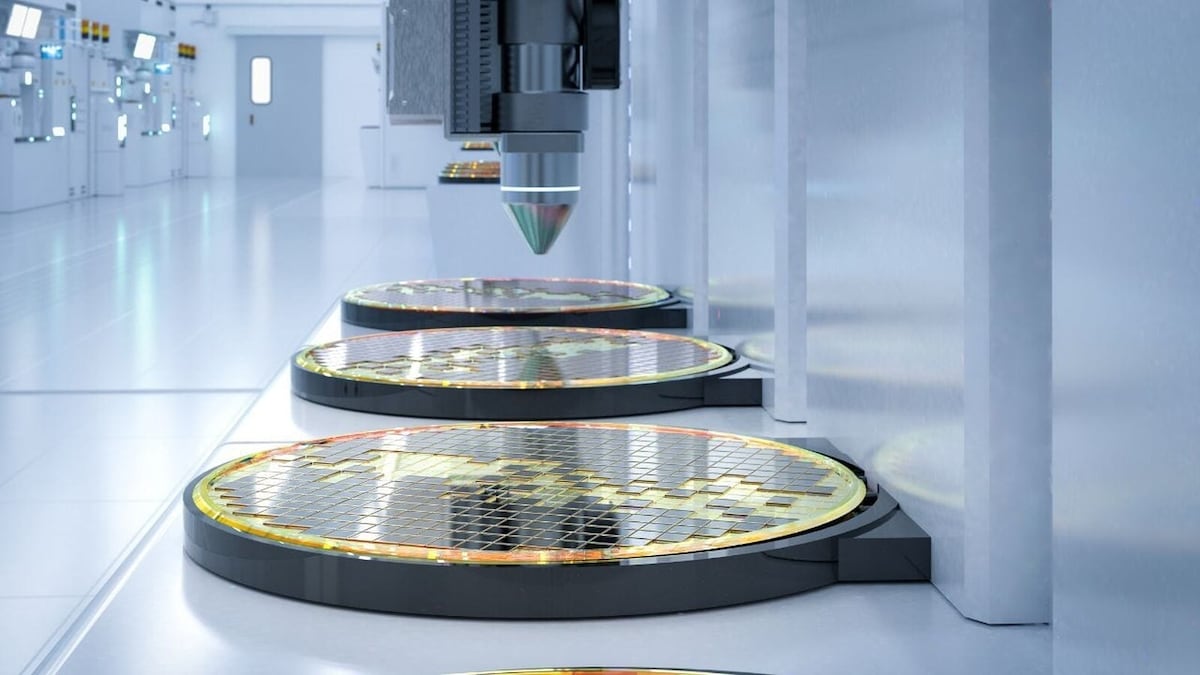


The startup has already developed thermal materials using its AI-led approach that, according to Co-Founder Advaith Sridhar, matched the performance of products that took large chemical companies years to develop. The materials have undergone third-party testing under the ASTM 5470 standard, and the company has received letters of intent from large semiconductor manufacturers, Sridhar told CNBC-TV18.
The startup plans to move these materials into pilot qualification and eventually commercial production.
“GPUs today have a major heat problem, where with every generation of GPU that comes out, the amount of heat coming out of these GPUs is doubling,” Sridhar said.
“This is primarily a materials problem,” he added.
AI chips face an extreme thermal challenge
The thermal challenge is becoming more acute as AI workloads require increasingly powerful processors. Sridhar said AI chips can generate heat densities of more than 140 watts per square centimetre.
He compared the heat flux with the conditions experienced by a spacecraft during atmospheric re-entry.
“The 140 watts per square centimetre is actually more than what a space shuttle experiences as it’s re-entering the atmosphere,” he said.
Sridhar described thermal management as “the most serious challenge” facing chips today and said the problem is likely to become more severe as chip performance continues to increase.
The implications extend beyond semiconductor manufacturing. According to Sridhar, the heat generated by chips is also one reason data centres consume large amounts of water, as cooling systems are required to manage rising temperatures.
Startup wants to compress years of materials R&D
Developing a new material for commercial use can traditionally take years. The process involves computational simulations, laboratory synthesis, testing and validation, as well as determining whether the material can meet the manufacturing constraints of a semiconductor fab.
Discovered Materials is developing AI agents that can work across these stages.
Sridhar said the company’s approach is to give AI agents broad access to scientific knowledge and enable them to reason across different parts of the materials development process.
“We think these agents, by having this broad access to knowledge and being able to reason over that, are able to compress a lot of the timelines that we are seeing to much shorter durations,” he said.
The startup has released hundreds of AI-discovered materials and is focused on moving beyond identifying promising candidates to synthesising, testing and manufacturing them.
“There’s a long road in going from the lab to the fab,” Sridhar said.
$9 million seed round
Discovered Materials has raised $9 million in seed funding led by Lightspeed, with Y Combinator and Peak XV Partners participating.
Around 50% of the funding will be spent on computing infrastructure to improve the company’s AI models and build its platform, Sridhar said.
Another quarter will go towards setting up the physical laboratory, while the remaining quarter will be used to hire talent with expertise spanning materials science, laboratory work and AI.
Business model centred on materials IP
Discovered Materials plans to license the intellectual property generated from its work, covering both the materials it discovers and the processes used to manufacture them.
The company expects to work with semiconductor fabs as well as chemical companies.
It also sees a potential business in licensing its AI platform. Sridhar said the startup may initially generate more revenue from the platform before shifting towards materials IP.
The company is currently pre-revenue.
Sridhar expects the revenue profile to change once its materials enter commercial production, given the potential for licensing income from materials used at scale.
Can AI genuinely discover new materials?
Discovered Materials has also launched Material Discovery Bench, a benchmark designed to test frontier AI models on real-world semiconductor materials problems.
Sridhar said the models have shown they can identify new materials with useful properties, although moving from an AI-generated candidate to a commercially manufactured material remains a significant challenge.
The company is therefore focused not only on identifying promising materials but also on synthesising them, testing their performance and determining whether they can be manufactured within the constraints of semiconductor production.
Sridhar also pushed back on the idea that reasoning over existing scientific literature cannot result in genuine scientific discovery. He argued that researchers, including PhD scientists, already use existing knowledge as a foundation for developing new ideas.
India opportunity as semiconductor ecosystem expands
Discovered Materials believes India’s growing semiconductor manufacturing ambitions could create opportunities beyond chip fabrication.
Global semiconductor companies such as TSMC, Intel and Samsung have extensive proprietary knowledge of the materials they currently use. Sridhar said this could create an opportunity for startups to explore entirely new chemical spaces.
He described this as an “innovator’s dilemma” for large companies, which have significant investments in existing manufacturing infrastructure and materials.
For Discovered Materials, the potential moat lies in rapidly exploring new chemical spaces and building experimental data around what works and what does not.
Sridhar also sees an opportunity for India to play a larger role in semiconductor intellectual property and materials as domestic manufacturing capabilities expand.
“I think it can. India has the best talent, not just globally, in all semiconductor companies,” he said.
With Indians already spread across the global semiconductor value chain, Sridhar believes the development of domestic manufacturing capability could provide the missing piece for India to build a broader semiconductor ecosystem.



















Original source: https://www.cnbctv18.com/technology/