Pete Hegseth Denies Crisis Aboard USS Lincoln as Senators Demand Investigation Into Sailors’ Wellbeing
- Edited by: Sagar Kar
- Updated Aug 14, 2026, 01:29 IST
Defense Secretary Pete Hegseth has dismissed reports of deteriorating conditions and mental health struggles aboard the USS Abraham Lincoln, calling them a misrepresentation, even as senators demand formal answers and access from the Pentagon.
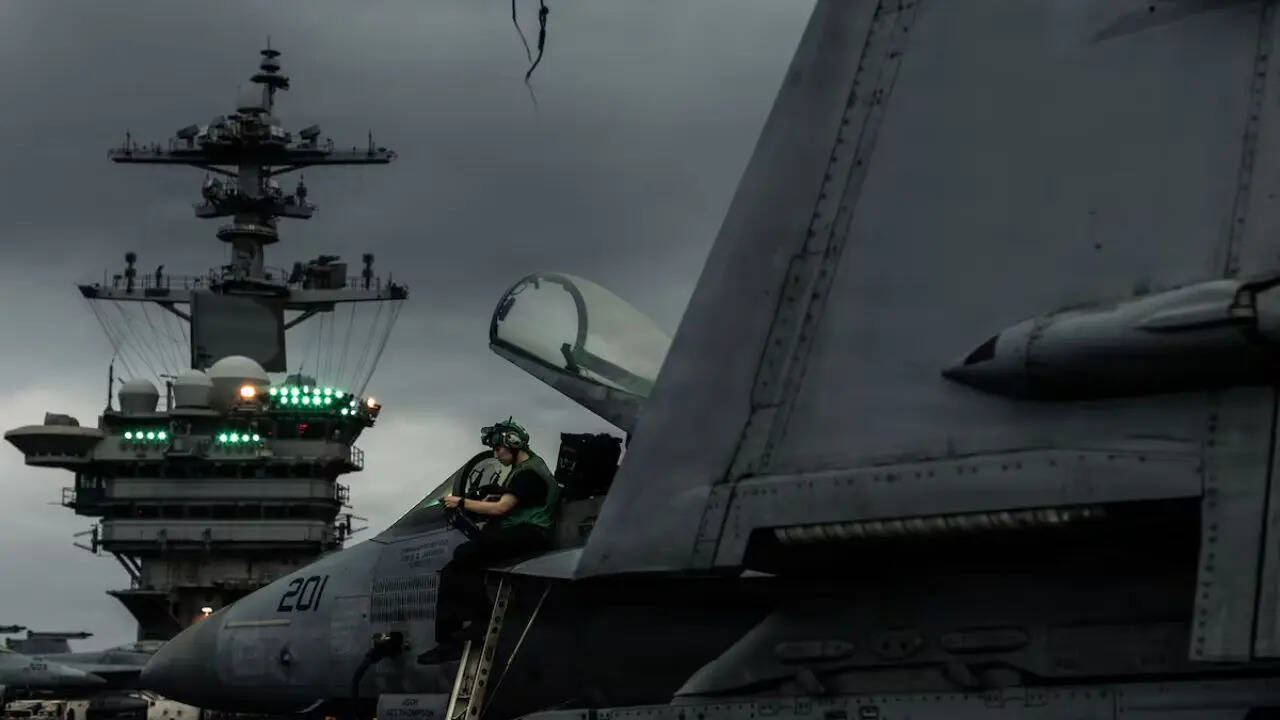
A US sailor conducts an inspection on an F/A-18E Super Hornet on the flight deck of the aircraft carrier USS Abraham Lincoln, June 27, 2026. (U.S. Navy)
US Defense Secretary Pete Hegseth has rejected claims that sailors aboard the USS Abraham Lincoln are facing worsening conditions and mental health struggles, dismissing the reports as inaccurate even as pressure mounts from Congress over the carrier’s unusually long deployment.
Speaking to reporters during a trip to Panama, Hegseth said the military does everything possible to support every ship, crew and captain at all times. He acknowledged that some deployments simply run longer than others, and he praised the sailors for enduring rough seas and difficult conditions with fewer opportunities to dock at port.
Hegseth’s comments followed a letter sent one day earlier by Senator Richard Blumenthal, a Connecticut Democrat who sits on the Senate Armed Services Committee. Blumenthal addressed the letter to both Hegseth and Acting Navy Secretary Hung Cao, calling for a detailed accounting of what conditions are actually like aboard the ship.
In the letter, Blumenthal expressed concern over how long carrier strike group deployments have been stretching, arguing that the Lincoln’s situation raises larger questions about whether the Navy can keep generating carrier forces without sacrificing the wellbeing of its sailors.
He detailed a list of issues sailors had reportedly experienced, including shortages of basic supplies, contaminated water, plumbing problems, worsening mental health, safety concerns on deck, and a mail system so backed up that care packages have been lost in transit for months. Blumenthal included six specific questions for Pentagon leadership, among them what methods the Navy uses to measure fatigue and morale among crew members. He set a deadline of August 27 for a response.
Blumenthal emphasized that the sailors aboard the Lincoln volunteered to serve their country and argued the Department of Defense owes them more than just basic supplies and maintenance during such an extended deployment.
Senator Mark Kelly, a Arizona Democrat, wrote on X that “The reports from the USS Abraham Lincoln about multiple sailors attempting to jump into the sea are disturbing. Long deployments are hard. They are a lot harder when the mission isn’t well defined and there is no end in sight.”
Senator Ruben Gallego, another Arizona Democrat, wrote – “The Department of the Navy must allow a bipartisan Congressional Delegation to visit the USS Lincoln to conduct oversight investigation into this horrible situation. CODELs have visited war zones to inspect the conditions of our troops. There is no reason to be denied access.”
A Deployment Unlike Any Other
The Lincoln departed its home port in San Diego back in November before later being sent to the Middle East to help with US military operations tied to the war with Iran, a conflict that has now stretched into its sixth month. The carrier has gone more than 200 days without making a single port call, setting a modern record for the longest stretch of continuous time at sea. All told, the ship has now been deployed for over 250 days.Typically, the Navy plans carrier deployments to last somewhere between six and seven months. However, that timeline usually includes regular port visits along the way, which the Navy has described as chances for sailors to step away from the pressures of life at sea. According to the Navy’s own 2025 carrier briefing, sailors can end up working more than 12 hours a day during active operations, a demanding pace even under normal circumstances.
Research backs up concerns about how these conditions affect sailors psychologically. A 2024 study from the Naval Postgraduate School that looked at 873 sailors found a connection between worsening mood and sleep that was shorter, lower quality, or frequently interrupted. Separately, another 2024 Navy study tracked 58 submariners over 30 days at sea and found they averaged just 6.6 hours of sleep per day, with their mood noticeably declining as the deployment wore on.
Conflicting Accounts Emerge
A Navy official told the British publication, the Guardian this week that based on the information available to command, there has not been any identified increase in reported suicidal thoughts or suicide attempts aboard the ship.That statement stands in contrast to reporting from Stars and Stripes and Navy Times, both of which said this week, based on interviews with active duty sailors and their families, that there have been multiple instances of crew members attempting to jump from the ship, along with widespread accounts of exhaustion and declining morale.
Navy Times spoke with Annabelle Loma, whose husband is currently serving aboard the Lincoln and was reported to have attempted to go overboard during the deployment. Loma said she worries a dishonorable discharge could end his 13 year career, calling that outcome unfair.
Stars and Stripes also reported that at a recent gathering, one spouse broke down while telling officials that her husband had texted her that same day saying he hoped he would not wake up the next morning.
Latest News


Sagar is a journalist with an interest primarily in geopolitics and American domestic politics. Before joining Times Now, he wrote for Republic and Sw… View More
Original source: https://www.timesnownews.com/latest-news