Independence Day 2026: The Ordinary Ingredients that Became Extraordinary Symbols of Resistance
- Authored by: Aalokitaa Basu
- Updated Aug 15, 2026, 09:00 IST
When a country is fighting for its freedom, everything finds a way to be doused in political hues. The same goes for the food on your plate and the staples in your pantry.
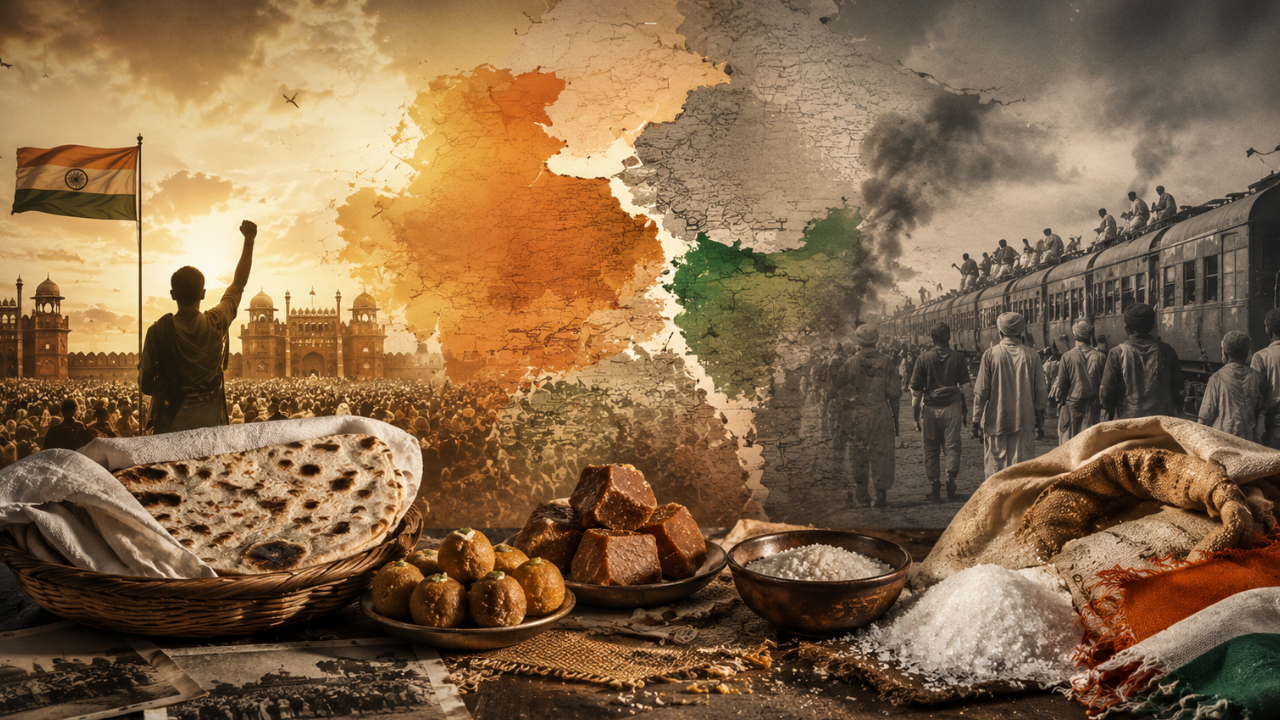
Independence Day 2026: Ordinary ingredients, extraordinary legacies (Credit: AI)
The seminal role the tiny particles of salt played in the mammoth move that was, the mass civil disobedience is potentially one of the very first stories of the nation’s willpower that is ingrained on to young minds in our history textbooks. And rightly so, given the scale and impact of what something so seemingly innocuous in our day to day life today, stood to represent when our forefathers found their then-nascent nation at a bourgeoning impasse with the British Raj.
The history of the Dandi March, dated 1930, only keeps getting richer with the reverence that gets added on with each passing year – especially as the current, ecologically-conscious generations strives to ‘go local’, like their ancestors. But speaking of the salt, in and as itself – it’s a marker of how deeply rooted India’s extraordinary struggle for independence was, in the ordinary; a lot of the mundanity coming right from the staples on plates and in our pantries.
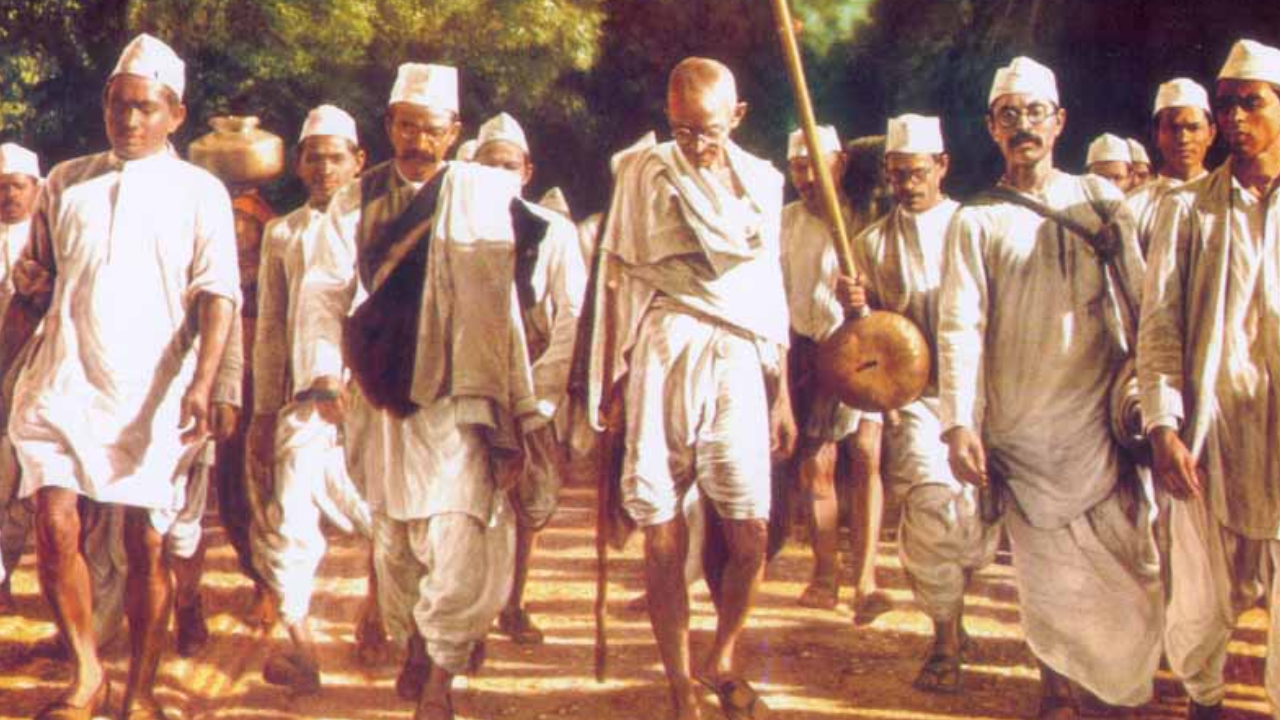
The Dandi March (Credit: MK Gandhi.org)
Take the humble chapati for instance. It’s the defacto presence on the dining table, scooping up dals and curries – the ultimate marker of a ‘mundane’ meal; so mundane that hardly anyone recognises it as being the first symbol and vehicle for ‘India’s First War of Independence’. What the country managed to achieve by 1947 was of course, no overnight feat. It was decades in the making – almost a century many would say! The Revolt of 1857 was just that, ‘India’s First War of Independence’. Sepoys, peasants and dethroned rulers joined forces in a focused attempt to challenge the British colonial power, an event that laid the foundation for the structure of the people’s freedom struggle.
In this regard, the Chapati Movement of early 1857 cannot be ignored. First noticed in Mathura in February, the ‘movement’ made its way through the villages of Madhya Pradesh, Uttar Pradesh and eventually Delhi. As per lore, a messenger handed flatbreads to a village headman with instructions to bake ten more and pass them on to the next settlement, creating an endless chain of sorts. One would typically expect for this to be carrying some kind of message that was being relayed through the people – but so was decidedly not the case. Either way, this mere gesture among people managed to stoke a deep colonial panic with British officials seeing this as potentially a secret signal for a coordinated rebellion, or worse, a magical talisman given the country’s legacy. It’s true motivations aside, what it did achieve was a sense of unity among the people, and an insidious and nagging panic among the British Raj.
Coming back to the final two decades before the country cracked the code for independence, not every item of protest was used to make a loud statement, as was the case with salt. Take sweet, melt-in-your-mouth gur for instance. It became one of the primary examples of Indians opting to go Swadeshi, nudging along the bubbling village industry and economic self-reliance, honouring ‘Gram Swaraj’ and the eventual course of the country’s history.
We may not fully ever understand the ordeal of ‘captivity’, especially given how most of us were born into an Independent India. However, this 80th Independence Day as the country celebrates 79 years of independence, we ought to hold some space to reflect on the ordinary stories that made this extraordinary feat possible, all those decades back.
Latest News


Aalokitaa Basu is a writer and Senior Copy Editor whose work explores the intersection of lifestyle, culture, beauty, wellness, and self-possession. H… View More
Original source: https://www.timesnownews.com/lifestyle