AI could eventually outperform doctors in key medical decisions, JAMA paper says
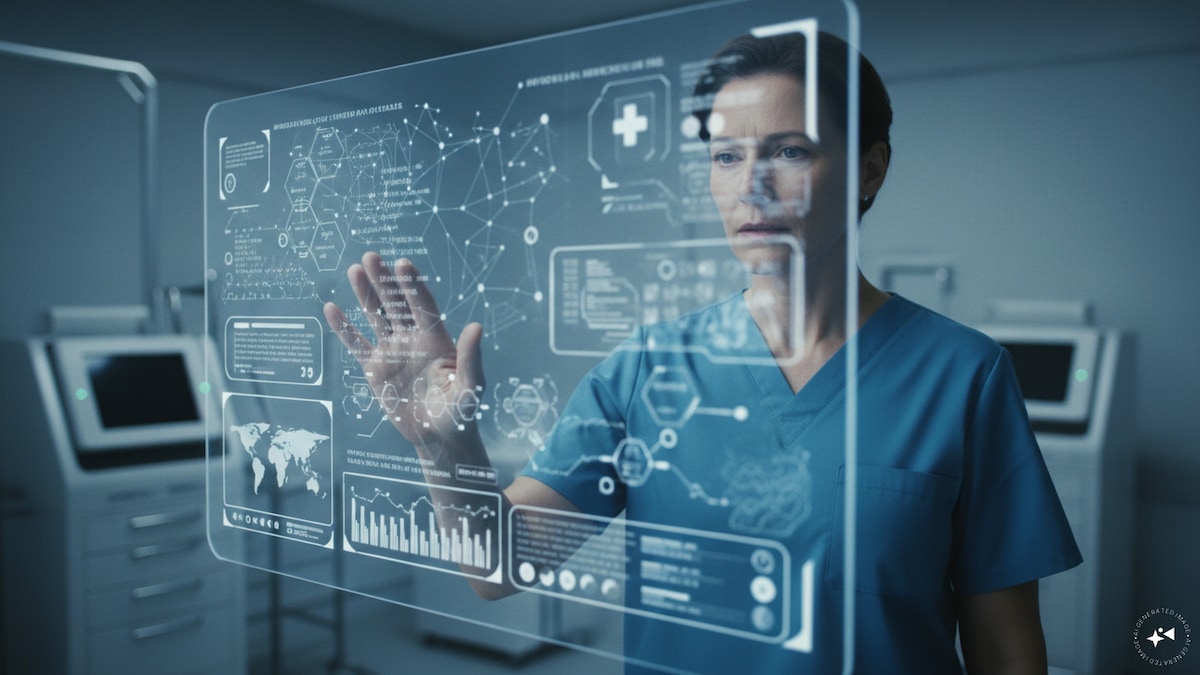
A JAMA paper by Ezekiel Emanuel, Abe Baker-Butler, Neal Khosla, and Vinod Khosla suggests AI could surpass human doctors in medical tasks, potentially by 2030. Studies show AI outperforming doctors in
The paper was written by Ezekiel Emanuel, Abe Baker-Butler, Neal Khosla and Vinod Khosla. The authors say that doctors are currently being encouraged to use AI as a tool. “When AI alone performance is consistently superior to human-alone performance, AI alone surpasses human-AI hybrids,” Vinod wrote in a post on X.
Game mostly over for human doctors vs. AI? @ZekeEmanuel @AbeBakerButler @nealkhosla and I just published in @JAMA_current: When AI alone performance is consistently superior to human-alone performance, AI alone surpasses human-AI hybrids. Paradoxically, hybrid care in which…
— Vinod Khosla (@vkhosla) August 17, 2026
They argue that if AI becomes much better than humans at certain medical decisions, a doctor checking and changing the AI’s answer could sometimes make the final decision worse.
The paper says newer AI systems are already matching or beating doctors in five important areas such as collecting patient information, finding the possible disease, choosing medical tests, suggesting treatment and managing long-term diseases.
In one study involving 377 complex real-world medical cases, OpenAI’s o3 model put the correct diagnosis first in 60% of cases. On the other hand, a group of 20 internal medicine doctors put the correct diagnosis first in only 15.9% of cases.
In another study, Microsoft’s AI system was able to reach the correct diagnosis more often while also spending 19.1% less money on tests than doctors working without access to colleagues, textbooks or the internet.
In one study, Google’s medical AI received a favourable rating for appropriate treatment recommendations in 90% of cases, compared with 37% for licensed primary-care doctors.
A 2024 analysis looked at 106 experiments involving humans and AI, including 20 medical experiments. It found an interesting pattern. When humans were better than AI, combining humans with AI generally helped. But when AI was already better than humans, combining the two actually reduced performance compared with AI alone.
The paper raises another concern called deskilling. If doctors increasingly depend on AI to diagnose patients, select tests and recommend treatments, they may get less practice doing these things themselves. In the long run, some doctors could lose skills.
The authors believe autonomous AI could be ready for some, and possibly many, medical decision-making tasks by 2030.
But even if AI handles more of the thinking, humans may still be needed for the physical part of care such as surgery, child birth, colonoscopy, physical examinations or other hands-on medical treatment.
Original source: https://www.cnbctv18.com/technology/