No Dates, No Pay, No Answers: Inside Indian Women’s Football’s Crisis Of Neglect | EXCLUSIVE
- Reported by: Neelav Chakravarti
- Updated Aug 20, 2026, 15:07 IST
The women’s domestic football calendar in India is an example of poor planning and mismanagement. The IWL 2 has been delayed without any tentative dates. Even the IWL is expected to be postponed.
The women’s domestic football calendar in India is currently in limbo. (X/AI-generated)
Imagine you are a club owner, and the federation has announced that the Indian Women’s League 2 will begin on July 20, so you begin preparations for the pre-season. Picture a player or a coach. You are informed that the new season is set to begin, and your club calls you up for the pre-season camp. The club owner books grounds and pitches, which aren’t cheap or easy to find. Meanwhile, the players and coaches travel for the pre-season camp. Some even take leave from their jobs and educational institutions.
But then, after you begin your preparations for the upcoming season, the club owner is told that the league has been postponed.
Then nothing. No revised date, no explanation, no compensation for the grounds already paid for.
“And after that, there is no update,” says Pragati Banka, India’s first female FIFA-licensed football agent.
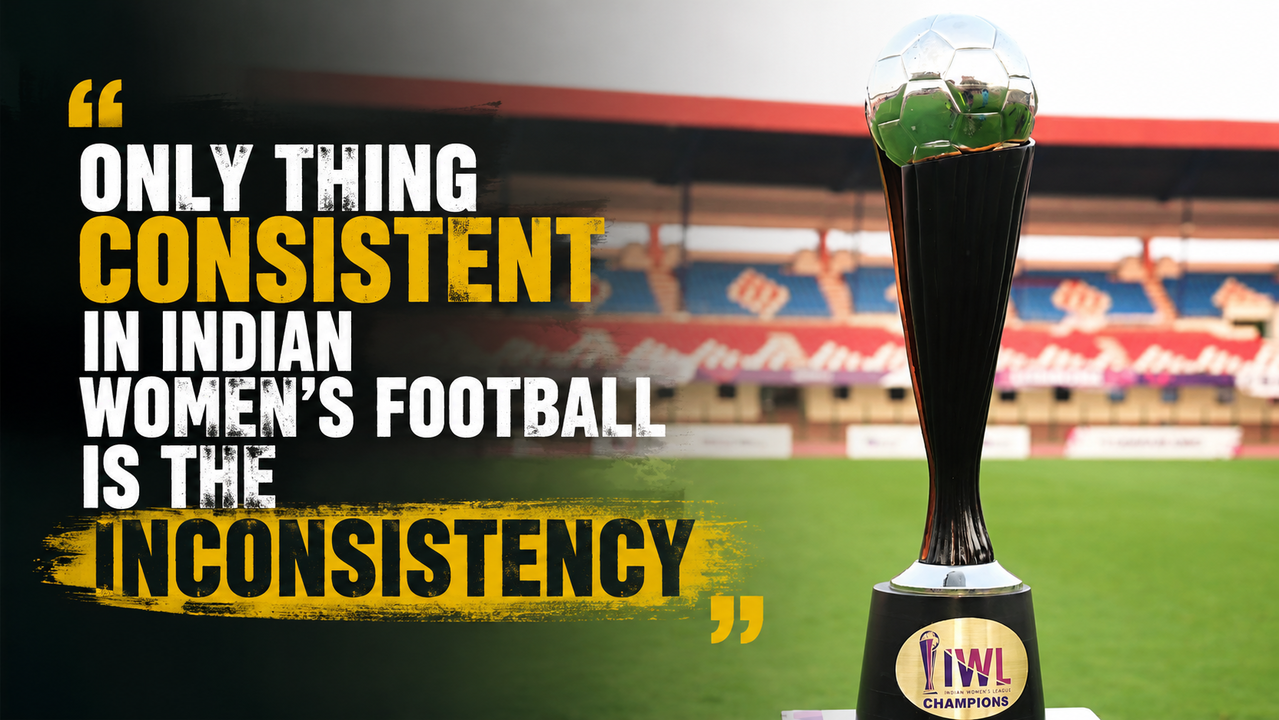
“The only thing consistent in women’s football is the inconsistency.”
This is not hypothetical or a story from the 20th century. This is happening now in India. It has been happening for years in Indian football. IWL 2 was scheduled to begin on July 20. It has not. The Indian Women’s League is scheduled for September 3, and sources close to the development understand that no commercial partner deal has been signed yet. The bids opened in March.
“In the last ten years, not even once has the league started on time,” Banka says.
Domestic women’s football calendar: Example of clueless management
The domestic women’s football calendar has been an example of a lack of transparency, clarity and commitment from the AIFF.
“That is the crux of it. That is what the clubs are also training for,” Banka says.
“Because the clubs don’t know how long the league will be, how do you convince sponsors? How to plan out the financials is also in the air.”
Also, a club can’t form a contract without having any information on whether it is signing a player for one month or six. State leagues are also scheduled around the national calendar, and it leads to an eventual paralysis of the system.
“Karnataka had at least a predictable calendar. Super Division happens every year in August-September,” she says.
“But because of this national league, the Super Division for women’s has also not started. Because they were expecting the IWL 2 to start.”
Also, Karnataka’s women’s league, which is one of the country’s strongest scouting grounds, was initially set to begin in mid-July and end of August. It was cancelled.
“It impacts not just the national-level players but also the state-level players, the grassroots players.”
Contracts not honoured
Indian football is the perfect example of pay disparity between genders. A lot of players in IWL 2 also don’t get paid. Banka feels that enforcement is the tougher problem.
“A lot of times, you are given a contract. But that contract is not honoured,” she says.
“So I have been promised, let’s say, five lakhs, six lakhs or even two lakhs rupees after the league is over. And I don’t receive it. Now I don’t even have the funds or the knowledge to go and claim my money.”
Players are also fearful of asking for their salary if it is not paid.
“Even if I want to claim my money, I am seen as a troublemaker. What if a club feels that this player is someone who goes to court? I don’t want this player in my ecosystem. So women are scared to even take legal action. And that is taken advantage of by the clubs.”
Banka pursued one such case against a Kerala club for a national team player. She won it, but collecting it was a separate issue altogether.
“It took more than six months to get the money out even after receiving an order in our favour from AIFF. The club just refused to pay.”
Even after the club received a ban for non-payment, it was still registering new players and no action was taken. What makes it worse is that the player was an India international.
“They don’t care about the stature or who you are. Because they are counting on the fact that what will she do?”
Commenting on the lack of pay in the second division, she says, “In IWL 2, the majority are not getting paid.”
Pre-seasons in IWL 2 are squeezed into 10 days, with two sessions a day. The players also have to deal with poor food, and many teams also don’t provide mattresses.
“A lot of girls are scared to speak up. And the ones who actually do speak up get punished. They will not get playing time, or they don’t get called back the next season,” she said.
The scouting system for women’s football in India is also skewed. Recruitment usually takes place in a few states and through word of mouth.
“I might know ten players,” Banka says.
“But are those ten players the best in the country?”
A lot of times, women’s matches are also not filmed. At the Association of Indian Universities nationals, only knockout matches were recorded. Every team eliminated in the group stage didn’t have any footage.
When pointed out that age-group national squad selections happen only in a handful of states, she agrees.
“Absolutely. Bang on. That’s why I said there is a lack of data. You’re not really identifying the right kind of talent,” she said.
Indian women’s international players live off government jobs. It is hard for them to get no-objection certificates for domestic tournaments or leagues.
“You are not even being released to play football, and you are stuck,” she said.
Sports Now even asked AIFF Women’s Development Committee chief Valanka Alemao for an update on IWL 2 and IWL. Alemao, who is also part of FIFA’s Women’s Development Committee, failed to give a proper response.
“All these decisions are being worked upon,” she said.
“Things have to become more systematic. And the leagues have to be structured in a proper manner.”
August is almost over, and there is still no clarity or communication from AIFF to our women footballers. It is not that AIFF don’t have funds, as already proven by their decision to withdraw from the FIFA ASEAN Cup and invite Brazil to India. The truth is that they will only pay attention to women’s football when it’s time to take photographs for social media, like celebrating Women’s Asian Cup qualification.
Latest News


Neelav Chakravarti is a sports journalist with 8.5 years of experience, primarily in digital media. He has reported extensively on Indian football and… View More
Original source: https://www.timesnownews.com/sports