More Space To Walk, Shop in Delhi? Narrow Streets To Go Pedestrian-First Under 2047 Master Plan
- Edited by: Mansi Arora
- Updated Aug 21, 2026, 20:49 IST
The Master Plan for Delhi 2047 aims to enhance urban mobility and safety by transforming narrow roads into pedestrian-friendly shopping streets, creating dedicated spaces for non-motorised transport on major roads, and promoting active travel.
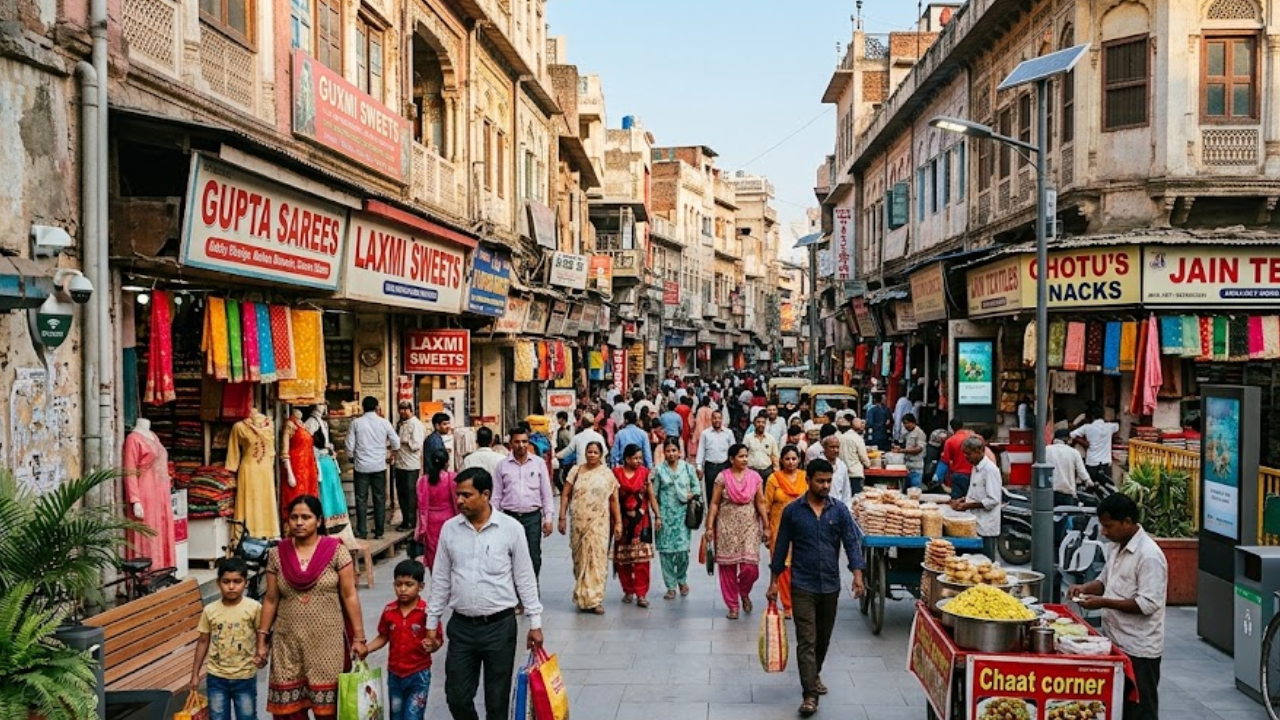
Narrow Streets In Delhi To Go Pedestrian-First Under 2047 Master Plan (AI image)
Under the Master Plan for Delhi (MPD) 2047, narrow roads measuring six metres or less will be turned into pedestrian shopping streets, giving people more space to walk and shop safely. The plan, notified by the Ministry of Housing and Urban Affairs, also proposes separate spaces for pedestrians and non-motorised transport such as cycles on major roads that are 45 metres wide or more, wherever possible.
For roads with a width of 30 to 45 metres, the plan recommends dedicated pedestrian spaces wherever feasible. The aim is to make Delhi’s streets safer and more convenient for people walking or using non-motorised transport, PTI reported.
Local streets with less than 12-metre ROW in city neighbourhoods will be designed for a mix of slow-moving traffic, NMT or pedestrianised streets, according to the master plan.
Road safety audits will be conducted annually by road-owning agencies and traffic police to create a safe travel environment, particularly for pedestrians, NMT users and two-wheelers.
A key feature of the master plan is the development of Active Travel Areas (ATAs) in places with high pedestrian footfall, including commercial spaces, heritage precincts, streets and areas identified for a 24X7 economy. Active travel routes will also be identified in areas with a high share of pedestrians and cyclists.
Active travel involves physical activity such as walking and cycling for travelling from one place to another.
Agencies will identify specific high-footfall areas as ‘pedestrian-only’ or ‘NMT-only’ zones. Tactical urbanism measures may be adopted to transform streets into fully pedestrian zones, the plan says.
Tactical urbanism, or ‘pop-up’ urbanism, involves temporarily retrofitting a section of a street to prioritise pedestrian and NMT movement by reserving lanes, pedestrianising stretches of roads and taking other such measures.
The streets will also be designed to promote active travel while ensuring safe mobility, with priority given to barrier-free movement for pedestrians and cyclists. Existing streets will be incrementally retrofitted to better serve pedestrians and cyclists, the MPD 2047 said.
The plan provides for grade crossings for pedestrians and cyclists wherever possible, pedestrian phases in traffic signals at busy intersections and pelican crossings near schools and markets.
Any notified mixed-use (residential-cum-commercial) or commercial street may be declared a pedestrian shopping street (PSS) by the local body. Notified streets with a ROW of six metres or less will be mandatorily declared PSSs, according to the master plan.
A proposed Comprehensive Mobility Plan (CMP) for Delhi, which is yet to be prepared, will address transportation issues, including safety and security across all modes of transport and for all users, particularly vulnerable groups such as NMT users and pedestrians.
The master plan also proposes deployment of surveillance technology to enhance the safety of pedestrians and cyclists, prevent traffic violations and curb theft or vandalism of public infrastructure such as street furniture and potted plants.
The Regulations for Enhancing Walkability in Delhi, 2019, have already been notified, under which 24 priority areas have been identified for preparation of Walk Plans in the initial stages.
The plan also builds on the ‘right to walk’ by developing a citywide network of safe, shaded, universally accessible and continuous pathways integrated with public transit areas, a provision already notified in 2019.
It emphasises adequate pedestrian access to multi-utility zones, multi-modal transport hubs, strategic economic hubs and centres.
Seamless integration across various modes will be facilitated at rail-based transit stations, including Metro Rail, RRTS, railway stations and Ring Rail stations, as well as at bus terminals. The integration will prioritise pedestrians, elderly persons, children and persons with disabilities.
Pedestrian infrastructure will be designed as inclusive civic spaces, with climate-responsive and public-realm-oriented design, according to the MPD 2047.
The master plan also envisions people-friendly neighbourhoods with accessible sports infrastructure, playgrounds, parks, community centres, libraries, co-working spaces and safe, pedestrian-friendly public spaces to promote active, healthy and inclusive communities.who is ri
Latest News


Ardent news writer with a keen eye for global affairs and geopolitical news. With passion for illuminating the complexities of global dynamics, Mansi … View More
Original source: https://www.timesnownews.com/delhi