Are smart glasses coming for your smartphone? Explained
Meta CEO Mark Zuckerberg believes smart glasses could become the next major computing platform, offering AI, calls, music and other smartphone-like functions without requiring users to reach for a screen.
In a recent interview, Meta CEO Mark Zuckerberg said the next major computing platform may not be another smartphone. It could be something we wear.
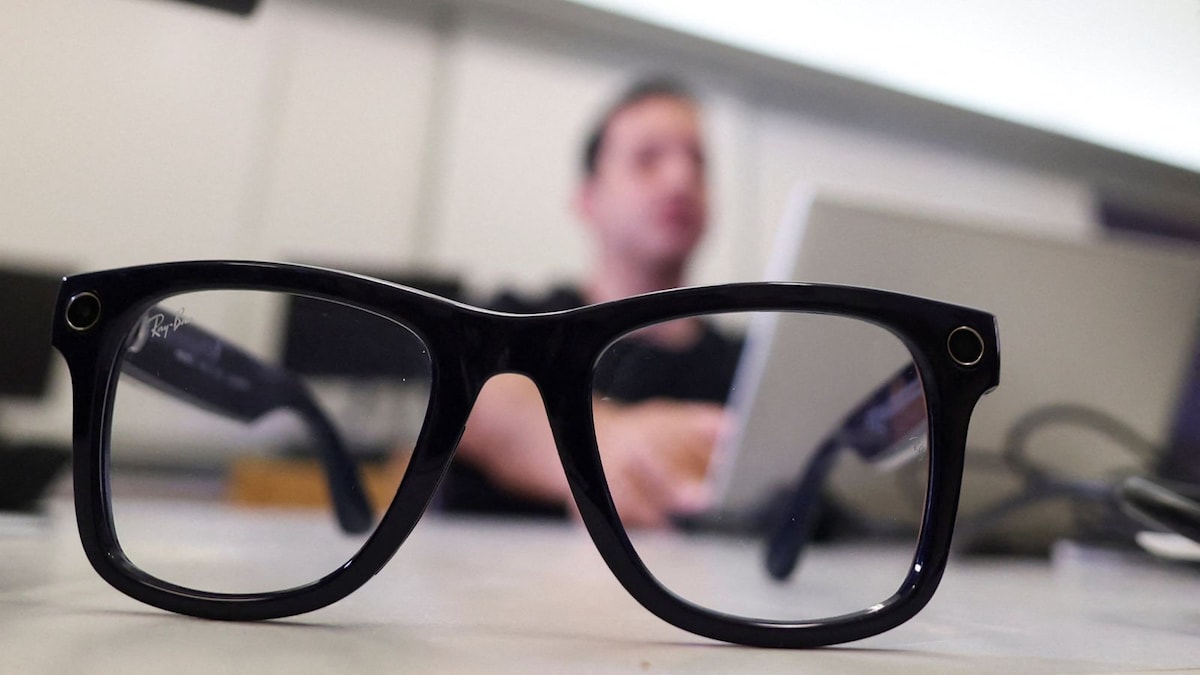
Meta’s Ray-Ban Meta smart glasses are an early example of that vision, he said. Combining a camera, microphones, open-ear speakers and Meta AI in a familiar pair of glasses, the device is designed to let users interact with technology without constantly reaching for a screen.
Zuckerberg has been unusually explicit about where he thinks this is heading. He said, “I think glasses are going to be the next major computing platform.”
Speaking about the future of smart glasses, Zuckerberg has argued that new computing platforms do not necessarily eliminate older ones overnight. Instead, the new device can gradually become the one people turn to more often. He has compared this transition to the shift from computers to smartphones.
Meta is combining two of its biggest technology bets: AI and wearable computing. The company has previously described AI-powered glasses as a potential new way for an AI assistant to understand the world from the user’s perspective.
Users can speak to the assistant, ask a question about something they are looking at, capture a photo or video, listen to music or take a call without taking their phone out.
That is the idea behind what the technology industry calls ambient computing — technology that is increasingly available in the background rather than requiring users to reach for a dedicated screen every time they want to use it.
The AI glasses also support calls and messaging through services including WhatsApp and Messenger, along with music and media controls. They can even be used to share the wearer’s point of view during certain video calls.
The camera is particularly important to Meta’s AI strategy.
Users can ask the glasses about something in front of them, and the image can be sent to Meta’s cloud for AI processing. The response is then delivered through the glasses. This can be used for tasks such as translating text, identifying objects or landmarks, or understanding what is in front of the wearer.
But can they really replace your smartphone? This is where the gap between Meta’s long-term vision and today’s reality becomes clearer. For certain activities, smart glasses can reduce the need to reach for a phone. Taking a photo while walking, recording a first-person video, listening to music, making a call or asking an AI assistant a quick question can all happen hands-free.
But the smartphone remains far more versatile. Making UPI payments, navigating through Google Maps, replying to long messages, checking email, browsing social media, booking a cab or editing content are still fundamentally smartphone-first experiences.
That is because the smartphone has spent years evolving into much more than a phone. It is simultaneously a camera, wallet, map, entertainment device, communication tool and portable computer.
In an interview discussing Meta’s AR glasses strategy, Zuckerberg compared the potential shift by saying, “I continue to think that glasses are basically going to be the ideal form factor for AI, because you can let an AI see what you see throughout the day, hear what you hear, [and] talk to you.”
Meta isn’t alone. The race is also expanding beyond Meta. Google is developing AI-powered glasses as part of its Android XR strategy, while Apple has already entered spatial computing with the Vision Pro. Other technology companies and hardware makers are also exploring AI-first wearable devices.
There is, however, another question that becomes harder to ignore as these devices become more capable: privacy.
A smartphone camera is relatively obvious when someone is using it. A pair of glasses with an integrated camera can be much less conspicuous.
Ray-Ban Meta glasses use a white LED indicator when photos or videos are being captured, but the broader social question remains: how comfortable will people be around cameras that can be worn continuously?
That debate is becoming more relevant as smart glasses spread. Recent concerns have included people being recorded in workplaces and public spaces without their knowledge or consent.
For now, the smartphone remains firmly in our pockets. But the race to build what comes after it has already begun.
Original source: https://www.cnbctv18.com/technology/