Nearly 2 lakh social media takedown orders in five months: How the system works and what users can do
Government takedown requests to social media platforms have surged. Here’s why platforms comply, how Section 79 differs from Section 69A, and what remedies users have.
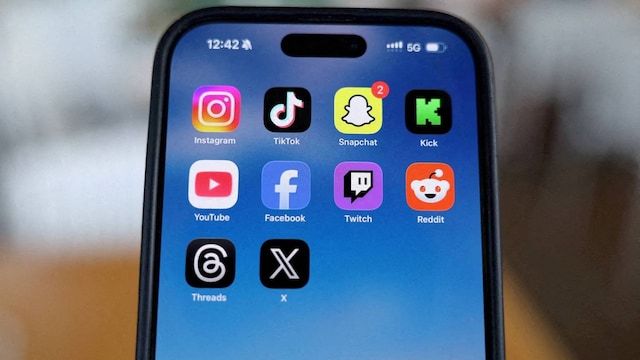
According to a report by The Indian Express, nearly 1.95 lakh blocking orders were sent to Instagram, Facebook and YouTube between March and July 2026. That works out to roughly one order every 68 seconds, or around 1,275 orders a day.
The figure refers to orders, not necessarily individual pieces of content. A single order can cover multiple posts or accounts.
So, what happens when a government agency asks a social media platform to take down content? Why do platforms usually comply? And what legal safeguards are available to users whose posts or accounts are removed?
To understand this, it is important to distinguish between Section 69A and Section 79 of the Information Technology Act.
What is Section 79 of the IT Act?
Section 79 provides intermediaries, including social media platforms, with protection from legal liability for third-party content, subject to certain conditions. This is commonly known as safe harbour protection.
Section 79(3)(b) is relevant to the government’s takedown mechanism. Under this provision, an intermediary’s safe harbour can be affected if, after receiving actual knowledge of unlawful content through the legally recognised process, it fails to expeditiously remove or disable access to that content.
For platforms, the consequence is significant: refusing to comply with a notice can potentially put their statutory protection at risk.
Cyber law expert Pavan Duggal said this creates a strong incentive for platforms to comply with government requests.
“If the notices are being sent in this particular section, this is within the remit of the powers given by the IT Act,” Duggal told CNBC-TV18.
He described the position of platforms as a “Damocles sword on the head of the service provider” because they have to consider the risk to their safe harbour if they do not act on a Section 79(3)(b) notice.
Section 79 vs Section 69A: What is the difference?
The distinction between the two provisions is at the heart of the current debate.
Section 69A specifically deals with blocking public access to information. It allows the government to block information on specified grounds, including those linked to national security and public order, among others.
The provision also has procedural safeguards.
Tech law and policy expert Pranesh Prakash said Section 69A contains provisions requiring the government to hear the affected party before issuing a blocking order, although he said such safeguards have not always been followed.
The Supreme Court examined the blocking framework in its 2015 Shreya Singhal judgment.
Section 79(3)(b), by contrast, sits within the intermediary safe-harbour framework. Prakash said notices issued under this provision are not technically blocking orders. They tell an intermediary that unlawful activity is allegedly taking place on its platform and that the intermediary has been given actual knowledge of it.
That distinction matters.
The concern raised by the experts is that if Section 79(3)(b) is used to achieve the practical effect of blocking or removing content, it could allow the government to avoid some of the procedural safeguards associated with Section 69A.
Duggal said this issue could ultimately require judicial scrutiny.
“The kind of checks and balances that are there under Section 69A of the IT Act pertaining to blocking should, pari materia, also be made available under Section 79(3),” he said.
In simple terms, the question is whether a government should be able to get the same practical outcome — removal of content — through a provision that has fewer procedural safeguards.
Why do social media platforms comply?
The answer is largely safe harbour.
Social media platforms host content posted by millions of users. Their legal protection from liability for that third-party content is conditional.
A Section 79(3)(b) notice therefore creates a strong incentive to comply. A platform that refuses to act has to consider whether it could put its safe-harbour protection at risk.
The pressure has increased with changes to the IT Rules.
Sidharth Deb, Associate Director of Public Policy at The Quantum Hub, said the compliance window for certain takedown requests has been reduced from the earlier 24-36 hours to around 2-3 hours.
That leaves platforms with little time to assess individual requests, seek clarification or challenge them before taking action.
“When global representatives from tech companies were coming about, they were talking about the fact that we anticipate that not only will there be a surge in the volume of requests, but the expectations of us to take down all posts or all takedown requests within a period of three hours,” Deb said.
For platforms receiving a large number of requests, the shorter deadline makes automated systems increasingly important.
Why have government takedown requests increased?
The scale of the increase is significant.
Data accessed by The Indian Express shows Instagram received nearly one lakh blocking orders between March and July 2026. Facebook received around 80,000 and YouTube close to 15,000.
Taken together, Instagram and Facebook accounted for roughly nine out of every 10 orders during the period.
The numbers are sharply higher than the previous year. RTI records obtained by The Indian Express show that 2,312 blocking orders were sent to 19 online platforms through the Home Ministry’s Sahyog portal between October 2024 and October 2025. That worked out to an average of around six orders a day.
The Home Ministry’s 2024-25 annual report separately said more than 1.1 lakh pieces of “suspicious online content” had been blocked by March 2025.
Deb said the increase is also linked to the expansion of the Section 79(3)(b) framework.
He pointed to institutions such as the Securities and Exchange Board of India (SEBI) and the Ministry of Railways being granted powers to issue takedown requests through the system.
So the change is not simply about more requests from existing agencies. More government institutions can now potentially feed requests into the system.
What is the Sahyog portal?
The Sahyog portal is the government’s central mechanism for sending content takedown requests to online intermediaries.
Instead of government agencies separately communicating with individual platforms, the portal provides a common channel through which such requests can be sent.
The scale of requests makes the way platforms process them particularly important.
According to The Indian Express, Meta has integrated its API, or application programming interface, with the Sahyog portal. Content flagged through government orders can therefore be automatically taken down from Meta’s platforms, without a separate human review by the company.
That has raised questions about how much scope a platform has to independently assess or challenge a request, particularly when it is also working against a short compliance deadline.
For critics of the system, the combination of large volumes, short deadlines and automation makes transparency and independent review more important.
What happens to users when content is removed?
This is where the system becomes difficult for ordinary users to navigate.
If a post or account is removed following a government request, the user may not know the precise legal basis for the action.
Deb said confidentiality requirements can prevent platforms from forwarding government takedown requests to affected users.
“So, for example, if I’m a user, then I don’t know what are the exact legal grounds for the takedown,” he said.
That creates a basic problem: a user cannot easily challenge a decision if they do not know who ordered the removal or what law was cited.
The problem is even more significant when the government, rather than another user or private complainant, initiates the takedown.
What legal remedy does a creator have?
Under the IT Rules, a user can generally raise a complaint through the platform’s grievance redressal mechanism.
Duggal, however, said the mechanism does not provide an effective remedy in many cases.
“The grievance redressal mechanism is a failed experiment from the word go,” he said.
He said a user can escalate the matter to the Grievance Appellate Committee (GAC) or approach a court through writ jurisdiction.
But Prakash pointed to an important limitation.
According to him, the GAC mechanism applies to certain content removals following complaints but is not available when the government itself uses the Sahyog portal to seek removal.
“In fact, the Grievance Appellate Committee, that’s only about when they remove content pursuant to someone else’s complaint,” Prakash said. “It does not apply when the government is the one that uses Sahyog portal to complain.”
In such cases, approaching the courts may be the principal avenue available to an affected party.
Prakash cited the example of the Aam Aadmi Party, which approached a high court after its accounts were blocked and obtained an order for their reinstatement.
Can platforms disclose government takedown orders?
The transparency question has gained fresh attention after Elon Musk said X would make government-ordered content restrictions visible to users.
The platform intends to identify the government department or agency that submitted the request, along with the legal justification or explanation provided for seeking the restriction.
Prakash said Section 79 does not, by itself, create a general prohibition on platforms disclosing such notices.
He pointed to the existing practice of publishing certain copyright-related notices through the Lumen Database, arguing that a similar approach could be used for government takedown requests.
Prakash also argued that the government itself should make such orders public.
The basic principle is straightforward: if the state restricts access to online content, users and the wider public should be able to know who ordered the restriction, under what legal provision and on what grounds.
Who should review government takedown orders?
Deb said the problem goes beyond individual takedown notices and raises questions about institutional checks and balances.
He argued that the current review structure is largely within the executive branch, including the Ministry of Home Affairs.
In a constitutional democracy, he said, there should also be mechanisms for judicial or parliamentary oversight of content takedown powers.
Such oversight would help determine whether restrictions are genuinely pursuing objectives such as public order or national security while remaining consistent with the constitutional right to freedom of speech and expression.
The bigger question: Is Section 79 enough?
The debate is not simply about whether the government can ask platforms to remove unlawful content.
It is about which legal route is being used and what safeguards apply to that route.
Section 69A has a specific blocking framework with defined grounds and procedural requirements. Section 79(3)(b), meanwhile, is part of the intermediary safe-harbour regime.
The experts’ concern is that if Section 79(3)(b) is used to produce the practical effect of blocking content, platforms could have little incentive to resist because their safe harbour is at stake.
That concern becomes more significant when requests are being processed at scale, the compliance window is only a few hours and platforms are increasingly relying on automated systems.
For users, the issue ultimately comes down to three questions: Why was the content removed? Who ordered it? And how can the decision be challenged?
The debate over Section 79 is therefore moving beyond the number of takedown requests to the larger questions of transparency, due process and accountability in online content regulation.
Original source: https://www.cnbctv18.com/technology/