Data centre expansion in Thane, Visakhapatnam faces pushback from locals: What we know
In Thane, residents are opposing Amazon’s proposed hyperscale facility, while citizen groups in Visakhapatnam have raised concerns over a planned Google-Adani data centre complex.
The companies have said their projects are being designed with measures to reduce pressure on local water resources and limit noise and environmental impact.
Why are residents protesting in Thane?
In Thane, residents are protesting against Amazon’s proposed data centre spread across around 53-58 acres in Balkum and Majiwada. The campaign, led by residents under the Wake Up Thanekar initiative, focuses on concerns over water availability, electricity demand, heat, noise and the project’s location near residential areas, schools and hospitals.
“Half of Thane is living on tanker water. Why have the data centre in a residential area and put all the citizens in trouble?” Sadhana Pradhan, a resident, was quoted as saying by Hindustan Times. Residents said they were not against AI or technology but wanted greater clarity on the project’s long-term impact.
Residents seek answers on water, power
The group reportedly sent Amazon and the Thane Municipal Corporation a 22-point questionnaire seeking details about environmental clearances, water and sewerage approvals, power requirements, emergency preparedness and compliance with environmental conditions.
The campaign gained momentum after residents learnt that data centres were classified as ‘essential services’. It prompted concerns about whether such facilities could receive priority access to water and electricity during shortages.
The Thane civic body, however, said residents need not be concerned about drinking water being diverted. It said Amazon’s facility would receive 12 million litres per day of treated sewage water, rather than potable water.
What Amazon says
Amazon said its Thane data centre would not use water for cooling and that it doesn’t use water for cooling at its data centres in India. The company said the approved water supply for the Thane facility is 0.01 million litres per day, meant for basic requirements such as drinking water and restrooms for employees.
“Amazon recently became water positive in India, meaning we now return more water to communities than we use across our direct operations, including our data centers,” it said. Amazon also said it would follow noise pollution rules and use sound-dampening materials and insulation, acoustic enclosures and other measures to manage noise.
Google-Adani project faces opposition in Visakhapatnam
A similar campaign is underway in Visakhapatnam, where citizen groups are opposing a proposed Google-Adani hyperscale AI data centre complex. Children and activists in Visakhapatnam have held marches in recent weeks. They carried banners reading ‘We cannot drink data’ and depicted handcuffs over the Google logo.
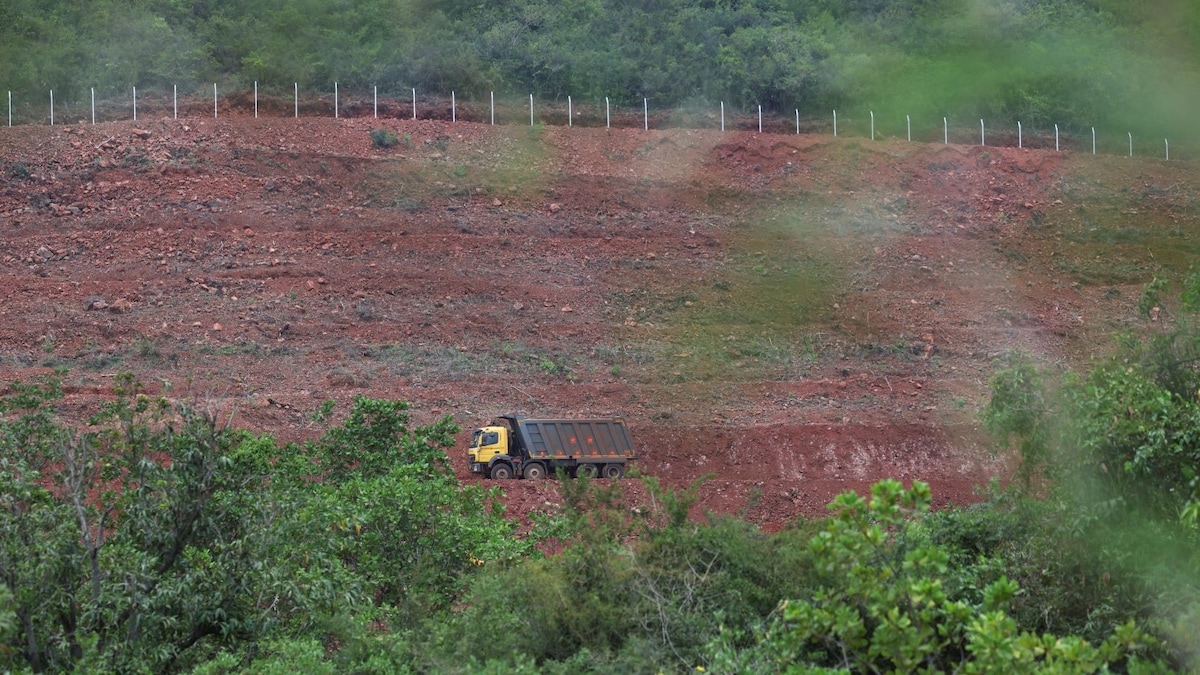
The planned project is a 1-GW cluster spread across three locations, covering around 200 acres at Tarluvada, 120 acres across Adavivaram-Mudasarlova and 160 acres at Rambilli in Anakapalli district.
Protesters have raised concerns about land acquisition, environmental clearances, water availability and the project’s overall use of public resources. More than 100 people took part in a protest against the project last month.
The state’s top court on Monday asked the government to respond to allegations by activist group Jal Biradari (Water Community) that the project could put additional pressure on water availability by straining a nearby reservoir. The Andhra Pradesh High Court will hear the public interest litigation next on August 24.
“The new hub in Visakhapatnam marks the construction phase of a $15 billion investment to provide the foundational infrastructure for India’s growing digital economy and drive long-term community impact,” the tech giant shared in a blog post in April.
Water and land concerns
Activists have questioned the proposed sources of water for the Visakhapatnam projects, including the Polavaram project and desalination. They have also raised concerns over land acquisition, including allegations that some Dalit farmers have not received promised compensation. Some protesters are considering approaching the National Green Tribunal over the issues they have raised.
Google says it is taking environmental measures
Google said it conducted independent environmental assessments during the planning of the project, including studies covering ecology, water systems and noise.
“Based on these findings, safeguards—such as natural drainage preservation, erosion and runoff control, noise mitigation barriers, and shielded lighting—are fully integrated into construction processes,” Alexander Smith, principal, global infrastructure and energy, Asia Pacific, Google, said, as per the HT report.
“These findings also inform facility design choices, including our decision to utilise advanced air cooling to protect vital local water resources and invest in sound-dampening fans in buildings, paired with property setbacks and landscaping buffers, to ensure we are a quiet, unobtrusive neighbour.”
India’s data centre capacity is growing
The protests come as India’s data centre industry expands rapidly. Installed capacity has increased from around 520 MW in 2020 to nearly 1.5 GW by mid-2025 and is projected to reach 6.5 GW by 2030, according to the Council on Energy, Environment and Water (CEEW). The sector attracted around $95 billion in committed investments between 2019 and 2025.
The report said decisions on data centre locations could shape India’s land, water and electricity use for decades. “India does not yet have a national data centre policy; instead, states have taken the lead, with 15 states notifying dedicated data centre policies or leveraging IT and industrial frameworks to attract investment,” it added.
Original source: https://www.cnbctv18.com/technology/