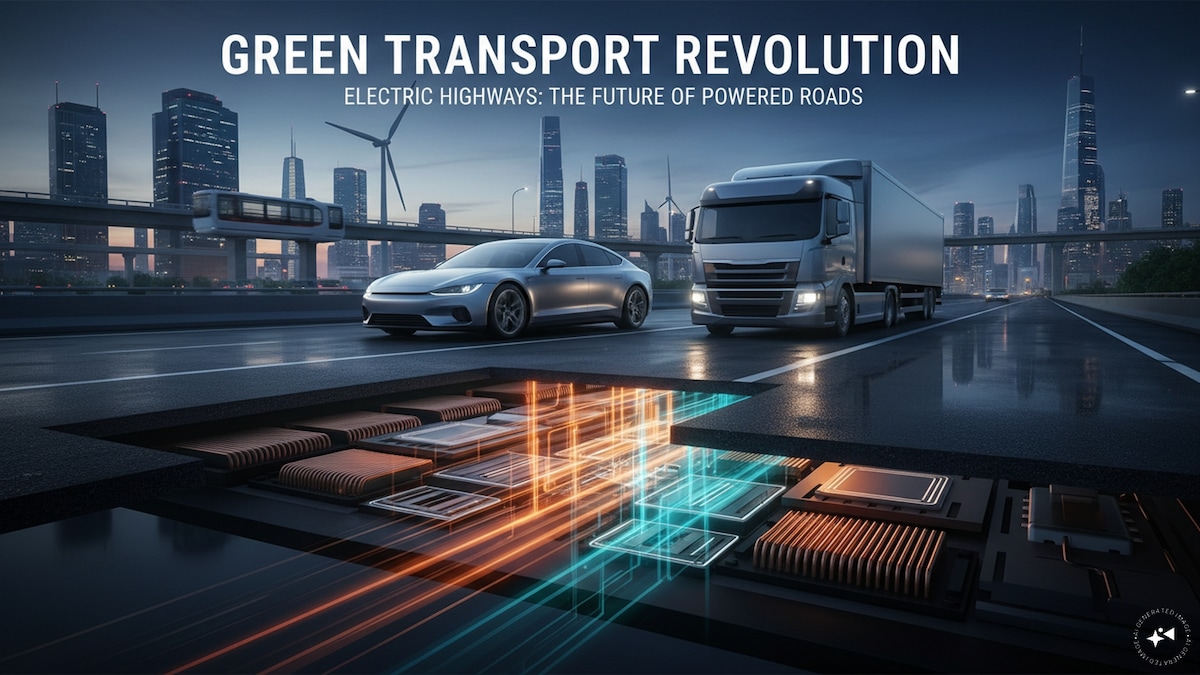
What are Electric Road Systems? | Electric Road Systems (ERS) transfer electricity to moving vehicles, allowing electric cars and heavy goods vehicles to travel longer distances with fewer charging stops. By potentially reducing battery size and charging-related downtime, they could complement conventional charging networks and improve transport efficiency. (Image: AI-Generated)
\n\nThree types of electric road technology | Electric roads use three main technologies: overhead cables that supply power to trucks through roof-mounted pantographs; conductive rails that transfer electricity through physical contact; and wireless inductive charging, which transfers energy from coils embedded beneath the road to a receiver on the vehicle. (Image: AI-Generated)
\n\nJapan develops wireless charging units for roads | Honda, Taisei Corporation and Taisei Rotec have developed modular wireless charging units designed to be installed within existing asphalt roads. The approach aims to reduce the need for extensive road reconstruction. Public-road demonstration trials in Japan are planned for the 2027 financial year. (Image: AI-Generated)
\n\nWhere are electric roads being tested? | Electric road technologies are being tested in several countries. France is trialling wireless charging on a 1.5-km section of the A10 motorway near Paris. Sweden has explored overhead cables and conductive rails for port logistics, while Detroit is…
Original source: https://www.cnbctv18.com/technology/