Explained: Why US Defence Companies Are Racing to Build Cheaper Missiles
- Edited by: Sagar Kar
- Updated Aug 15, 2026, 00:45 IST
Major US defence contractors like Boeing and Lockheed Martin are redesigning missiles to be cheaper and faster to produce, after the Iran war exposed how strained stockpiles have become.
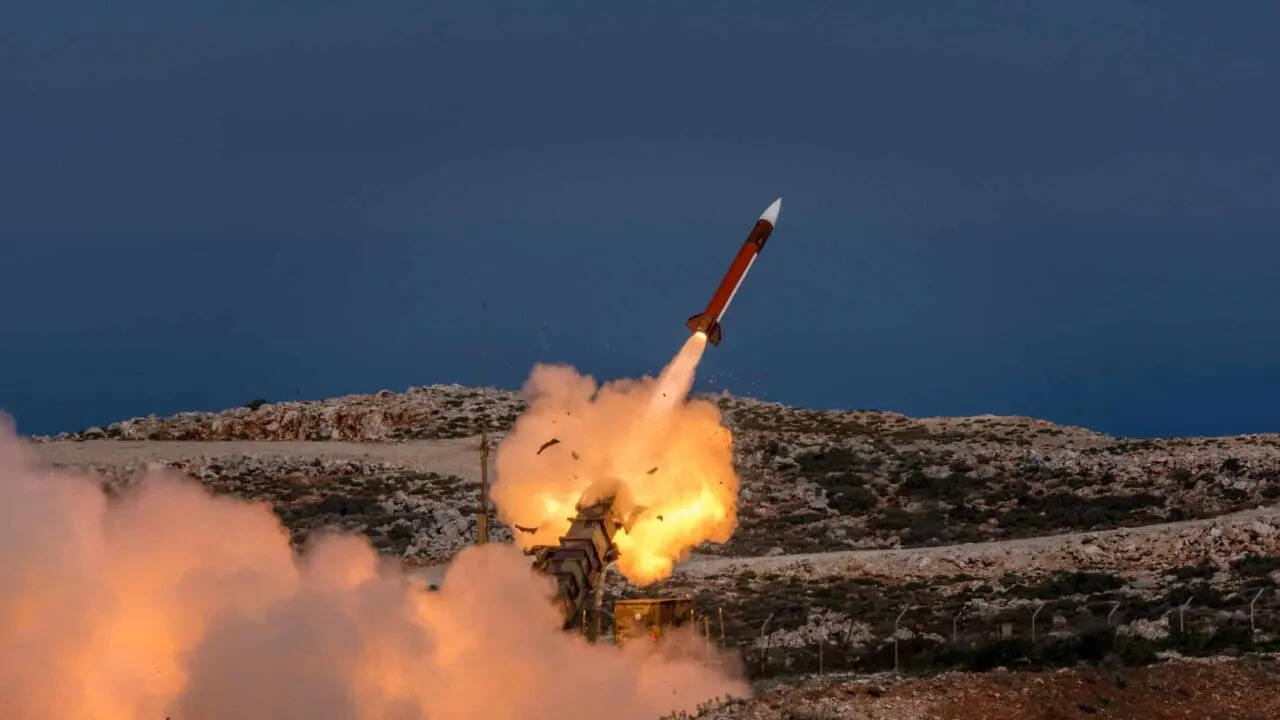
Patriot missile.
America’s biggest weapons makers are under pressure to build missiles that cost less and roll off the production line faster, after the war in Iran exposed just how thin the country’s stockpile of key interceptors has become.
For years, US defense companies have kept adding new technology to their missiles. Better seekers, the sensors in a missile’s nose that lock onto a target, and improved propulsion systems have made these weapons more capable against tougher threats. But that sophistication comes at a cost. These so called exquisite missiles can take years to build and often run more than 4 million dollars apiece.
That price tag looks especially steep when compared to what they’re often up against. Iran has been using cheap, one way attack drones in the Middle East, and Russia has done the same in its strikes on Ukraine. A multi million dollar interceptor going up against a drone that costs a fraction of that isn’t a sustainable trade, especially when stockpiles start running low.
Big Defense Firms Are Changing Their Approach
This week at the Space and Missile Defense Symposium in Huntsville, Alabama, major contractors including Boeing, Lockheed Martin, Northrop Grumman and RTX’s Raytheon laid out their plans to fix this.
Jim Bryan, Boeing’s executive director for integrated air and missile defense, said the company is rethinking how it builds these products. According to a report from Bloomberg, he described the traditional approach as expensive by nature and said the company is now pushing hard to make its offerings both affordable and available in larger numbers.
To get there, Boeing has been developing what it calls an ultra low cost seeker. Normally, a missile’s seeker makes up close to 30 percent of its total cost. Boeing’s new version relies on commercial grade parts instead of specialized components, bringing that share down to roughly 10 percent, according to Bryan. The seeker has already been flight tested on both a rocket body and an aircraft, and the company is planning an intercept attempt next year.
Lockheed’s Cheaper Patriot Variant
Lockheed Martin, the maker of the widely used Patriot missile system, unveiled its own answer last month. The company introduced a new version of its interceptor called the Patriot Advanced Capability 3 Adapted Capability Effector, or ACE. It costs around 2 million dollars, less than half the price of the top of the line PAC-3 Missile Segment Enhancement, which runs about 4 million dollars.
Jason Reynolds, Lockheed’s vice president of integrated air and missile defense, said the cheaper ACE version still delivers roughly two thirds of the capability of the premium model, depending on the type of threat and how far it needs to fly. Part of how Lockheed cut costs was by simplifying the missile’s internal components. Instead of relying on the kind of precision technology needed to score a direct hit on a target, the ACE variant is designed to detonate close enough to disable it. Reynolds added that Lockheed is also looking into partnerships with companies outside the traditional defense industry to help produce parts, or even entire missiles.
Smaller Companies Are Entering the Field
The Pentagon isn’t just leaning on its usual, long established contractors. According to the report, in recent months it has awarded contracts to smaller, newer firms such as Castelion Corp, Anduril Industries, CoAspire and Zone 5, all of which are working to design and test interceptors far more quickly and cheaply than what’s currently in the US arsenal.
This shift comes as defense officials have made clear they expect the industry to move faster. Pentagon leadership has told contractors bluntly that they need to adapt or risk being left behind.
A Difficult Balancing Act
The challenge facing these companies goes beyond just building cheaper missiles. They need to scale up production, keep costs low enough to make sense against inexpensive enemy weapons, and get these systems into service quickly enough to address the shortages that already exist. For most of the cheaper options currently in development, that’s still likely years away.
Adding to the uncertainty is the state of Pentagon funding. The Defense Department has asked Congress for emergency money to replenish a range of weapons systems, but those requests remain unresolved on Capitol Hill, where lawmakers are increasingly questioning the costs and consequences of the Iran conflict. President Trump, for his part, has downplayed concerns about shrinking munitions stockpiles, insisting that weapons manufacturers are producing at record levels.
Latest News


Sagar is a journalist with an interest primarily in geopolitics and American domestic politics. Before joining Times Now, he wrote for Republic and Sw… View More
Original source: https://www.timesnownews.com/world
