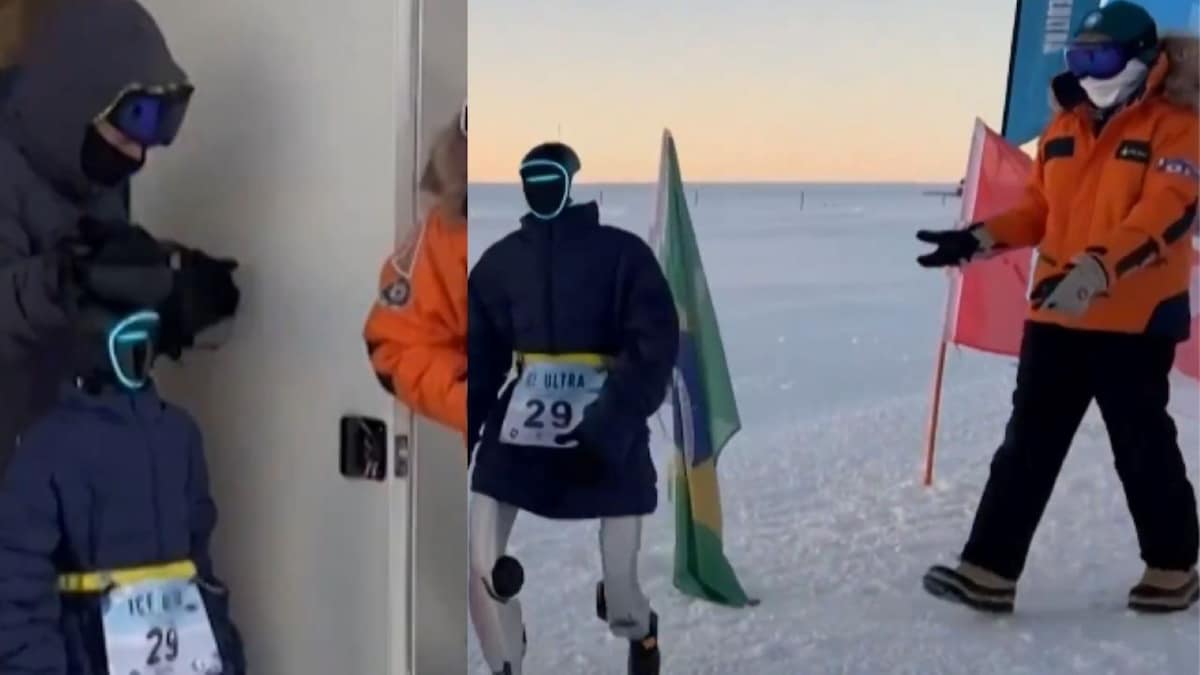
A humanoid robot named Qestr took part in an endurance race in Antarctica alongside 24 human runners on Sunday. However, its attempt came to an early end after it covered just 3 kilometres, as its battery ran out in the freezing conditions.
\n\nThe unusual race took place during the Antarctic Ice Ultra near Ultima Camp, where temperatures reached minus 24°C. Although Qestr was fitted with a specially designed thermal jacket to protect it from the cold, the machine could not continue the challenge.
\n\nQestr's participation was aimed at testing how humanoid robots perform in extreme weather conditions. The Antarctic race provided an opportunity to assess the machine's endurance, mobility and ability to operate on snow and ice.
\n\nWhy did Qestr stop running after 3 kilometres?
\n\nQestr had to withdraw from the race after its battery ran out. The extreme cold posed a major challenge for the robot's battery-powered system.
\n\nWhile human runners rely on stored energy and generate body heat to keep moving, humanoid robots depend on batteries to operate their motors, sensors and onboard computing systems. This makes battery performance particularly important when machines are tested in freezing environments.
\n\nWhile Qestr had to withdraw, the human participants continued the…
Original source: https://www.cnbctv18.com/technology/