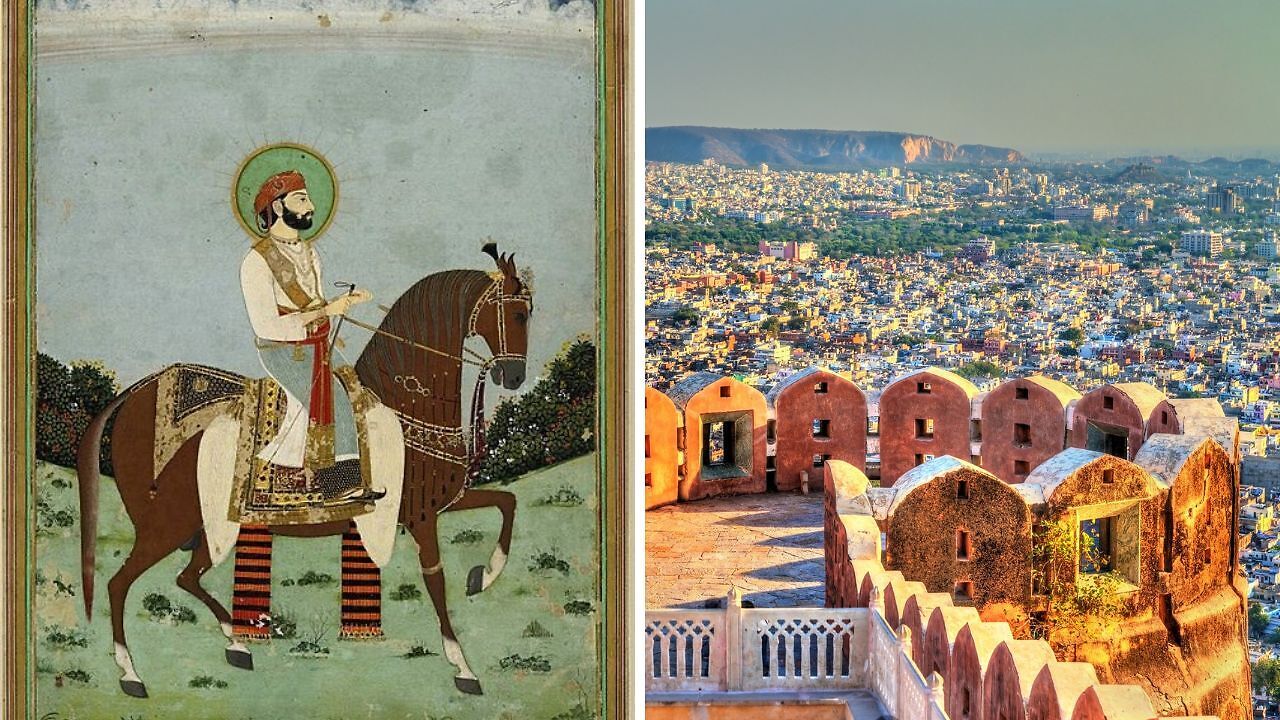
On 18 November 1727, a Maharaja and an architect drew a capital on an empty plain. Its grid is still the skeleton of the walled city. Walk into the historic Walled City of Jaipur, also known as the “Pink City”, and you can see shopfronts running in unbroken lines, their arcades sharing the same rhythm and height. Streets meet at right angles and open into wide squares.
\n\nUnlike many historic Indian cities that evolved organically over centuries, Jaipur which now serves as the capital of Rajasthan, was conceived as a planned urban settlement. It was established by Maharaja Sawai Jai Singh II (3 November 1688 – 21 September 1743), the 30th Kachhwaha ruler of Amber, to replace the older capital due to a burgeoning population and scarcity of water. The city was designed by Vidyadhar Bhattacharya, a Bengali Brahmin scholar, who served as the chief architect for the plan.
\n\n“Jaipur was conceived and developed in a single phase in the 18th century CE with a grid-iron model inspired from the Prastara plan of the Vastu Shastra, treatise of traditional Hindu architecture. This town plan later became a trendsetter for many 19th century CE towns in Rajasthan State and India,” states…
Original source: https://www.timesnownews.com/lifestyle