Who Is Rohan Naidu? Hyderabad-Born Astronomer Behind The ‘Black Hole Star’ Discovery
- Authored by: Girish Shukla
- Updated Aug 18, 2026, 13:00 IST
Rohan Naidu abandoned an engineering degree in Hyderabad at eighteen for an unproven college abroad. He now stands behind a startling cosmic discovery, proof that the dropout was watching something else.
Meet Rohan Naidu, The Hyderabad-Born Scientist Behind The ‘Black Hole Star’ Breakthrough (Picture Credit – MIT)
At eighteen, Rohan Naidu did something that must have looked, to almost everyone around him, like a mistake. He walked out of an engineering college in Hyderabad, bought the first aeroplane ticket he had ever owned, and flew alone to Singapore to join the untested founding class of a college that did not yet have a single graduate. It was the kind of decision Indian families rarely applaud. Nearly two decades later, that leap has carried a boy who refused the safe path to the front of one of the year’s most talked-about scientific discoveries, and his story, far more than the object he found, is the one worth telling.
The Boy Who Said No To Engineering
Naidu grew up in Hyderabad, a bright student steered, as so many are, towards the reassuring certainties of an engineering degree. It never held him. His attention kept drifting upward, to the night sky, and at eighteen he did the unthinkable. He dropped out. In what he has himself described as a Bollywood-style plot twist, he abandoned the expected route, boarded his first-ever flight, and joined the inaugural batch of a hundred and fifty students at Yale-NUS College in Singapore, a place with no reputation, no alumni and nothing to promise but a chance. For a young man from an Indian middle-class home, walking away from a settled future for an experiment in another country took a particular kind of nerve.
The Long Road From Hyderabad
The gamble paid off slowly, in the way real things do. He first tasted astronomy for real at Yale-NUS, studying blazars from an observatory high in the Chilean Andes, and the wonder of it never wore off. He went on to earn his doctorate at Harvard in 2022, digging through the faint outer reaches of our own Milky Way to find the fossil remains of ancient galaxies our own had swallowed long ago. Even before the black hole star, he had made headlines, leading the team that identified what was, at the time, the most distant galaxy ever seen, its light setting out barely 280 million years after the Big Bang. Today he holds prestigious fellowships at MIT and ranks among the leading young astronomers using the James Webb Space Telescope. What stands out, tracing that path, is how far it runs from where it began. There was no famous laboratory in his childhood, no obvious ladder to the summit of world astronomy from a classroom in Hyderabad. He built the route himself, one improbable decision at a time, and he did it by trusting an instinct almost everyone told him to ignore.
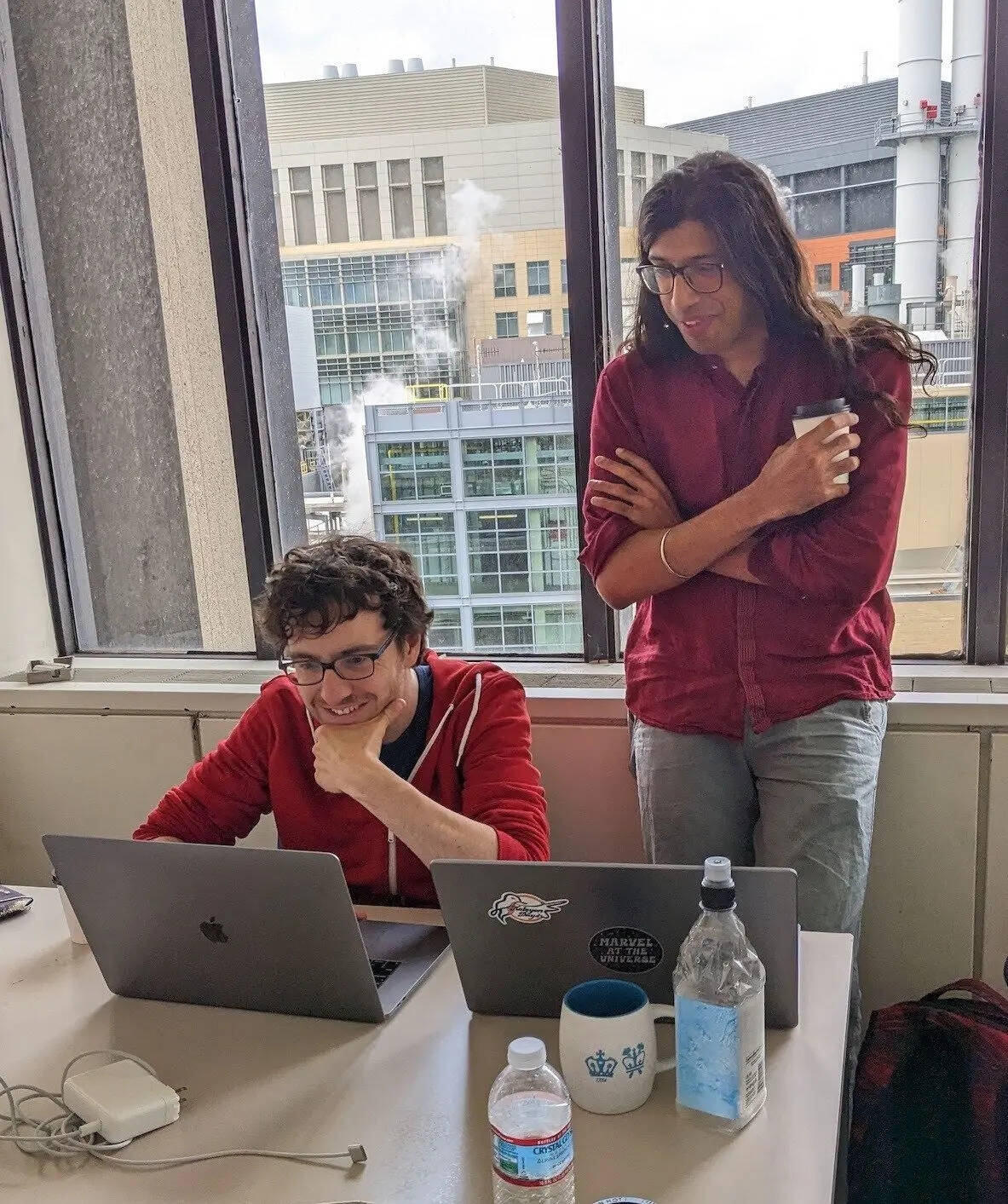
Exactly Two Years Ago Rohan Naidu Submitted The ‘Little Red Dot’ Paper at MIT Kavli (Picture Credit – X)
The Poet Who Reads The Sky
The most telling thing about Naidu is that the scientist is only half of him. Away from the telescope, he is a published poet, a quiz and trivia enthusiast, and a devoted follower of test cricket, the slowest, most patient game there is, which feels apt for a man whose work is reading light that has travelled for billions of years. He talks about his research not in cold technical terms but as a kind of archaeology, treating ancient stars as fossils and speaking of the elements forged in the universe’s first galaxies as the ones that would eventually make life on Earth possible. It is the language of someone who still finds wonder in what he does, a curiosity that clearly never left the boy who preferred the stars to the syllabus.

Rohan Naidu Spotted An Exceptionally Bright Red Object In The Early Universe
What His Story Really Says
It would be easy to reduce Rohan Naidu to a headline, the Hyderabad astronomer behind a black hole star. But the discovery, remarkable as it is, is not really the point of him. The point is the eighteen-year-old who looked at a life mapped out in advance and decided he wanted a different one, who gave up a guaranteed degree for an unproven college in a foreign country, and who kept choosing the harder, stranger road until it led somewhere no one could have predicted. Plenty of parents will read his name this week and quietly wish their own child would just finish the engineering degree. His life is the gentle argument for the opposite. Sometimes the dropout is simply looking at something the rest of us cannot see yet.
Latest News


Seasoned Editor and Author with over a decade of experience in literary journalism, author interviews, and publishing trends. Known for curating impac… View More
Original source: https://www.timesnownews.com/lifestyle