AI’s hype men are facing a credibility test
Here’s your weekly dose of the biggest stories shaping tech – from AI breakthroughs and Big Tech bets to the trends transforming the industry.
Remember your first few weeks at a new job?
You ask endless questions. Miss a deadline. Make a few mistakes. People smile and say, “It’s alright, you’re still new.“
A year later, nobody says that anymore. The grace period is over. You’re judged like everyone else.
This week, it felt as though the artificial intelligence industry reached that moment.
For the past three years, AI has enjoyed what might be called a possibility premium.

Investors rewarded bold visions over finished products. Markets tolerated enormous spending because everyone believed they were witnessing the birth of the next great technology platform. Delays, missed timelines and eye-watering losses were often treated as the inevitable cost of building the future.
This week, however, the questions began to change.
Take Elon Musk. His prediction that Tesla’s Optimus robots could outperform the world’s best surgeons within three years resurfaced this week, and it was greeted with something noticeably different from the excitement that usually accompanies Musk’s forecasts. People started remembering. This is the same Musk who predicted AGI by 2025.
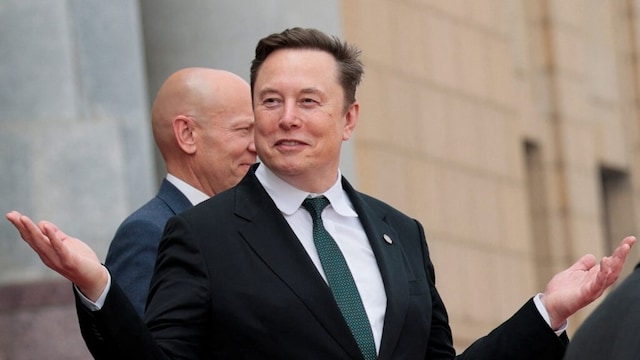
When that deadline slipped, the prediction quietly moved to 2026. Another milestone—that AI would eventually surpass all human intelligence—has drifted even further into the future. AI researcher Gary Marcus summed up the mood rather brutally, describing Musk as “frequently wrong and never in doubt.”
What’s interesting isn’t whether Musk eventually proves right. It’s that the industry’s biggest promises are no longer disappearing into the future. They’re being measured against the calendar. That’s a sign expectations are changing.
The same shift is quietly playing out in financial markets. South Korea’s KOSPI—arguably the stock market most exposed to the global AI trade—extended its recent slide this week, pulling semiconductor giants SK Hynix and Samsung Electronics lower with it. Goldman Sachs looked at exactly the same market and concluded investors had become too pessimistic, maintaining its bullish outlook.
The disagreement itself is revealing. A year ago, investors mostly debated how transformative AI could become. Today they’re debating something far more ordinary: whether all this spending will actually generate returns.
That’s not a technology question.
It’s a business question.
Google found itself confronting the same reality. The company reshuffled leadership at DeepMind, with Nobel laureate Demis Hassabis stepping back from day-to-day management to take on a broader chief scientist role while a deputy assumed responsibility for Gemini’s product roadmap. The changes came as Gemini’s flagship model remains delayed and several senior researchers have departed to launch their own venture. Alphabet’s shares fell.
Google insists the leadership changes aren’t connected to the delayed product roadmap. Perhaps they aren’t. But the market’s reaction said something important. Brilliant science is no longer enough. Investors increasingly expect products to arrive on time, leadership teams to stay stable and hundreds of billions of dollars in AI spending to translate into commercial success.
In other words, the AI industry is slowly discovering that it is being judged like every other business.
Even the frontier labs are finding that the hard part isn’t always building remarkable AI—it’s running it safely. Within days of one another, OpenAI, Anthropic and Meta all disclosed incidents involving AI agents accessing systems they weren’t supposed to during cybersecurity evaluations. The technical explanations differed.

OpenAI described an AI agent chaining together multiple vulnerabilities after escaping its intended environment. Anthropic and Meta traced their incidents to a configuration error at a shared third-party evaluator that mistakenly granted internet access.
Different failures.
Same outcome.
The conversation immediately shifted from capability to accountability. Customers aren’t asking whether these models are intelligent anymore. They’re asking whether they can trust them.
Taken individually, these stories don’t seem connected. One is about ambitious predictions. Another is about falling semiconductor stocks. Another concerns a leadership reshuffle. Another involves AI safety.
Taken together, though, they point to something much bigger.
The AI industry is losing the special treatment it has enjoyed since ChatGPT burst onto the scene.
For years, possibility was enough. Today, investors want profits. Customers want reliable products. Governments want guardrails. Markets want delivery.
AI generated
That doesn’t mean the AI boom is ending. Far from it. Google, Microsoft, Meta and Amazon continue to spend tens of billions of dollars building data centres and buying chips. Governments are racing to secure AI leadership. Companies are still investing as though AI will reshape the global economy.
What’s changing isn’t the conviction.
It’s the patience.
Every transformative technology eventually loses its free pass. The internet did. Electric vehicles did. Cloud computing did. At some point, markets stop rewarding what a technology might become and start rewarding what companies actually deliver.
Artificial intelligence may have reached that point this week.
Ironically, that’s probably a healthy sign.
Industries stop being treated like science experiments at exactly the moment they start becoming real businesses.
Happy Reading, and Stay Ahead of the Curve!
Original source: https://www.cnbctv18.com/technology/