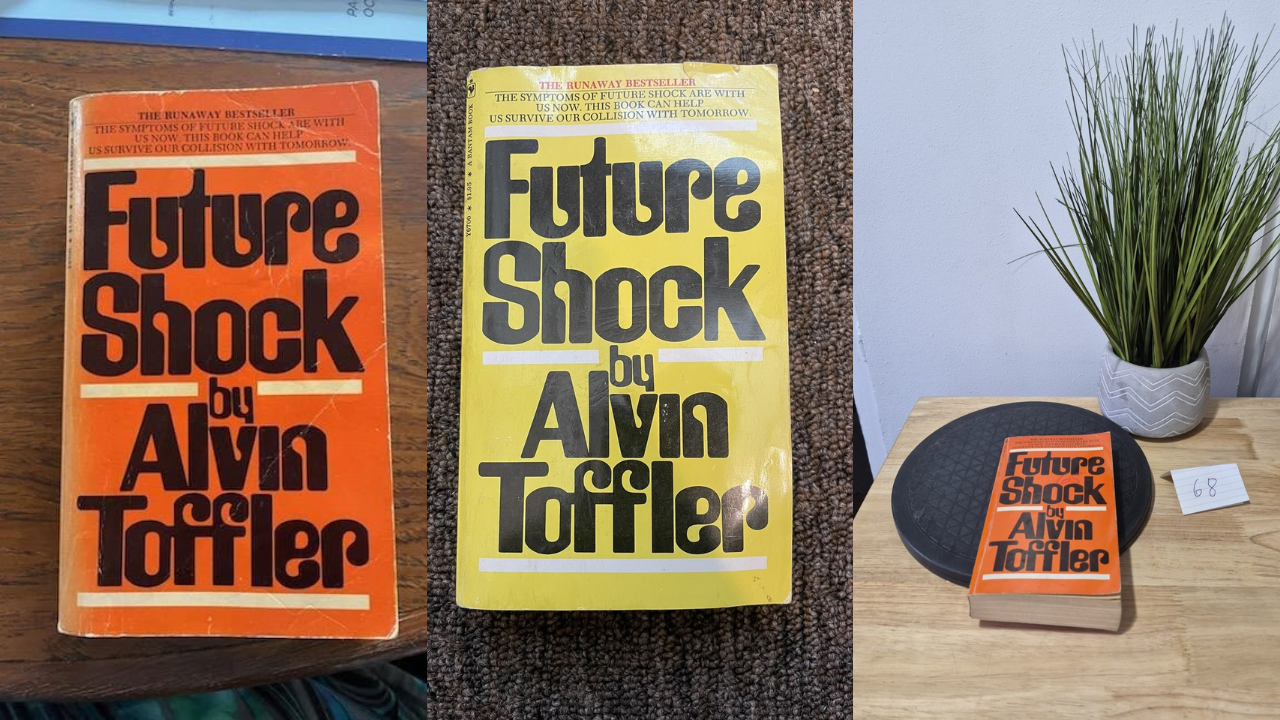
The Forgotten Bestseller That Understood Doomscrolling Before The Internet Existed
- Authored by: Girish Shukla
- Updated Aug 13, 2026, 13:01 IST
A man who never saw a smartphone diagnosed the midnight doomscroll in 1970. How Alvin Toffler’s Future Shock understood information overload decades before the technology that would make it inescapable.
The Forgotten Book That Saw Doomscrolling Coming Before The Internet (Picture Credit – Pinterest)
It is late, the phone is warm in your hand, and you have read the same grim headline three times without taking it in. One more refresh, you tell yourself, one more update and you will feel on top of things. You never do. That precise trap, the promise that a little more information will settle you when it only winds you tighter, was diagnosed with startling accuracy in 1970 by a man who had never seen a smartphone and never would. His name was Alvin Toffler, and the book was ‘Future Shock.’
A Prophet in a Paperback
‘Future Shock’ was a genuine phenomenon, selling more than six million copies and turning up on coffee tables and in secondhand shops for decades. Toffler, a former Fortune editor, spent five years asking a single question: what happens to human beings when change arrives faster than they can absorb it. His answer gave the era a phrase. Future shock, he wrote, was the disorientation caused by “too much change in too short a period of time,” and he thought it might become the defining affliction of the age to come. Reading him now, the uncanny thing is not how much he got wrong, but how precisely he named the thing we live inside.
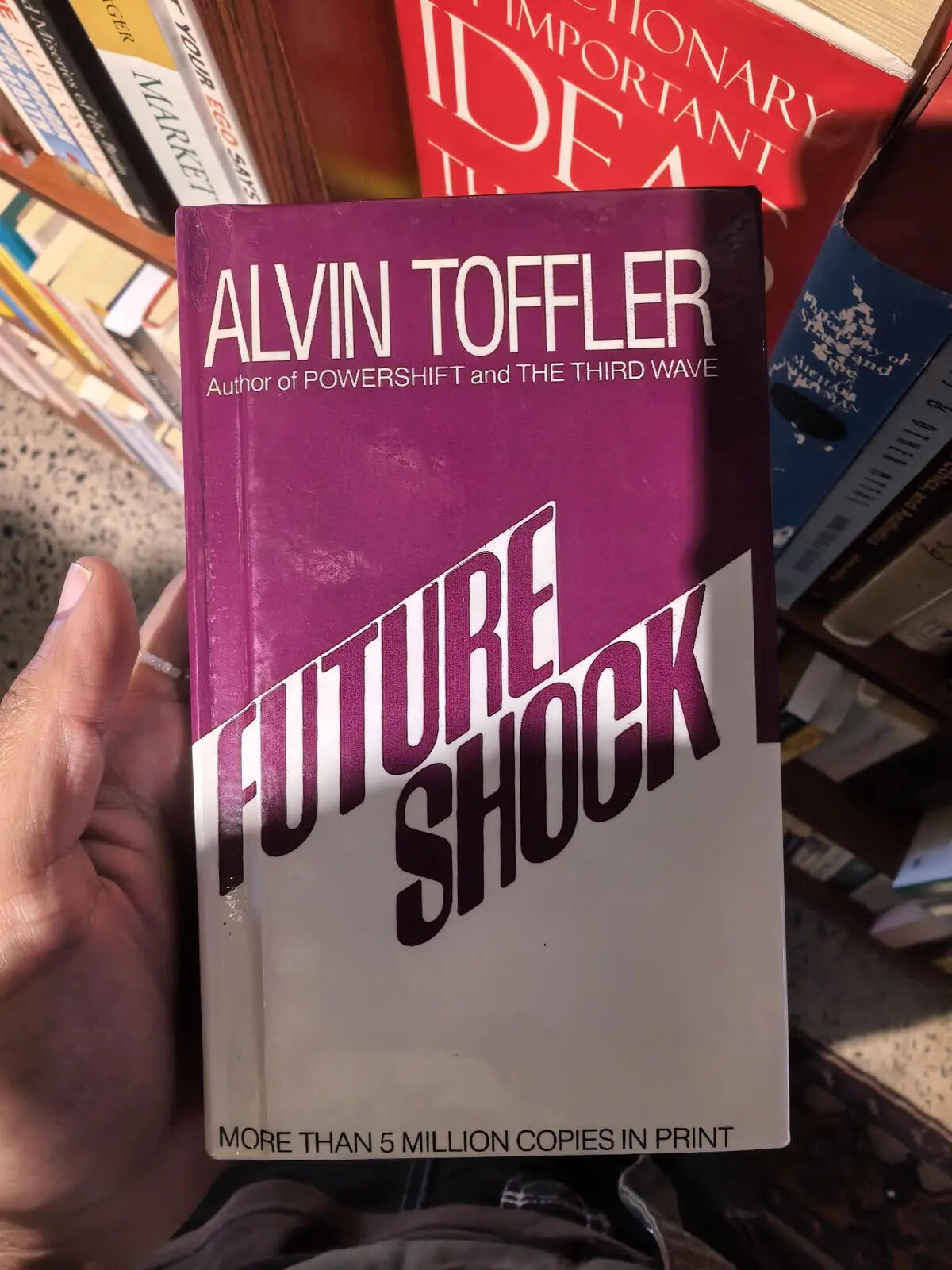
Future Shock (Picture Credit – Pinterest)
The Words He Left Us
Toffler did not merely sense the coming deluge. He named its symptoms, and we still use his terms without knowing they are his. He coined “information overload,” describing how the mind, like the body, “behaves erratically when overloaded,” lurching between agitation and numbness. He coined “overchoice” too, the paralysis that sets in when the options multiply beyond what any person can weigh, which is the exact sensation of a streaming menu at eleven at night. He even named “vicarious people”, the distant figures we would come to feel we somehow knew, which reads today like an early definition of the influencer. He foresaw that the flood would not enlighten us so much as exhaust us, widening, as he put it, the gap between what we believe and what really is.
Why He Reads Like a Warning
Here is the discomfort at the centre of the book. Toffler assumed that when the overload came, people would be sensible enough to reach for the off switch. That was his one great miscalculation, and it is the one that makes him feel prophetic rather than merely clever. Nobody turned it off. We built machines designed to make stopping almost impossible, then blamed ourselves for failing to stop. The doomscroll he could not have pictured is future shock with a battery, the same nervous exhaustion he described, now engineered into a product and slipped into every pocket. He had guessed at the cost too, the swings of mood, the retreat into easy choices, the frayed mind clutching at nostalgia to steady itself.
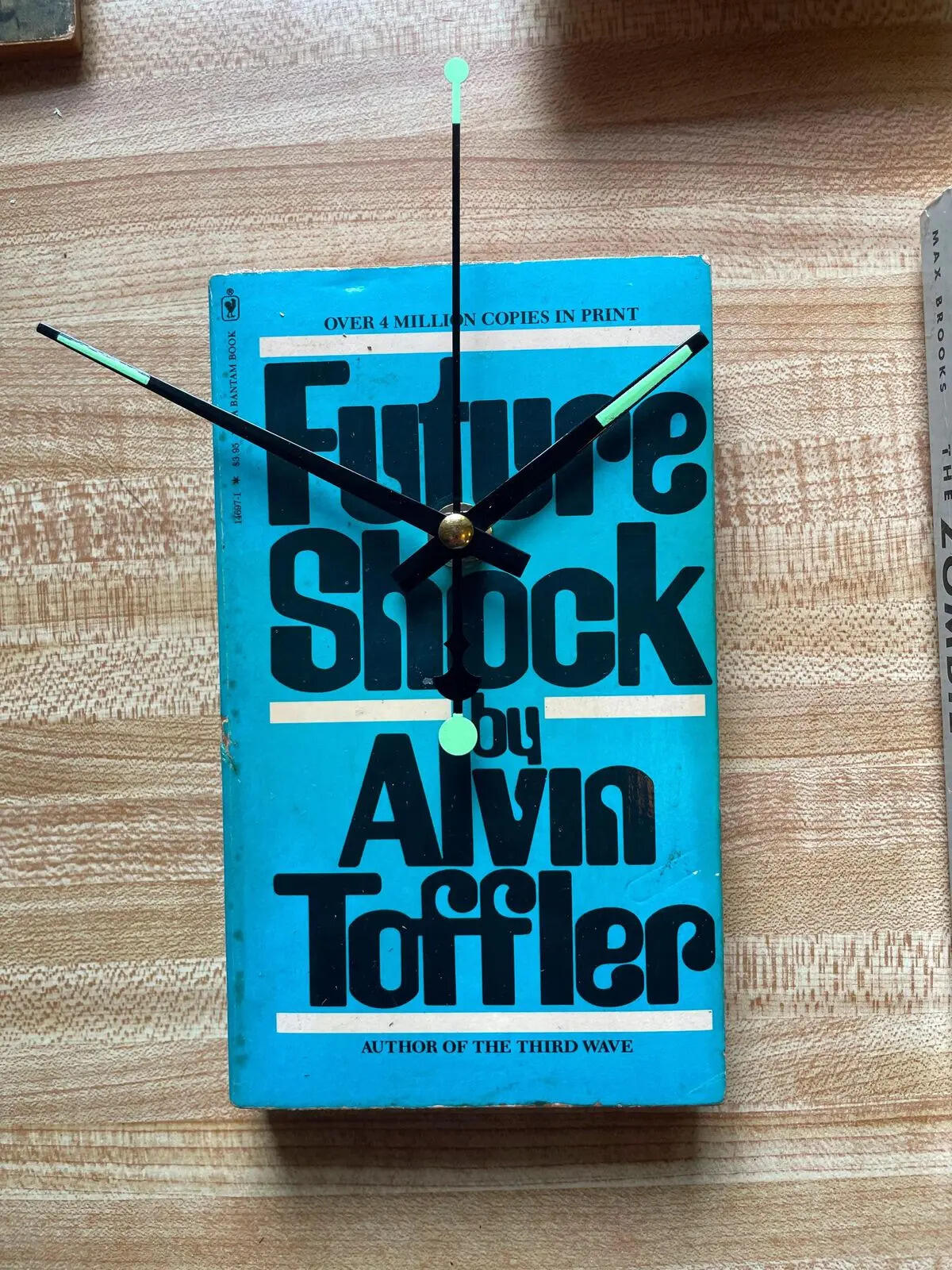
Future Shock by Alvin Toffler (Picture Credit – Pinterest)
So the next time you catch yourself refreshing a feed at midnight, hunting for the update that will finally make you feel prepared, remember that a man in 1970 already knew how the story ends. More information was never going to calm us. It was only ever going to make us unable to look away. Toffler’s real gift was not predicting the technology, which he mostly could not. It was understanding the human being who would one day hold it, tired, overloaded, and always reaching for just one thing more.
Latest News


Seasoned Editor and Author with over a decade of experience in literary journalism, author interviews, and publishing trends. Known for curating impac… View More
Original source: https://www.timesnownews.com/lifestyle