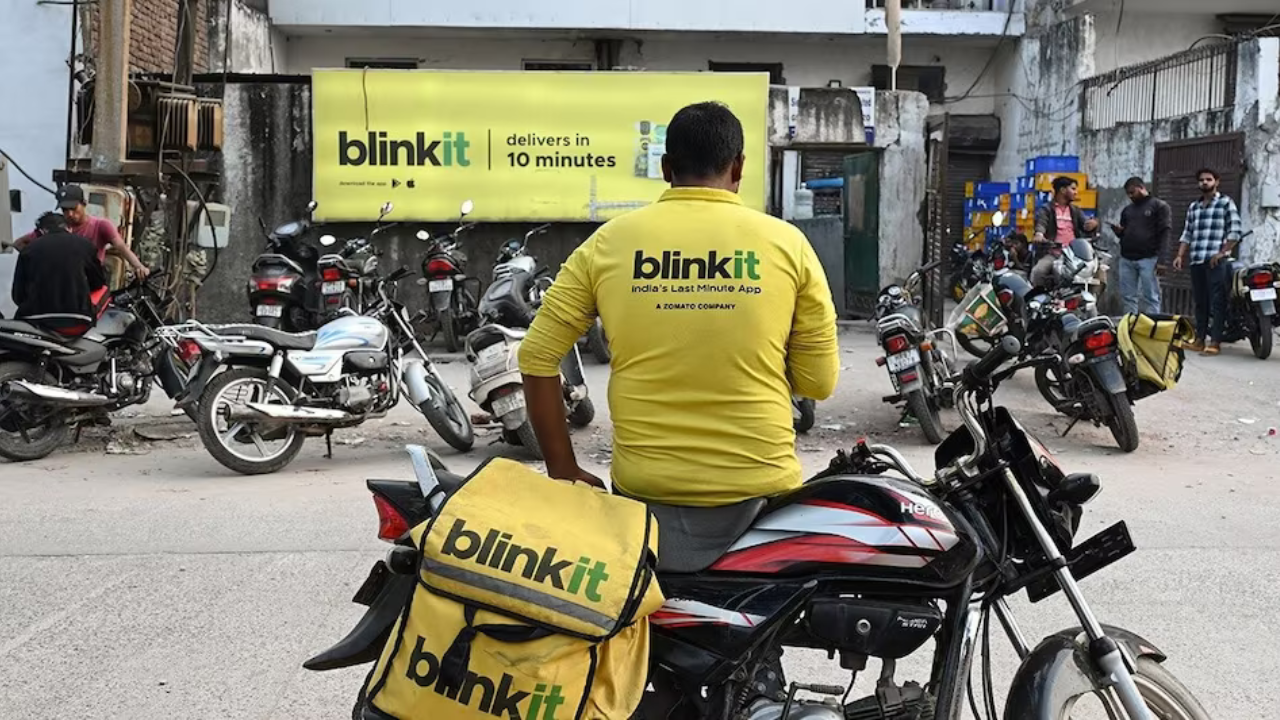
What’s Missing From Your 10-Minute Grocery Order? FDA Chief Tukaram Mundhe Flags The Importance Of Manufacturing And Expiry Details
- Authored by: Simran Sukhnani
- Updated Aug 13, 2026, 17:02 IST
Maharashtra FDA Chief Tukaram Mundhe urges consumers to check manufacturing and expiry dates on quick-commerce grocery orders, linking food safety, transparency, stricter inspections, and accountability across online food platforms.
Quick Commerce
The next time a quick-commerce delivery arrives at your doorstep in under 10 minutes, the first thing you should be doing is a thorough check of the expiry and manufacture dates. That’s what Maharashtra’s Food and Drug Administration (FDA) chief Tukaram Mundhe wants you to do before you rip apart the packet and use the paper bag as dustbin. In his latest address, Mundhe has directly cut to the chase and delivered a simple message that breaks apart the convenience economy: check the manufacturing date first, next check the expiry date and if any of that important information is missing, report it.
This warning comes shortly after the suspension of quick-commerce platform, Blinkit in Mumbai. Other apps like Zepto, Swiggy Instamart, and BigBasket have also come under growing scrutiny for displaying incomplete product information online. What one can see on the mobile screen is often different from what happens in the warehouses of these apps and while you may be thinking you are paying the price for glossy images, the reality on ground is completely different and often rotten. While the safety standards have gone for a toss, consumers have also been shrugging off the responsibility of checking some of the most important pieces of information while ordering in a hurry.
Mundhe’s remarks are not an isolated advisory. They are part of a much wider enforcement push that has transformed the functioning of the Maharashtra FDA since he took charge in May 2026.
Maharashtra FDA’s Recent Inspections
According to figures released by the commissioner, the FDA conducted 3,137 inspections of hotels, restaurants, milk establishments, food manufacturers and other food businesses between May 25 and July 31. The crackdown resulted in 165 licence suspensions and 764 improvement notices. The department also seized or destroyed 28.66 lakh kilograms of unsafe food products worth Rs 55.72 crore. Mundhe has repeatedly argued that the focus should not be on the percentage of violations alone, but on ensuring that unsafe food does not reach consumers. ThePrint, citing PTI, reported these official figures and Mundhe’s comments on the enforcement drive.

Food manufacturing date (Credits: Canva)
What has made the campaign stand out is its speed and visibility. Surprise inspections have been carried out across restaurants, eateries, milk units and quick-commerce facilities, with officials recording photographic and video evidence before and after compliance. In several cases, businesses that corrected deficiencies were allowed to resume operations after hearings, reinforcing Mundhe’s claim that the FDA’s approach combines enforcement with corrective action rather than permanent closure. ThePrint, citing PTI, reported that appeals were heard and interim relief was granted in eligible cases after compliance verification.
Tukaram Mundhe’s Advise For Consumers Buying From Quick-Commerce
The aggressive style has earned Mundhe an unusual reputation for a civil servant. On social media, many users have begun referring to him as ‘Singham,’ a comparison to the fictional no-nonsense police officer known for surprise raids and uncompromising action. The nickname reflects a broader public perception that the commissioner has been making changes left, right and centre in Maharashtra’s food safety ecosystem.
That perception has only grown stronger with recent actions against major food chains and the possibility of inspections extending even to film shooting locations, where complaints about poor-quality food served to crew members have surfaced. Industry observers have started referring to the phenomenon as the ‘Mundhe Effect,’ the idea that the fear of sudden inspection is forcing businesses to improve hygiene standards even before officials arrive. Recent reports on the FDA’s expanding inspection agenda have highlighted this emerging perception around Mundhe’s tenure.
Yet the most significant part of Mundhe’s message may be the responsibility he places on consumers themselves.
“Read labels carefully instead of relying solely on advertisements or product names,” he said. The larger question is no longer whether quick-commerce is convenient. It clearly is. The question is whether convenience can be allowed to dilute transparency. A packet of milk, bread, snacks or ready-to-eat food ordered through an app is still a regulated food product. The rules governing labelling do not disappear when the purchase is made with a thumb tap instead of a shopping cart.
Mundhe’s warning, therefore, is about more than dates printed on a packet. It is about restoring a basic principle of consumer protection: if you are expected to eat it, you are entitled to know exactly what it is, when it was made, and when it should no longer be consumed. In the race to deliver groceries in ten minutes, that right cannot become the first casualty.
Latest News


Simran covers books that start conversations, beauty insights, fashion moods, and stories that make people feel something. Off duty? You’ll find her c… View More
Original source: https://www.timesnownews.com/lifestyle