A Revolution Was Woven! Former Maoist Women Turn Models And Make A Powerful Statement In Chhattisgarh’s Kosa Silk
- Authored by: Akanksha Arora
- Updated Aug 13, 2026, 16:36 IST
Former women Naxals from Bastar’s forests trade rifles for ramp walks, wearing Kosa silk and handloom weaves at Raipur’s National Handloom Day, proving reintegration can be a runway too.
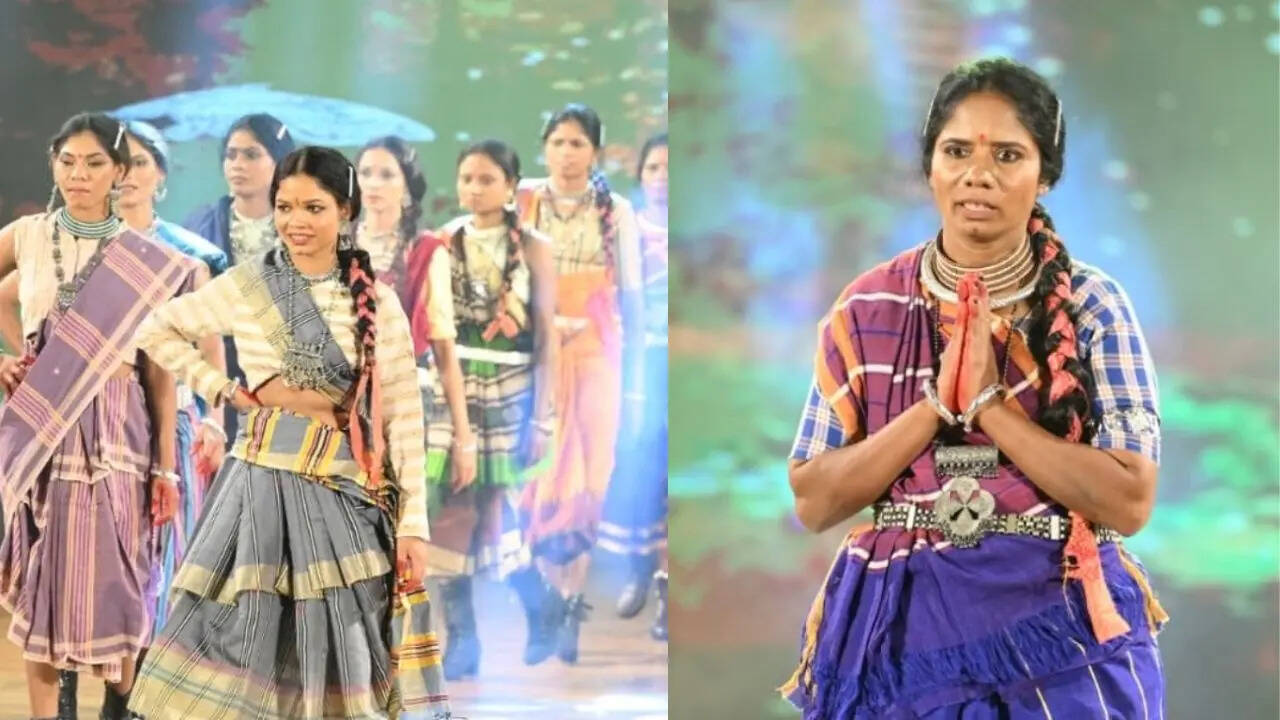
Formet maoist women walk the ramp. (Image: ANI)
For years, the word ‘Maoist’ brought up one image: Fighters hiding in the thick forests of Bastar, cut off from the rest of the world. On National Handloom Day 2026, that image was replaced by another one entirely. At the Pandit Deendayal Upadhyay Auditorium in Raipur, a group of women who once carried weapons in those same forests walked out onto a lit-up ramp, dressed in handwoven Chhattisgarhi textiles, and the crowd rose to applaud them. It was not a usual fashion show! The women on stage were former Maoists who had surrendered and chosen to leave the movement behind. Now they were modelling in Kosa silk sarees and handloom outfits, the same fabrics that Chhattisgarh’s weavers have been making for generations.
When Bastar Tradition Meets Runway
The outfits leaned heavily on the checks, stripes and earthy colours that define handloom weaving from this particular belt of central India.
One of the looks paired a soft lavender-and-cream striped saree with heavy tribal silver jewellery. It featured layered necklaces, an arm cuff, and a broad carved belt worn at the waist over the drape. The saree was pleated and gathered at the front like a traditional Bastar-style wrap. It was shorter than a regular saree so it moves easily. Chunky black boots underneath gave the whole outfit an unexpected, modern edge.
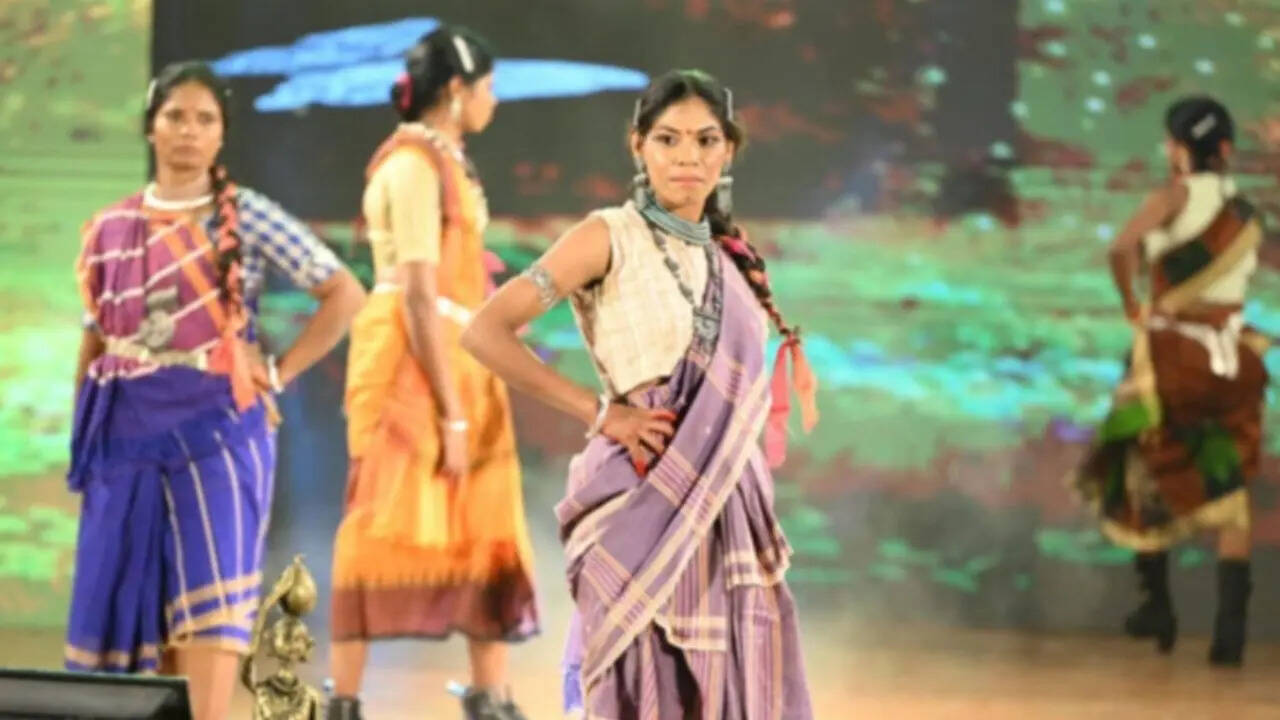
From guns to the ramp. (Image: ANI)
Another model wore a grey-and-cream striped skirt with wide golden borders. It was paired with a cream checked blouse and a stole slung over one shoulder. The model’s hair was in a long braid woven with red thread, a nod to how Bastar’s tribal women traditionally style their hair. Silver jewellery again did most of the talking.
A close-up of one participant showed just how much detail went into the styling. She wore a purple-and-orange checked wrap with a contrasting blue-and-white checked sleeve. This was paired with several rows of white beaded necklaces and a large silver belt buckle shaped like a flower. Her hair was braided with an orange tassel at the end. Standing with her hands folded, she looked composed and proud.
Behind the models, other participants in the lineup wore sarees in blues, oranges, and greens, all handwoven and featuring the checks and border patterns that Chhattisgarh’s weavers are known for.
Meanwhile, Chhattisgarh Chief Minister Vishnu Deo Sai met the participants after the show and wished them well. For the women involved, the event was part of a bigger journey. Many of them are now working with local organisations, taking part in community programmes, and building lives that were simply not possible for them before. Walking a ramp might seem like a small thing but for women who once lived in hiding, doing it in front of an applauding crowd, in the very handloom fabrics their region is famous for, was its own kind of statement.
Latest News


Senior Copy Editor at Times Network, Akanksha Arora covers Lifestyle, Culture and everything that falls under its big umbrella. When not writing, she … View More
Original source: https://www.timesnownews.com/lifestyle