From ‘Fragile Five’ To Major Economy: What PM Modi Said About India’s Transformation
- Edited by: Priya Raghuvanshi
- Updated Aug 15, 2026, 13:30 IST
PM Modi recalled India’s ‘Fragile Five’ past as the country marked 80 years of Independence, highlighting its economic transformation over 12 years.
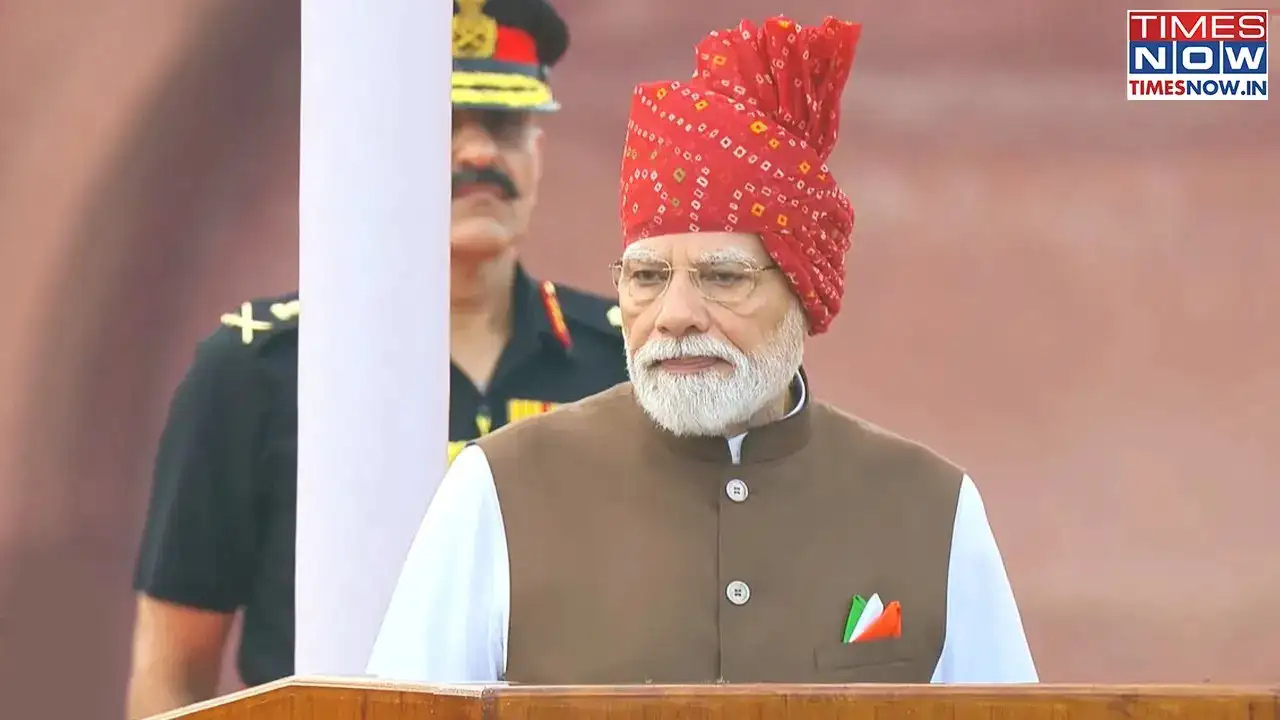
Prime Minister Narendra Modi on 15 August. (Image: Times Now Digital)
India’s economic journey over the past 12 years has been marked by a dramatic shift in its global standing. On the occasion of the country’s 80th Independence Day, Prime Minister Narendra Modi highlighted this transformation during his address from the Red Fort, recalling a period when India was grouped among the world’s so-called ‘Fragile Five’ economies. “The world had dumped India’s economy in the ‘Fragile Five’. People’s efforts have resulted in taking India to a major economy in the last 12 years,” PM Modi said, taking a swipe at the Congress-led UPA era.
The Prime Minister said India has since emerged as the fastest-growing major economy over the past 12 years. India also moved ahead of Japan last year to become the world’s fourth-largest economy, according to the information cited in the speech, placing it behind only the US, China and Germany.
What Was The ‘Fragile Five’?
The phrase ‘Fragile Five’ was introduced by global investment bank Morgan Stanley in 2013. It referred to five emerging-market economies that were considered particularly exposed to external financial pressures.
The group comprised India, Brazil, Indonesia, South Africa and Turkey.
At the time, these economies faced concerns over their ability to withstand sudden changes in global capital flows. India’s inclusion was linked to several economic weaknesses, including elevated inflation, a sizeable current account deficit, pressure on the rupee and reliance on overseas capital.
The label became particularly significant because it emerged during a period of heightened uncertainty in global financial markets.
One of the key factors behind India’s vulnerability was the changing global interest-rate environment. The US Federal Reserve’s decision to gradually scale back its large-scale bond-buying programme, known as quantitative easing, raised concerns that global investors would redirect money towards US assets as interest rates increased.
Emerging markets such as India faced the possibility of substantial capital outflows as a result.
India’s external position was already under pressure. The country’s current account deficit reached 5.1 per cent of GDP in 2012, indicating that the value of imports significantly exceeded earnings from exports and other external receipts.
A widening deficit made the economy more dependent on external financing and left it more exposed to sudden changes in global liquidity.
The rupee also came under intense pressure. The currency lost around 12 per cent of its value against the US dollar within a few months, adding to concerns surrounding India’s economic stability.
How India Moved Out Of The ‘Fragile Five’
India’s position began improving relatively quickly. By 2014, the country had moved out of the ‘Fragile Five’ grouping as its external balances strengthened and foreign exchange reserves improved.
The improvement reflected measures aimed at addressing some of the economy’s key vulnerabilities, particularly the current account deficit and pressure on foreign exchange reserves.
The International Monetary Fund also highlighted India’s turnaround, with the institution noting that India had recorded one of the sharpest improvements in macroeconomic conditions among emerging economies.
Policy measures played an important role in the process. The government worked to contain the current account deficit, including by restricting gold imports and taking steps to encourage exports.
The Reserve Bank of India also played a crucial role during the period. Several experts have credited then RBI Governor Raghuram Rajan with helping steer the economy through a challenging phase and restore confidence in India’s macroeconomic fundamentals.
From Economic Vulnerability To A Major Economy
The contrast between India’s current economic standing and its past vulnerabilities has become an important part of the country’s economic narrative. The ‘Fragile Five’ label reflected concerns about India’s exposure to capital outflows, currency volatility and external financing requirements. The subsequent improvement in external balances and reserves helped the country move beyond those concerns.
Over the following years, India continued to expand its economic footprint and strengthen its position among the world’s largest economies.
PM Modi used this transformation in his Independence Day address to underline the scale of India’s economic progress. His remarks also framed the change as the result of sustained efforts by the country’s people and institutions.
From being identified as one of the emerging markets most vulnerable to global financial shocks to becoming the world’s fourth-largest economy, India’s economic story has undergone a significant transformation in little more than a decade.
Get Latest News Live on Times Now along with Breaking News and Top Headlines from Business, Economy and around the World.
Latest News


She is working as a Chief Copy Editor at Times Now’s Business Desk, where she covers key developments in the stock market, Indian corporates across se… View More
Original source: https://www.timesnownews.com/business-economy