US-Iran Deal Ends Today: No Talks, No Breakthrough on Hormuz — What Happens Next?
- Edited by: Rounak Bagchi
- Updated Aug 17, 2026, 05:47 IST
Disputes over violations have emerged since its signing in June, with each nation blaming the other
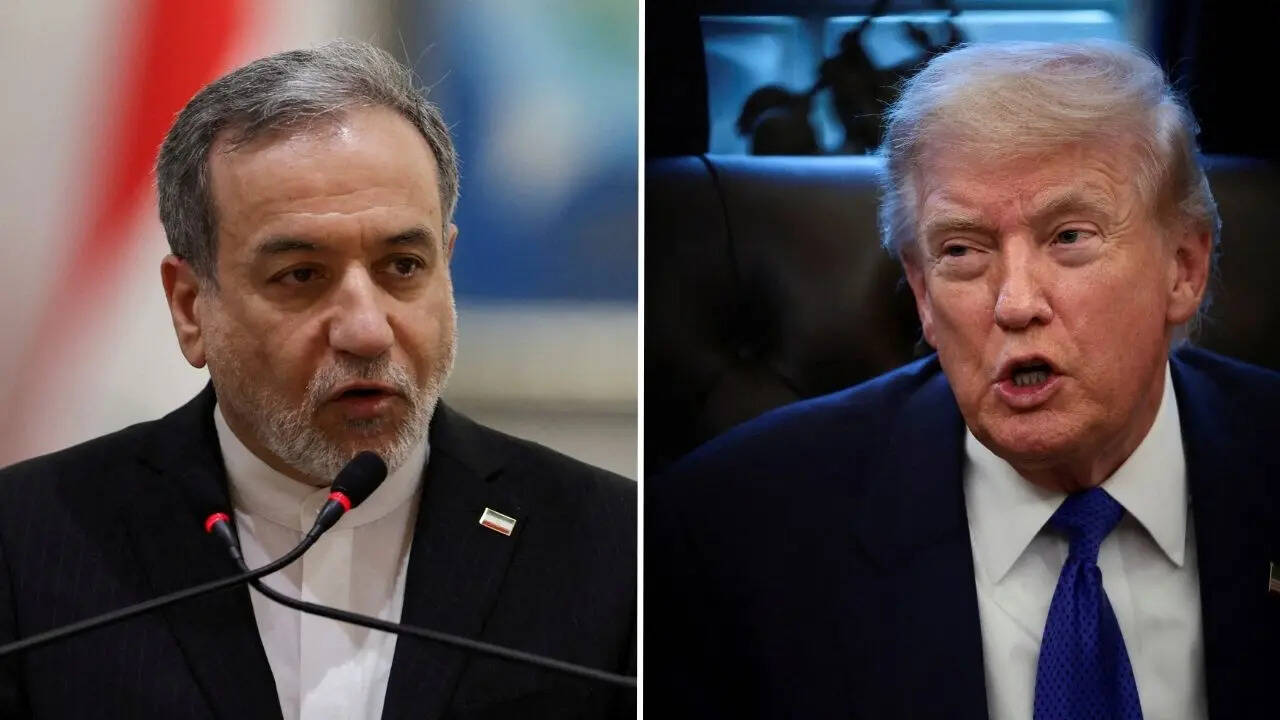
Iranian Foreign Minister Abbas Araghchi and US President Donald Trump have been involved in a war of words over the Strait of Hormuz.
A memorandum of understanding aimed at ending the war between the US and Iran is due to expire today (Monday), with little indication that either side is prepared to extend it. The agreement, signed in June after talks hosted by Pakistan, has been disputed by both Washington and Tehran, with each accusing the other of violating its terms.
Iranian Foreign Minister Abbas Araghchi said on Saturday that Tehran had not decided whether to resume negotiations with the US. “We have not yet made a decision to restart negotiations with the United States,” he said in a post on Telegram.
Meanwhile, Qatar and Pakistan have continued to exchange messages with Iranian officials in an effort to keep diplomacy alive.
Araghchi also said Iran was working with Oman on a separate agreement concerning new shipping routes through the Strait of Hormuz, but stressed that this would depend on reaching a political settlement.
The fate of the agreement is particularly significant because the Strait of Hormuz remains a major point of dispute between Washington and Tehran.
US President Donald Trump said on Friday that the US would soon claim the strategically important waterway as its own. “After we finish defeating Iran, which is being very badly defeated, pretty soon I’ll be declaring the Hormuz Strait a territory of the United States,” he said.
What Was the Agreement?
The memorandum was signed on 17 June by Trump and Iranian President Masoud Pezeshkian following rare high-level talks hosted by Pakistan.
It was intended to end more than three months of fighting that had killed thousands and severely disrupted commercial traffic in the Gulf, including oil and gas shipments.
The agreement said the US and Iran would “declare the immediate and permanent termination of military operations” and work towards a “final deal” confirming the permanent end of the war on all fronts.
That deal was to be endorsed by the UN Security Council and reached within 60 days, although the deadline could be extended if both sides agreed.
The US also agreed to end its naval blockade within 30 days, withdraw forces from areas near Iran once the final deal was reached and begin work on a reconstruction and development package worth at least $300bn.
Washington also agreed to lift sanctions, issue waivers for Iranian oil exports and allow Tehran access to frozen funds.
Iran, meanwhile, was expected to clear mines from the Strait of Hormuz and allow ships to pass through it “with no charge” for 60 days. Tehran also reaffirmed that it would not seek nuclear weapons and agreed to negotiate over issues including uranium enrichment.
Why Has the Agreement Broken Down?
The US and Iranian versions of the memorandum differed in some details, but disagreements quickly emerged over the nature of the agreement and what each side was required to do.
By late June, both countries were accusing the other of violating the deal.
On 7 July, Trump said the agreement was “over”. The US subsequently continued attacks on Iran, including strikes on what Tehran described as civilian infrastructure.
Iranian officials said Washington had “violated and suspended” its commitments and that Tehran had consequently suspended its own.
The US has also not fully lifted sanctions on Iran.
Trump has rejected the idea of paying Iran for reconstruction, instead suggesting that Tehran should compensate families of protesters it had killed “over the last 50 years” as well as “all the people they have killed and gravely wounded with their roadside bombs and many conflicts”.
The Strait of Hormuz has remained closed to normal commercial traffic. Earlier this month, the Pentagon said the US military had fired on a Panama-flagged cargo vessel in the strait because it had “violated the US blockade against Iran”. “The ceasefire stopped and was rendered obsolete after the US didn’t comply with the terms of the agreement, or the MoU,” Mostafa Khoshcheshm, a professor at the University of Applied Sciences in Tehran, told Al Jazeera
What Happens When the Deadline Expires?
It remains unclear what the expiry of the memorandum will mean in practice.
Iranian officials have argued that the document represented an agreement to end the war rather than a temporary ceasefire.
Araghchi said on Friday that the Islamabad memorandum was “the end of the war, not a ceasefire”. He added that because the US had violated the agreement and continued attacks, “there was no 60-day ceasefire that needed to be extended”.
Iran has also recently reshuffled parts of its national security leadership.
Earlier this month, former Islamic Revolutionary Guard Corps commander Mohsen Rezaei was appointed head of the Supreme National Security Council.
Analysts say the changes could signal a tougher Iranian position in any future negotiations, particularly over control of the Strait of Hormuz.
Khoshcheshm said Rezaei’s appointment suggested Iran believed “it has the upper hand”.
He said Tehran could enter any future negotiations with additional demands, potentially including an end to the war in Gaza, the lifting of sanctions and a blockade of Yemen, as well as calls for Israel to give up its nuclear weapons.
What Options Does the US Have?
Washington has continued to increase pressure on Tehran. Trump has threatened to claim the Strait of Hormuz as US territory, while Treasury Secretary Scott Bessent said the US would introduce measures against Iran that have “never been seen”.
Barbara Slavin, a distinguished fellow at the Stimson Centre in Washington, said US stocks of interceptor missiles had been depleted, strategic oil reserves had been drained and key military equipment, including aircraft carriers, had remained deployed for longer than planned.
Iran has also demonstrated its ability to inflict economic pressure by disrupting shipping through Hormuz, she said. “Iran is playing hardball here, clearly furious at the Trump administration for, in its view, not fulfilling the MoU signed back in June,” Slavin said. “They’re making the international economy and they’re making Donald Trump sweat.”
Iranian officials have continued to portray the conflict as a success for Tehran. Parliament Speaker Mohammad Galibaf told reporters in Tehran on Saturday that the concessions Iran had secured in the memorandum were “a source of pride and victory”. “I can say with complete conviction that we truly emerged victorious in this war, both militarily and politically,” he said.
Latest News


Rounak is a journalist with over 7 years of experience covering geopolitical and international affairs. He has a keen interest in research and explain… View More
Video
Original source: https://www.timesnownews.com/delhi