Vande Mataram At 150: The Song Bankim Chandra Chattopadhyay Hid Inside a Bengali Novel
The song that became India’s battle cry was first sung by fictional rebels, buried inside a Bengali novel. A hundred and fifty years of Vande Mataram, and the fault line within it.
Two words that almost every Indian knows by heart, chanted at rallies and cricket grounds, printed on banners, and this Independence Day sung from the ramparts of the Red Fort. Vande Mataram, I bow to thee, Mother. What almost nobody remembers is that this thunderous national song began life quietly, folded into the pages of a Bengali novel and sung by rebels who never existed. A hundred and fifty years after it first appeared, the journey of Vande Mataram, from a lyric in a work of fiction to the battle cry of a freedom movement, remains one of the most remarkable stories in Indian literature.
A Lyric Tucked Into Fiction
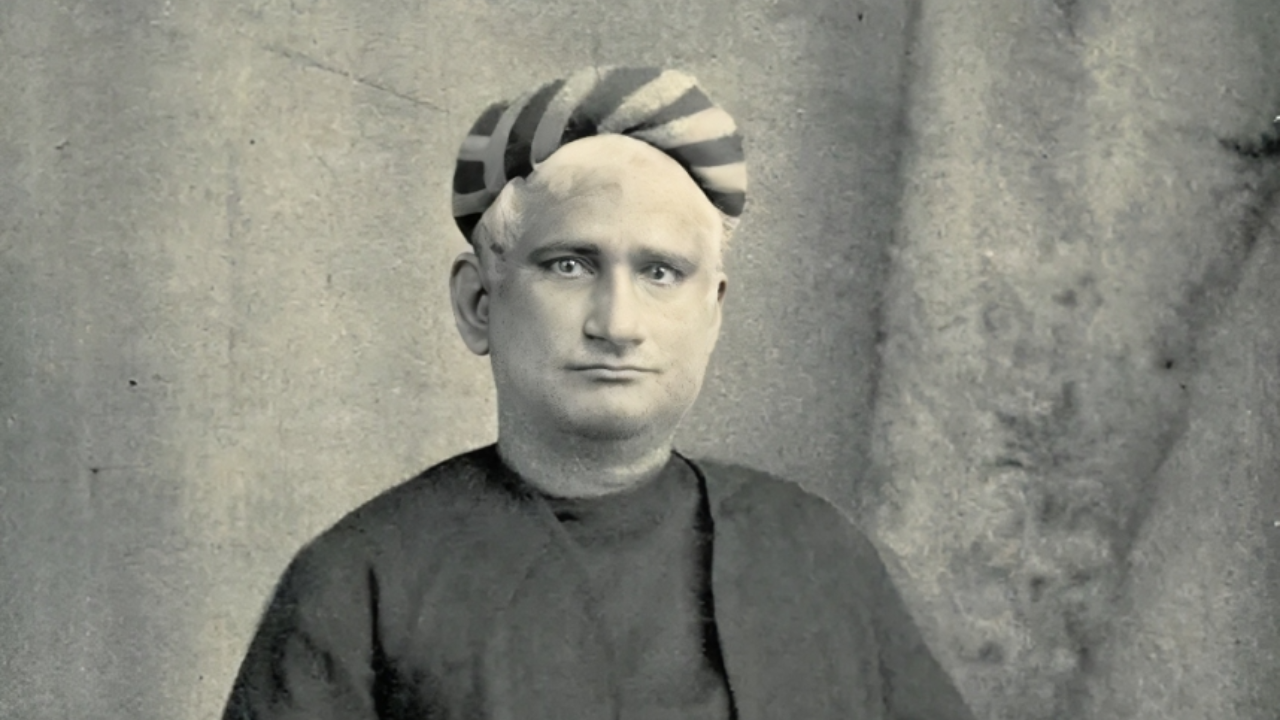
The man who wrote it was Bankim Chandra Chattopadhyay, born in 1838, one of the commanding intellects of nineteenth-century Bengal and, by common consent, the father of the modern Bengali novel. His books, from ‘Durgeshnandini’ in 1865 to ‘Devi Chaudhurani’, had already reshaped Bengali fiction and given a colonised people a literature of their own. By day, remarkably, he was a deputy magistrate in the service of the British government he would come to help undermine. He first published the poem Vande Mataram on 7 November 1875, in Bangadarshan, the influential literary journal he himself edited. Seven years later he did something quietly momentous. He wove the lyric into his 1882 novel ‘Anandamath’, a stirring tale of ascetic warrior-monks, the santans, who rise against injustice in the name of the motherland. In the book, the song is their hymn, sung by imagined men marching towards an imagined battle. The novel itself was set amid the upheavals of late eighteenth-century Bengal, a land emptied by famine and misrule, and in its pages the Mother appears in three faces, the land as she once was, as she is now, and as she might one day become. The words, however, refused to stay imaginary.

Anandamath by Bankim Chandra Chatterjee
The Words That Escaped the Book
The escape began with a tune. Rabindranath Tagore set the song to music and sang it himself at the 1896 session of the Indian National Congress in Calcutta, lifting it out of the novel and into the political air. When the British partitioned Bengal in 1905, Vande Mataram became the rallying cry of the Swadeshi movement, first raised as a political slogan on 7 August that year. In 1906, more than ten thousand people are said to have joined a single Vande Mataram procession in Barisal. Students were expelled for chanting it, young men went to prison with it on their lips, and some met the gallows the same way, and the colonial authorities eventually banned its public singing, which only deepened its power. A line of fiction had, within a generation, become an act of sedition. To sing it aloud in those years was itself to choose a side.
Rabindranath Tagore Composed The Music And Performed The Song At The 1896 Indian National Congress Session In Calcutta
A Song, and a Fault Line
Yet the same song that united also divided, and honesty demands that part of the story too. The later verses of Vande Mataram personify the motherland as the Hindu goddesses Durga, Lakshmi and Saraswati, and the novel that first carried it, ‘Anandamath’, set its Hindu ascetics against Muslim rulers. Many Muslims came to feel they could not sing it without betraying a faith that forbids the worship of any deity but God. The quarrel was never only about theology, though. At its heart lay a harder question, about who the imagined Mother included, and who was left standing outside her embrace. In 1937, a Congress committee guided by Tagore reached a careful compromise, adopting only the first two stanzas, which praise the land and its rivers and fields rather than any goddess, for use at national gatherings. On 24 January 1950, independent India formalised that balance. Jana Gana Mana would be the national anthem, and Vande Mataram would stand beside it, with equal honour, as the national song. The tension has never wholly disappeared, and the decision to revive the full six-verse rendition during this anniversary year has brought the old debate quietly back into view.
Vande Mataram Lyrics
It is easy, amid the ceremony and the argument alike, to forget the simplest fact about Vande Mataram. Before it was a slogan or a statute, it was a piece of writing, a novelist’s lyric about the love of a place, made so potent that it climbed out of its own story and took on a life its author never lived to witness. Bankim Chandra died in 1894, more than half a century before the song he had slipped into a novel was sung over a free and independent country. That is the quiet marvel buried inside its hundred and fifty years. A writer almost never knows which of his sentences will outlast him, or what a whole nation will one day do with words he believed he was only lending to imaginary men. Bankim hid a song inside a book. It walked out and helped to free a country.
Original source: https://www.timesnownews.com/lifestyle