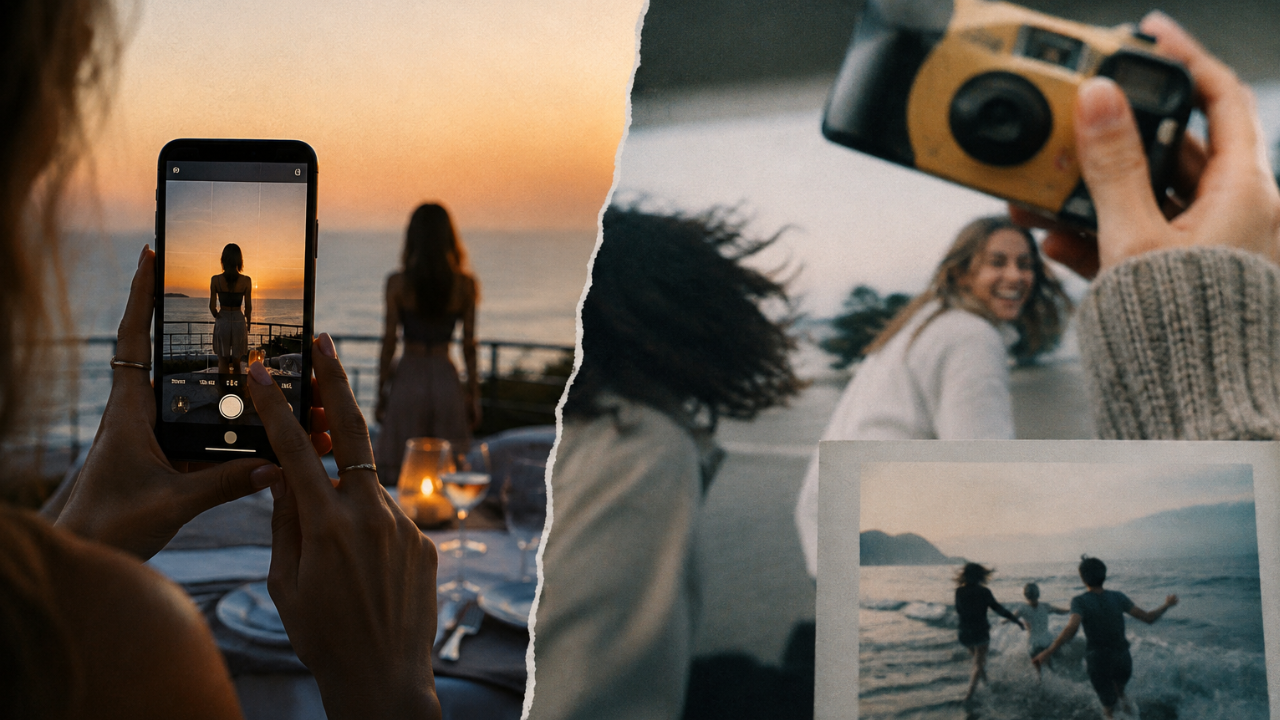
Photo Dumps to Film Cameras: Why We’re Obsessed with Imperfect Pictures Again
- Authored by: Aalokitaa Basu
- Updated Aug 19, 2026, 14:41 IST
Anybody who loves being photographed on the go will confirm: the joy of a genuinely beautiful candid is unmatched. And that seems to be the exact direction this generation of grid-curators seem to be moving towards.
World Photography Day 2026: We’re discovering the joy of genuine candids (Credit: AI)
We’ve all sifted through the endless stacks of carefully preserved photo albums in our homes. And besides the nostalgia, they’re all filed to the plastic-capped seams with more or less the same essence, of being raw and unfiltered. The current generation too, has been creating their own kind of keepsake boxes. Only these are locked away behind a screen. And after an endless strive to get the perfect picture, it seems like the current tides are finally moving back towards authenticity – of both moments and frames.
But how can we be so sure? It’s because we live in an age where all you need to produce a technically flawless image, is an AI app and roughly 10-seconds of your time. But there’s no nostalgia there – and where’s the fun in that? Arpita Kohli, Psychologist and Counsellor at PSRI Hospital, New Delhi, says this reflects a broader shift in what we value in images: “When almost everyone has access to powerful cameras, filters and AI editing tools, a technically flawless photograph no longer feels particularly distinctive. Grain, blur, uneven lighting or an awkward frame can signal that the moment was real rather than manufactured. Imperfections can therefore make an image feel more human and emotionally believable. They also offer a sense of relief from the pressure to constantly present an idealised version of ourselves. In a culture saturated with polished images, an imperfect photograph can communicate, ‘This is how it actually felt,’ rather than ‘This is how I wanted it to look.’ “

World Photography Day 2026: We’re moving back to unchoreographed photos (Credit: Unsplash)
In this context it’s tone-deaf to not address the perfection pandemic, further reinforced by the booming creator economy. And there are several authorities in this matter who continue to curate the perfect frame and online presence, well enough for it to pay their bills. And that’s exactly what the catch is – it’s their job. Perceptively scroll through any of these pitch-perfect feeds and you’re likely to find that sense of genuine, unrehearsed joy only in the shots with what you’d call ‘flaws’.
Now, the photograph that makes it into a photo dump might be the one that would once have been deleted. These are the shots that don’t really clue a stranger in. But if you were there, these have the same kind of imprint on your senses as a bottle of perfume you haven’t spritzed in a while. Kohli adds, “Candid photographs can create what psychologists would describe as a stronger sense of naturalness and emotional authenticity. When we see someone laughing mid-conversation, looking away from the camera or caught in an ordinary moment, we are less focused on their appearance and more likely to engage with the emotion and story behind the photograph. Spontaneity also reduces the feeling that we are being presented with a carefully managed image. This can make the photograph feel more intimate and relatable. Candid images can satisfy our growing desire for experiences and representations that feel genuine and less performative.”
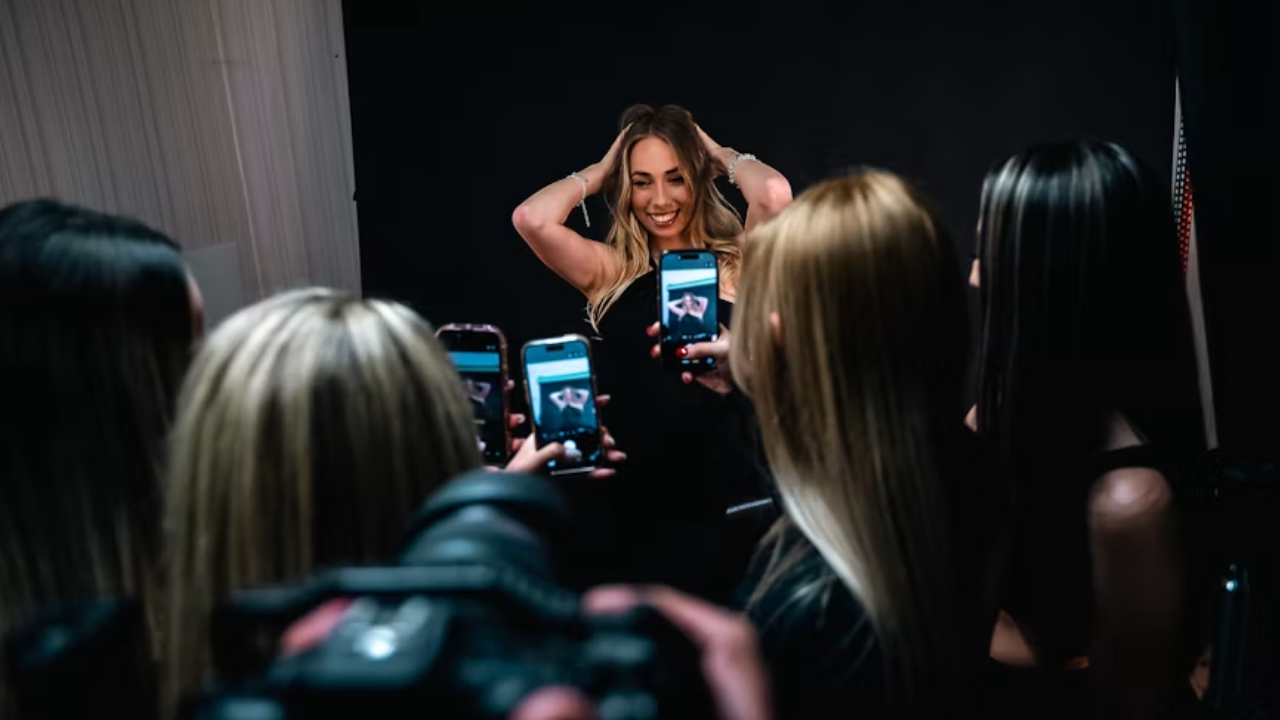
World Photography Day 2026: The ‘perfect’ photo era is fading out (Credit: Unsplash)
Also Read: The Quiet Truth About Adult Friendships
There is also something deeply reminiscent about photographs that don’t quite work. This is more literal for Gen X and some of the older millennials. But for Gen Z who have grown up with a much stronger predisposition to ‘curation’, the switch is likely to feel refreshing. Anurag Mehra, a professional photographer who also runs his own creative agency, sees that connection between technology, memory and nostalgia: “Technology is around us so much these days that while capturing our special moments people want to keep it as original as they can so that on a later time when they revisit those memories they can imagine the actual moments. For Gen Z, this is same nostalgia as millennials feel when they see the unfinished photos of their childhood. Some are over exposed, some dark but the feeling behind them is real.”
This also explains why film cameras have found their way back into the hands of people who don’t really know anything about waiting on photos to be developed. This, unlike what many think, is less about the technique and more about not only contending with the uncertainty of an ‘imperfect’ photo, but also seeking it out – because that’s what makes them real. “An imperfect photograph can sometimes function as a stronger emotional cue for autobiographical memory. A slightly blurry image, unusual expression or background detail may remind us not only of what we looked like, but of what was happening around us – the people we were with, the atmosphere, how we felt and even seemingly insignificant details we had forgotten,” explains Kohli, adding, “Highly edited photographs can sometimes create a polished representation of the event, but they may also distance us from the experience because they emphasise how the moment looked rather than how it felt. Memory itself is not a perfectly preserved recording; it is reconstructed through emotional and sensory associations. An imperfect photograph can therefore feel more powerful precisely because its imperfections preserve the texture of the original moment.”
World Photography Day 2026 (Credit: iStock)
Mehra lives and breathes photographs both as his profession, and as a passion. But even he concurs that a ‘good’ photograph is ultimately not about the image itself. “A picture should always be the thumbnail of a broader story. If there is no story behind the image that you can think of later, then there is no value. There are of course, always exceptions to this approach in some styles of photography, especially speaking professionally. But in a personal context, photographs, no matter how beautiful, will not have you return unless they hold some genuine meaning.”
We’ve never had more ways to document our lives. The right light, the right angle, the right expression, the right outfit, the right background, and then the right edit and the right filter before a single shot is deemed even worthy of being seen – this has been the reigning formula for years on end. The rigidity of it all is potentially what takes the soul out of it, and in that light, it’s hard to miss the appeal of an untouched photograph. Film camera rolls and photo dump carousels may have this shift feel like a rejection of beautiful photography. But that’s not the case. It’s more a rejection of the idea that every photograph needs to be ‘beautiful’ to be worth keeping.
Latest News


Aalokitaa Basu is a writer and Senior Copy Editor whose work explores the intersection of lifestyle, culture, beauty, wellness, and self-possession. H… View More
Original source: https://www.timesnownews.com/lifestyle