Amazon Faces Rs 1 Lakh CCPA Penalty Over Misleading ‘Ayodhya Ram Mandir Prasad’ Listings
- Edited by: Priya Raghuvanshi
- Updated Aug 20, 2026, 14:34 IST
Amazon faces a Rs 1 lakh CCPA penalty over sweets sold as Ayodhya Ram Mandir prasad, with the regulator ordering stricter checks.
Central Consumer Protection Authority’s action against Amazon. (File Photo)
Amazon has been fined Rs 1 lakh by the Central Consumer Protection Authority (CCPA) over listings that marketed commercially manufactured sweets as authentic Ayodhya Ram Mandir prasad. The regulator found that the products could mislead devotees and that their presence on a major e-commerce platform gave the listings an unwarranted appearance of authenticity.
The CCPA issued its final order on August 4, 2026, bringing to a close proceedings that began in January 2024, shortly before the Pran Pratishtha ceremony at the Shri Ram Mandir in Ayodhya.
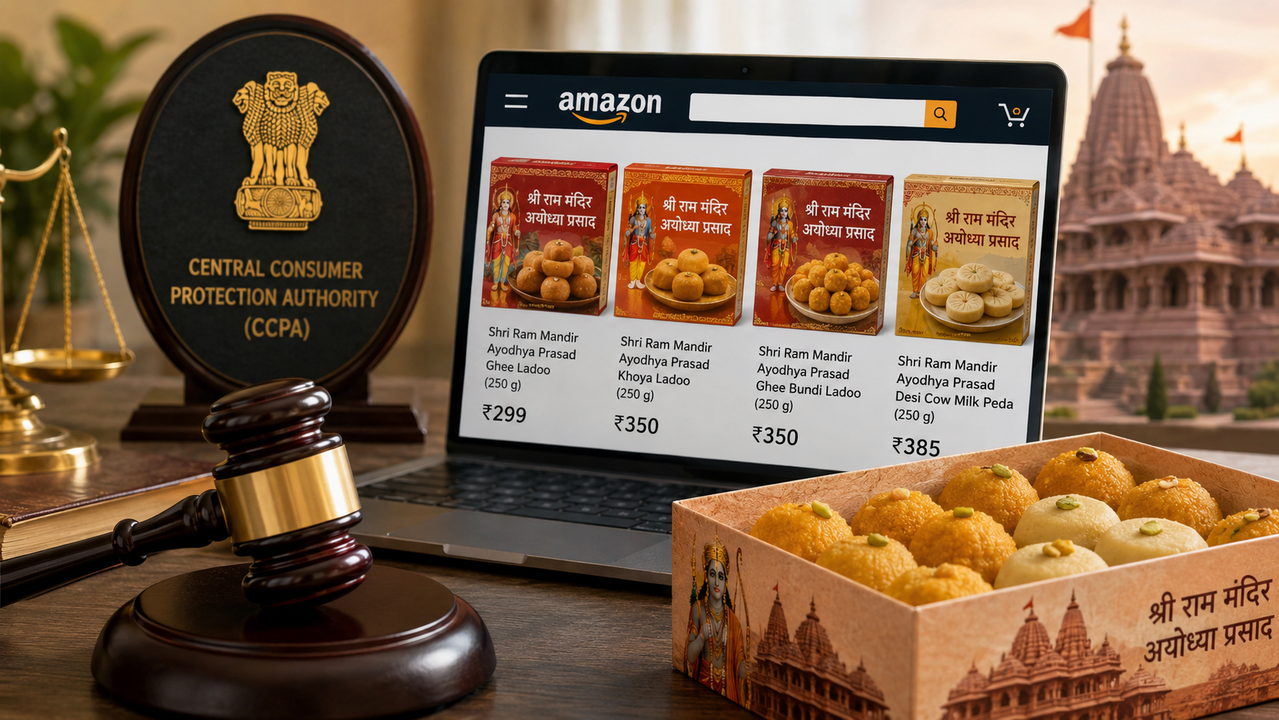
The case involved four 250-gram sweet packs listed on Amazon by Patna-based seller M/s Chandu Trading Company under the Bihar Brothers brand.
The products included ghee ladoo priced at Rs 299, khoya ladoo and ghee bundi ladoo priced at Rs 350 each, and desi cow milk peda priced at Rs 385. Their product titles prominently featured references to Shri Ram Mandir Ayodhya Prasad or Ayodhya Ram Mandir Ayodhya Prasad.
The listings also featured religious imagery and Hindi references to Lord Ram and Ayodhya. Marketing descriptions suggested that the sweets carried blessings from Shree Ram Janam Bhumi Temple, Ayodhya.
According to the CCPA, the listings described the ingredient simply as Ram Mandir Prasad. The authority considered this representation misleading because the products had no documented connection with the temple.
Importantly, none of the four products had authorisation, affiliation or endorsement from the Shri Ram Janmabhoomi Teerth Kshetra Trust, the body responsible for managing the temple.
Complaint Came Before Pran Pratishtha Ceremony
The matter was first brought to the government’s attention in January 2024 when the Confederation of All India Traders flagged the listings to the Union Minister for Commerce and Consumer Affairs.
The complaint was subsequently referred to the CCPA. The regulator issued a show cause notice to Amazon Seller Services Private Limited on January 19, 2024, just days before the January 22 Pran Pratishtha ceremony.
The timing became an important consideration in the regulator’s assessment. With millions of devotees looking for ways to obtain prasad while being unable to visit Ayodhya, the CCPA said consumers could be particularly vulnerable to misleading representations involving religious offerings.
The authority also highlighted the trust consumers typically place in established e-commerce platforms. According to the CCPA’s reasoning, shoppers may focus on the platform rather than independently examining the identity or credibility of each third-party seller.
CCPA Rejects Amazon’s Safe Harbour Argument
Amazon maintained that it functions as an intermediary marketplace and does not independently control the descriptions, pricing or listing of products offered by third-party sellers.
The company invoked safe harbour protections under Section 79 of the Information Technology Act and referred to the Supreme Court’s Shreya Singhal judgment. Amazon argued that intermediaries are not generally required to pre-screen content and that the obligation to act on unlawful material arises upon receiving actual knowledge in the manner recognised by law.
The company also said sellers are contractually required to comply with applicable regulations under its Business Solutions Agreement. Amazon further told the authority that it removed all four listings after receiving the CCPA’s notice and provided information about the seller.
However, the regulator did not accept the argument that intermediary status could shield Amazon from its responsibilities under consumer protection legislation.
Religious References Became A Key Concern
The CCPA said the term Shri Ram Mandir Ayodhya Prasad has a specific meaning for devotees, referring to food associated with the temple and its religious traditions.
The regulator therefore distinguished such a religious offering from ordinary commercially produced sweets carrying the same description. It found that using the temple’s name to market products without authorisation could mislead consumers and exploit their religious sentiments.
The authority also pointed to the circumstances surrounding the listings, noting that they appeared shortly before the consecration ceremony, when interest in Ayodhya and the Ram Mandir was exceptionally high.
Amazon’s Monitoring Systems Also Came Under Scrutiny
Amazon told the regulator that it uses automated systems and machine-learning tools to identify prohibited or problematic product listings.
The CCPA, however, questioned why the products in this case remained available despite prominently using the name of one of India’s most revered religious institutions in their titles.
The regulator said the episode raised concerns about the effectiveness of Amazon’s monitoring and due-diligence mechanisms. Given the scale and technological capabilities of the platform, the CCPA said monitoring systems should be capable of addressing listings where religious institutions and offerings are used in potentially misleading commercial claims.
CCPA Orders Stronger Checks On Religious Offerings
The regulator has now made Amazon’s proposed due-diligence framework mandatory. Under the framework, products claiming to be prasad, prasadam, mahaprasad, bhog or similar religious offerings linked to specified religious institutions cannot be listed without verifiable documentary evidence of authorisation.
The framework covers 10 institutions, including Shri Ram Janmabhoomi Mandir, Tirumala Tirupati Devasthanam, Shri Mata Vaishno Devi Shrine, Shri Kashi Vishwanath Temple, Shri Jagannath Temple, Shri Kedarnath Temple, Shri Badrinath Temple, Shri Somnath Temple, Shri Dwarkadhish Temple and Shri Mahakaleshwar Temple.
Amazon has also been directed to ensure that key seller information, including the seller’s name, address, customer care details and grievance officer information, is prominently available as required under the E-Commerce Rules.
Why Amazon Was Fined Rs 1 Lakh
The CCPA imposed a Rs 1 lakh penalty on Amazon under Section 21(4) of the Consumer Protection Act, 2019, holding the company liable for being a party to the publication of misleading advertisements on its platform.
The regulator treated the matter as a first contravention and therefore imposed a penalty at the lower end of the prescribed range, which can extend to Rs 10 lakh. It also warned that any repeat violation could result in more severe action.
Amazon has been given 15 days from the date of the order to deposit the penalty. The CCPA will also assess compliance with the mandated framework after three to four months.
Meanwhile, M/s Chandu Trading Company did not respond to repeated notices issued during the proceedings and is set to face separate action.
Latest News


She is working as a Chief Copy Editor at Times Now’s Business Desk, where she covers key developments in the stock market, Indian corporates across se… View More
Original source: https://www.timesnownews.com/business-economy