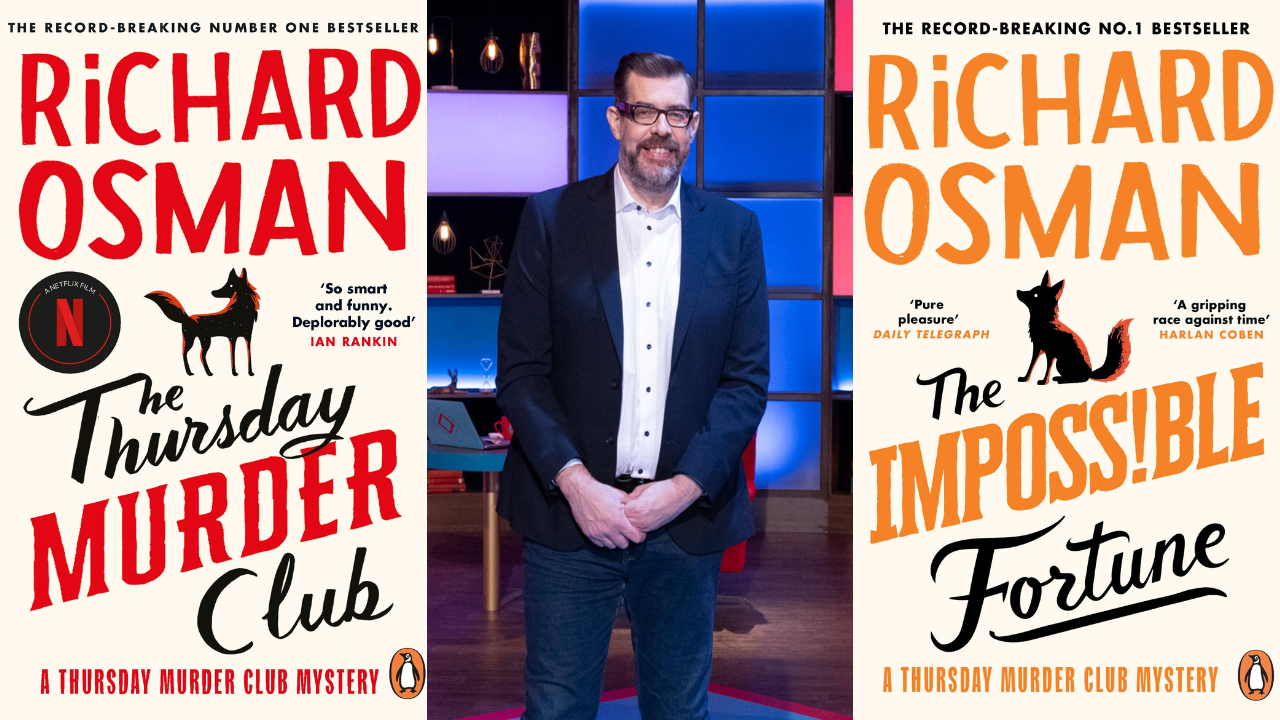
Richard Osman On Why He Writes About Death To Make You Laugh
- Authored by: Girish Shukla
- Updated Aug 20, 2026, 10:01 IST
The man who planted the clues was working out the answer at roughly the same pace you were. Richard Osman on the deal every crime novel quietly strikes with you.
Richard Osman Never Knows Who The Killer Is Until The End
Richard Osman does not know who the killer is. Not at the outline stage, not in the middle, and not for most of the manuscript. He works it out somewhere near the end, alongside everyone else, and then goes back to make sure the clues were there all along, which is a peculiar admission from a writer whose audience now gathers in groups specifically to beat him to it.
Across Indian metros, crime fiction has stopped being something done alone with a lamp on. Murder mystery nights sell out. Amateur sleuth clubs meet on weekends. Escape rooms have quietly turned into detective experiences, and groups of friends spend Saturday evenings arguing over fictional evidence between courses. ‘The Thursday Murder Club’ novels sit at the centre of that shift, and Osman has a theory about why.
Why People Are Solving Books Together
“I like to write about human connection,” he says. “I like to write about people meeting new friends, new challenges, pushing themselves and putting themselves in situations they might not otherwise be in. I think that in a world of AI, those factors are going to become much more important. We’re going to seek out human connection, experiences that give us that, give us the sense of being human.”
Collective deduction, in his account, is that instinct in its purest available form. “A human being has written the book, other human beings have read the book, and then those human beings are choosing to team up to try and work out what happened in the mind of the author. All of that is incredibly human.”
The Bullet That Missed Book Cover
The Indian version of this has a longer runway than the current trend suggests. Puzzle-solving here has always been social rather than solitary: family quiz nights, the crossword passed around a Sunday breakfast table, riddles as a currency between cousins. What has changed is the packaging, not the appetite.
Osman is clear that none of it alters how he writes. “If you read a book and pass it round your family so everyone’s read the same book, I know, or at least I hope, they’ll sit and talk about it. Hopefully, if I’ve done my job properly, everyone will have a different opinion on who the murderer is. Statistically, one of the group is almost certain to be right, and they can have bragging rights for the next week or so.”
The Deal Between Writer and Audience
The reason a crime novel can carry this weight, he argues, is structural. The genre operates on an agreement nobody has to explain.
“The beauty of crime fiction is that it allows you to write whatever story you want because there’s a contract between writers and readers, which is: I’m going to kill somebody, but at the end we are going to discover the culprit. We all know the deal. In between those two points, murder and reveal, you can write whatever story you want.”
The Last Devil to Die Book Cover
That space is where the Thursday Murder Club books actually live, and it is not especially gentle. Joyce is a widow. Elizabeth’s husband is disappearing into dementia. The residents of Coopers Chase are, without exception, in the last chapter of their own lives. The murders are the least distressing thing on the page.
“It’s a perfect container for exploring what you think is important,” Osman says. “I want to write about what it is to be a human being; about mortality, about what it’s like to be older, and in amongst all of that, I really, really want to make people laugh. Weirdly crime fiction is perfect for that. To make people laugh and make people cry, it’s two sides of the same coin.”
The Clues Were Always There
For anyone assembling a group to crack the next one, he offers something close to a guarantee, and it is the reason the format works as a party game at all.
“In crime fiction, the author must have pointed out to the reader who the murderer is through all the clues. Yes, there will be red herrings, loads of them, but somewhere in that book, when you re-read it, you’ll see the author told or showed us exactly who the killer was.”
This brings the debate back to where it began. The clues are genuinely planted, the solution is genuinely findable, and the man who planted them was working it out at roughly the same pace you are.
“To anyone reading this, who has worked out any of the killers in my books at an early stage, I say congratulations to you. Because I never know who the killer is until towards the end.”
Latest News


Seasoned Editor and Author with over a decade of experience in literary journalism, author interviews, and publishing trends. Known for curating impac… View More
Original source: https://www.timesnownews.com/lifestyle