The Most Brazen Art Heists In History
On 21 August 1911, the Mona Lisa vanished from the Louvre, turning a Renaissance masterpiece into a global obsession. More than a century on, these are some of the most audacious heists to target priceless paintings, jewels and cultural treasures.
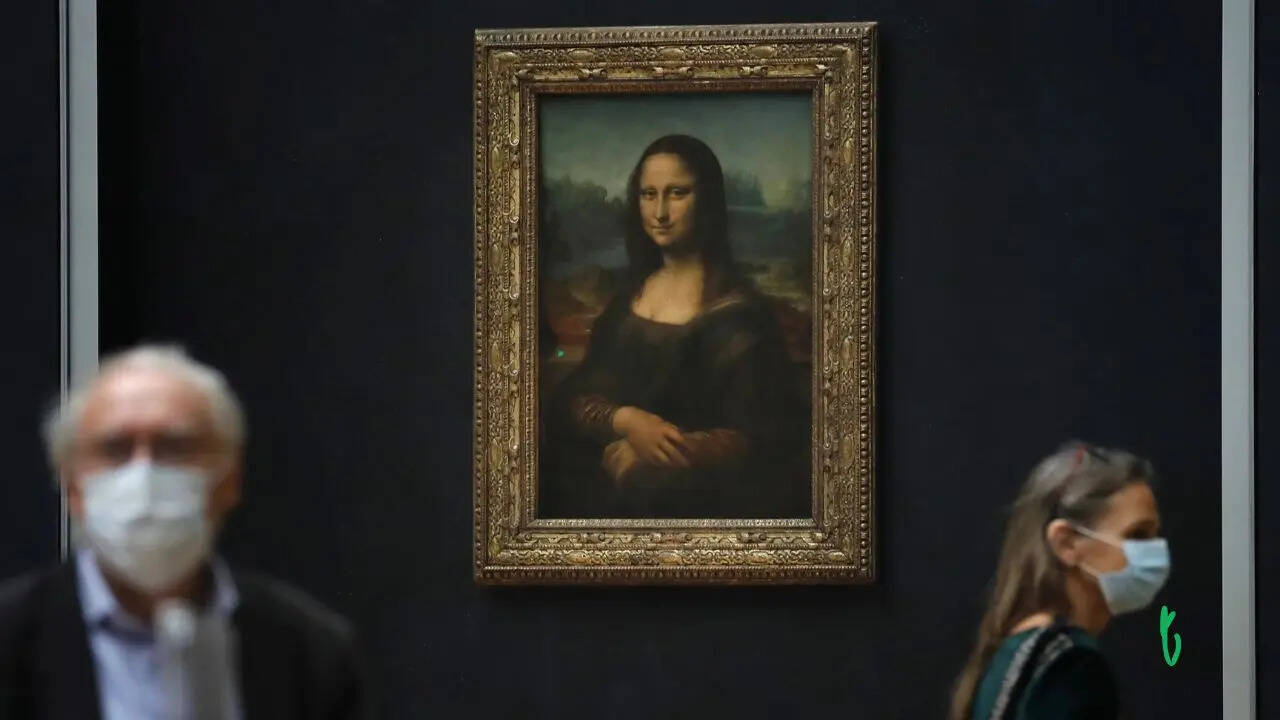
On 21 August 1911, more than a century ago, Leonardo da Vinci’s Mona Lisa was stolen from the Louvre in Paris. Vincenzo Peruggia, a former Louvre employee, was behind the heist, which would propel the painting towards its status as the most famous painting in the world. At the time, the Mona Lisa was already regarded as an important Renaissance work, but it was far from being the global cultural icon we know today. The theft changed that.
The news spread rapidly, newspapers followed every twist in the investigation and the painting acquired a new kind of celebrity. According to the Library of Congress, the Mona Lisa gained world fame as the theft dominated the news between 1911 and 1913. When Peruggia was eventually arrested in Florence after attempting to sell the painting, it was recovered and returned to the Louvre. The museum describes the episode as the “theft of the century”, noting that the Mona Lisa’s fame was even greater after its recovery.
The scandal also had consequences within the Louvre. Its director, Théophile Homolle, was forced to relinquish his position following the theft.
Art heists continue to fascinate despite being criminal acts. There is something about the combination of priceless objects, elaborate planning and high-security museums that makes them feel almost cinematic. They have become the stuff of Hollywood films, documentaries and books, while the stolen works themselves can take on a mythology of their own.
From the world’s most famous painting to priceless royal jewels and masterpieces that have remained missing for decades, here are some of the most notorious art and cultural heists in history.

Visitors photograph the window broken during the 2025 Louvre Crown Jewels heist, at the reopening of the Apollo Gallery in Paris, July 22, 2026. (Photo: AP)
The Louvre Crown Jewels: Seven Minutes In Broad Daylight
In October 2025, the Louvre was once again at the centre of an audacious heist, when thieves struck in broad daylight and made off with France’s historic Crown Jewels in a robbery that lasted just seven minutes.
The thieves arrived in a vehicle fitted with a mechanical lift, using it to reach the Galerie d’Apollon, or Gallery of Apollo, where some of France’s most important royal treasures are displayed. They smashed through a window and entered the gallery, using power tools to break into the display cases.
Among the stolen pieces were jewellery belonging to Empress Eugénie, wife of Napoleon III, including her diamond tiara and corsage brooch. The thieves also took an emerald necklace and earrings from the collection of Empress Marie-Louise, as well as pieces from a sapphire set associated with Queen Marie-Amélie and Queen Hortense. One piece, Empress Eugénie’s crown, was dropped during the escape and later recovered outside the museum. The other stolen jewels remain missing.
The audacity of the crime had the world shocked. The Louvre was not targeted under the cover of darkness, but during opening hours, with visitors inside the world’s most famous museum.
Rembrandt van Rijn’s Christ in the Storm on the Sea of Galilee (1633) and Govaert Flinck’s Landscape with an Obelisk (1638), two of the 13 works stolen from Boston’s Isabella Stewart Gardner Museum in 1990. (Photos: www.gardnermuseum.org)
The Isabella Stewart Gardner Museum: The Heist That Left Empty Frames Behind
In 1990, one of the most notorious unsolved art crimes in history took place at Boston’s Isabella Stewart Gardner Museum.
According to the museum’s own account, in the early hours of 18 March, two men dressed as police officers arrived at the museum and claimed they were responding to a disturbance. The guard on duty allowed them through the employee entrance, breaking protocol. The men then restrained the guards and took them to the basement.
What followed was an 81-minute raid through the museum’s galleries. The thieves targeted the second-floor Dutch Room, where they removed Rembrandt’s Christ in the Storm on the Sea of Galilee and A Lady and Gentleman in Black, Johannes Vermeer’s The Concert and Govert Flinck’s Landscape with an Obelisk. They also took an ancient Chinese bronze gu, or beaker, and a small Rembrandt self-portrait etching.
In the Short Gallery, they took five works by Edgar Degas and a bronze eagle finial. From the Blue Room on the first floor, they stole Édouard Manet’s Chez Tortoni, leaving its frame behind. In total, 13 works were taken. The FBI estimates their value at more than $500 million, making the theft one of the largest property crimes in history.
The thieves left the museum at around 2.45am, making two trips to their car with the stolen works. The guards remained handcuffed until police arrived at 8.15am.
More than three decades later, the paintings have not been found.
The empty frames, however, remain. They hang on the museum walls in the spaces where the stolen works once were, turning absence into part of the museum’s visual landscape. The Gardner Museum continues to offer a reward for information that leads to the recovery of the works.
The Fondazione Magnani-Rocca, a private museum near Parma, Italy, where works by Cézanne, Renoir and Matisse were stolen in March 2026. (Photo: iStock)
Cézanne, Renoir And Matisse: The Three-Minute Heist
All it took was three minutes to steal three masterpieces collectively worth more than €9 million.
In the early hours of 23 March 2026, two masked figures slipped into the Fondazione Magnani Rocca, a private museum near Parma, Italy. Security footage captured the break-in as the thieves entered through a window and swiftly removed paintings from the walls.
The stolen works were Paul Cézanne’s Tasse et Plat de Cerises, Pierre-Auguste Renoir’s Les Poissons and Henri Matisse’s Odalisque sur la Terrasse. Together, they were valued at more than €9 million, or over $10 million.
Five months after the robbery, Italian police recovered all three paintings from an apartment in Parma. Nine Moldovan nationals were being investigated in connection with the theft, while surveillance footage showed two masked burglars carrying out the actual break-in in less than three minutes.
The recovery also highlights one of the peculiar problems of stealing famous art. A painting may be worth millions on the legitimate market, but once it is reported stolen, its fame becomes a liability. The more recognisable the work, the harder it is to sell without attracting attention.
Henri Matisse’s Pastoral, 1905. The Fauvist painting was among five works stolen from Paris’s Musée d’Art Moderne in 2010 and remains missing.
The ‘Spider-Man’ Heist: Five Masterpieces, One Night
In 2010, in the middle of the night, a masked man broke into the Musée d’Art Moderne de la Ville de Paris. He cut through a padlocked gate, smashed a window and entered the museum, emerging with five 20th-century masterpieces.
The paintings, by Pablo Picasso, Henri Matisse, Georges Braque, Fernand Léger and Amedeo Modigliani, were estimated to be worth around €108 million. Among them were Picasso’s Le Pigeon aux Petits-Pois, Matisse’s La Pastorale and Modigliani’s La Femme à l’Éventail.
The thief was Vjeran Tomic, a professional burglar who became known as ‘Spider-Man’ because of his ability to climb buildings and enter properties through windows. He had originally gone to the museum intending to steal a painting by Fernand Léger. But after discovering that the alarm system was not functioning, he stayed and took four more.
Tomic was arrested in 2011 and admitted carrying out the heist. In 2017, he was sentenced to eight years in prison, while two accomplices received sentences of seven and six years. The three were also ordered to pay €104 million to the city of Paris. The paintings remain missing.
There was something almost absurd about the aftermath. Five works worth more than €100 million had been stolen, but their value also made them almost impossible to sell. The paintings were simply too recognisable. They became five of the most valuable missing objects in the art world.
Edvard Munch’s The Scream, 1893. The painting was stolen from Norway’s National Gallery in Oslo in 1994 and recovered three months later. (Photo: Wikimedia Commons)
Edvard Munch’s The Scream: Stolen In 50 Seconds
The legendary 1893 painting by Edvard Munch, The Scream, is one of Norway’s most famous works of art. Its waif-like figure on a bridge, hands pressed against its face beneath a turbulent sky, has become one of the most recognisable images in modern culture.
In 1994, one version of the painting was stolen from the National Gallery in Oslo in a break-in that took just 50 seconds.
The timing could hardly have been more dramatic. The theft took place on 12 February, the opening day of the Winter Olympics in Lillehammer, when the world’s attention was already fixed on Norway. Two thieves used a ladder to reach a museum window, smashed the glass and removed the painting. They left behind a note mocking the museum’s security. It read, “Thousand thanks for the bad security!”
The painting’s disappearance quickly became an international story. A Norwegian anti-abortion group claimed it could arrange for the work to be returned if Norwegian television broadcast an anti-abortion film, but the claim turned out to be false. A $1 million ransom demand was also made, which Norwegian authorities refused to pay.
Instead, Norwegian police, working with British investigators, launched an undercover operation. On 7 May 1994, almost three months after the theft, The Scream was found undamaged in a hotel in Åsgårdstrand, about 40 miles south of Oslo. Four men were eventually convicted in connection with the theft.
Original source: https://www.timesnownews.com/lifestyle